Lidocaine ≥99.48% – Analytical Reference Standard, 1000 mg | CAS 137-58-6
- Home
- Lidocaine ≥99.48% – Analytical Reference Standard, 1000 mg | CAS 137-58-6
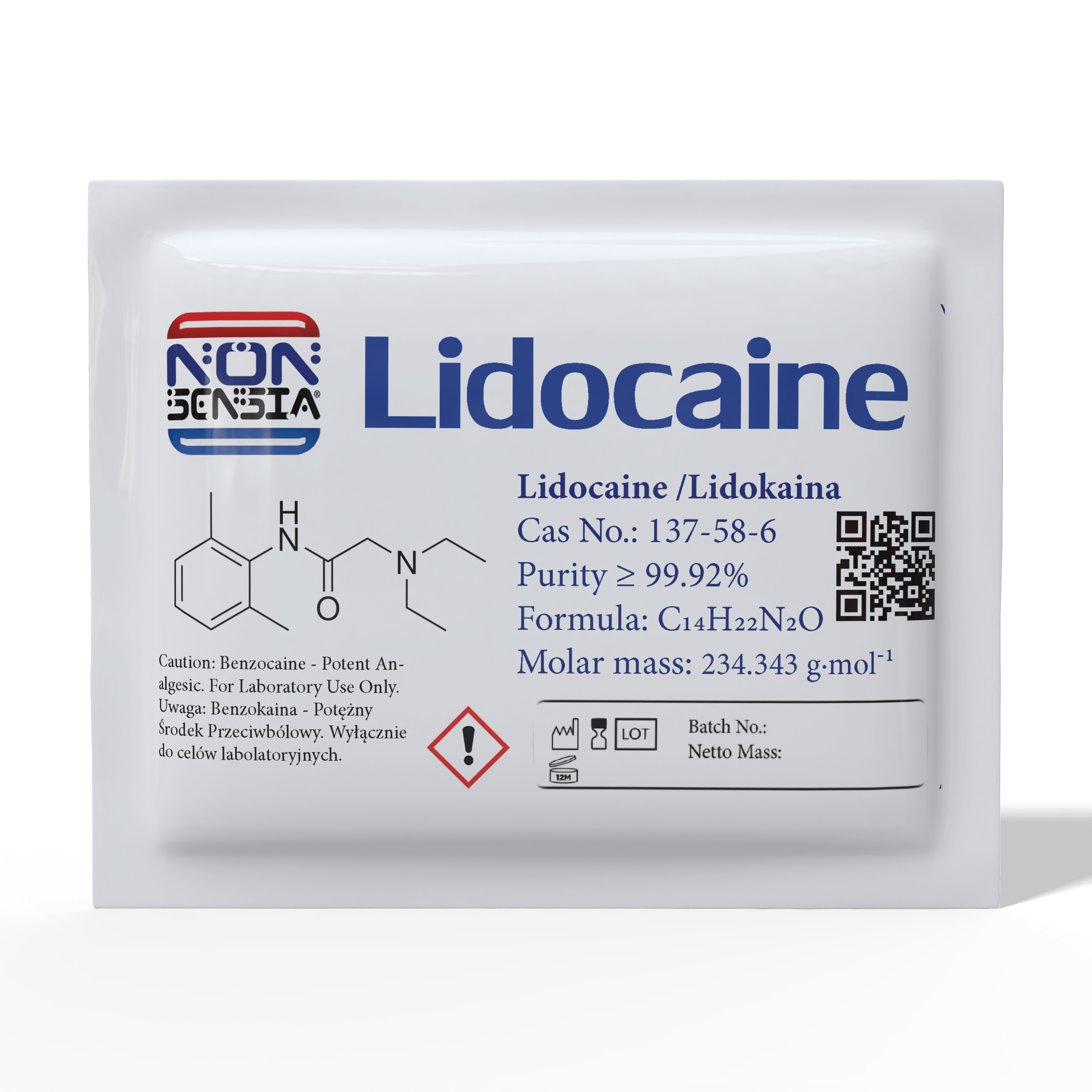
Lidocaine ≥99.48% – Analytical Reference Standard, 1000 mg | CAS 137-58-6
19,27 zł
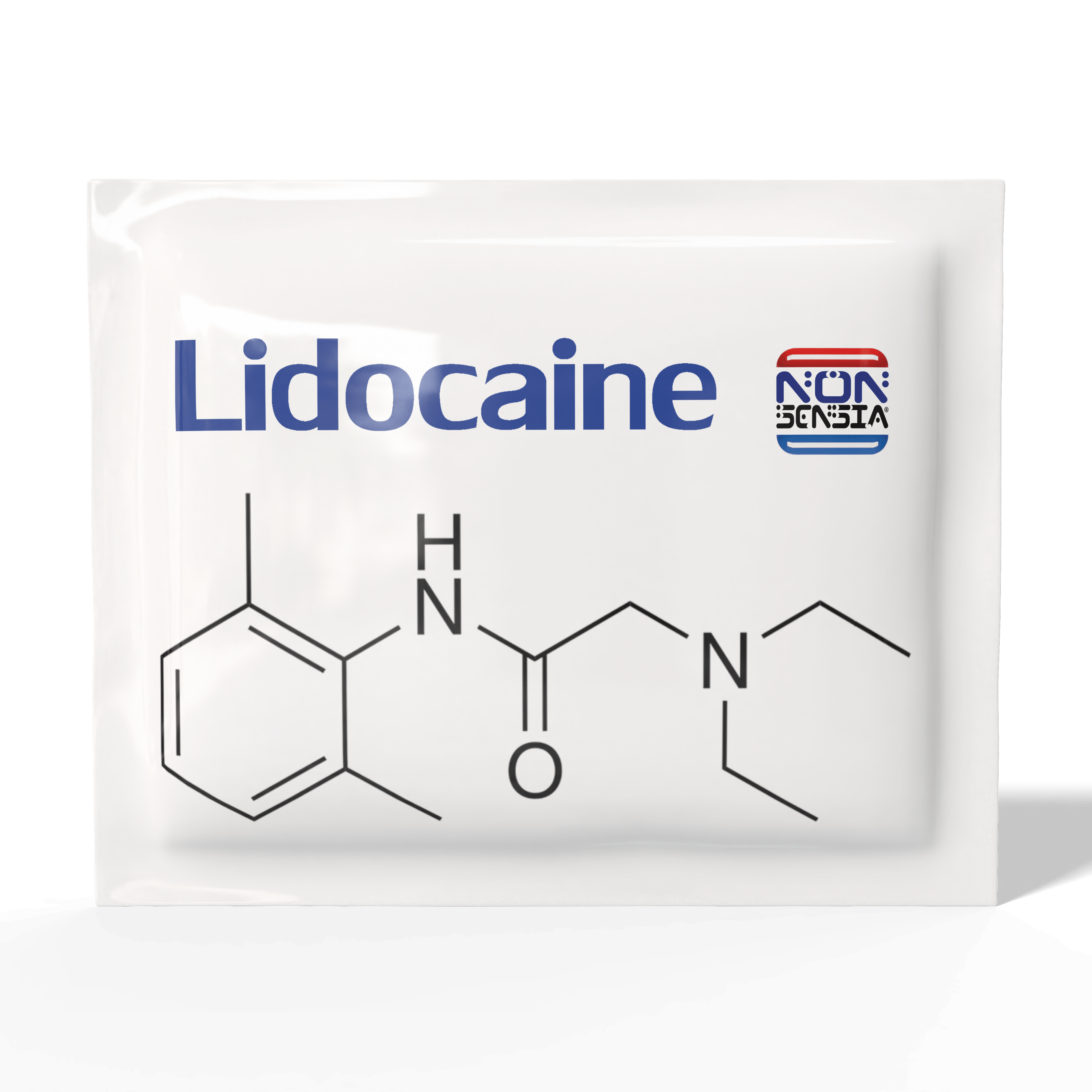
Lidocaine Free Base Reference Standard — CAS 137-58-6, C14H22N2O, 234.34 g·mol−1
2-(Diethylamino)-N-(2,6-dimethylphenyl)acetamide supplied for identity confirmation, calibration and method development. Laboratory reagent and analytical reference material only — not for human or animal consumption, and not a medicinal product, even though this molecule is the active substance of both prescription and pharmacy-counter medicines.
- Read this first: three registered substances are sold under the single word lidocaine — base (137-58-6, 234.34), anhydrous hydrochloride (73-78-9, 270.80) and hydrochloride monohydrate (6108-05-0, 288.81). Weighing one while calculating with another shifts a single-point calibration by 15.6 % or 23.2 %. Figures for all three circulate under the same short name in commercial listings; they are three different substances
- This item is the free base: CAS 137-58-6 · PubChem CID 3676 · UNII 98PI200987 · EC 205-302-8 (a second European entry, 684-578-5, describes the same structure)
- Formula / mass: C14H22N2O · 234.34 g·mol−1 · monoisotopic 234.173213330 Da · InChIKey NNJVILVZKWQKPM-UHFFFAOYSA-N — the three forms differ from the very first character of the key, and in covalent-unit count (1 / 2 / 3) and heavy-atom count (17 / 18 / 19)
- Four goods-in checks that settle the form: read the InChIKey rather than the name; melting behaviour (base 68–68.5 °C, monohydrate 77–78 °C, anhydrous salt 127–129 °C); water solubility (the salt dissolves freely, the base does not); and loss on drying or Karl Fischer, the only test that separates monohydrate from anhydrous salt
- Mass spectrometry will not do it: the hydrochloride dissociates in electrospray and the protonated base reaches the detector at a calculated m/z 235.1805 whichever solid was weighed. The collision is on the label and the balance, not in the spectrometer
- Stereochemistry: achiral — 0 defined, 0 undefined atom stereocentres, 0 defined, 0 undefined bond stereocentres. There is no (S)-lidocaine and nothing to resolve. Ropivacaine returns 1 defined centre and mepivacaine, bupivacaine and prilocaine 1 undefined centre each in the same registry, so the zeros are the molecule and not the query
- The most important entry on the whole card is an impurity: 2,6-xylidine, CAS 87-62-7, is simultaneously the synthetic precursor and the principal metabolite. It carries a Group 2B evaluation and a harmonised European classification with H351; lidocaine itself carries neither. No ordinary certificate quantifies it
- Method anchors: 235 → 86 in positive electrospray (the diethyl-substituted iminium at m/z 86.0964); electron-ionisation base peak also m/z 86, then 58 and 87; 82 deposited Kovats indices on standard non-polar columns spanning 1838–1900; 1000 liquid-chromatography deposits from 62 depositors
- Where the public record disagrees with itself: aqueous solubility reported as 4100 and as 410 mg·L−1 at the same stated 30 °C — a clean factor of ten; melting point 68–68.5 °C in three sources against 76–79 °C in a fourth; three collision cross-sections for one ion under three calibrations. No 2D NMR anywhere, no derivable molar absorptivity, and the solved crystal structure belongs to the monohydrate rather than the base
- Hazards: Warning, H302, from 98.2 % of 167 reports across 10 notifications — self-classification, not harmonised. The Japanese national evaluation reaches Danger with H302, H317, H362, H370 and H372, so a safety data sheet for this substance is jurisdiction-specific in substance, not merely in language
- Status: not scheduled in Poland across three current instruments and not scheduled in the United States, both measured with positive controls firing in the same documents; not on the 2026 anti-doping list; active substance of 133 Polish medicinal products, of which 68 have a pharmacy-counter pack, 62 a prescription pack and none any narcotic-prescription pack. Pack size 1000 mg
Lidocaine is one of the most frequently measured small molecules in forensic toxicology, seized-material analysis and wastewater screening, which is exactly why the form question matters: every one of those workflows is quantitative, and none of them can recover from a calibrant weighed as the wrong solid. Full registry data, the three-form analysis, per-value attribution for every physicochemical figure, the 2,6-xylidine dossier including the unresolved dispute over its mechanism, regulatory measurements with their positive controls and their failures, and 45 cited sources are set out below.
Shipping is charged once per order, not per item — adding more items to this order does not increase the delivery cost.
Quick Payment
100% New
Fast Delivery
- Additional Information
Product classification — read before ordering. This item is a chemical reagent and analytical reference material. It is not a medicinal product, dietary supplement, food, feed, novel food or cosmetic, and it is not intended for human or animal consumption or for any in-vivo administration whatsoever. It is supplied exclusively to laboratories, research institutions and professional users for in-vitro analytical, chromatographic and method-development work. Scientific findings summarised on this page describe substances investigated in published laboratory and clinical research; they are reported here as bibliographic facts about that literature and are not product claims, dosage guidance, or a recommendation of any use of this reagent.
One name, three solids, and up to 23 % of difference on the balance. Read section 4 before weighing anything. Three distinct substances circulate on the reagent market under the single word lidocaine: the free base, CAS 137-58-6, 234.34 g·mol−1 [1]; the anhydrous hydrochloride, CAS 73-78-9, 270.80 g·mol−1 [2]; and the hydrochloride monohydrate, CAS 6108-05-0, 288.81 g·mol−1 [3]. These are not variants of one article — they are three registry records with three formulae, three exact masses and three different InChIKeys. Weighing one while assuming another shifts a single-point calibration by 15.6 % or 23.2 %, which is not a rounding error but roughly a quarter of the answer. The trap is sharpened by pharmacopoeial practice: the European chemical reference substance for the salt is the monohydrate, catalogue code L0600000, CAS 6108-05-0 [5], while most chemical registries default to the base. This product is the free base, CAS 137-58-6, and section 4 sets out how to prove that is what arrived.
Key facts
- Substance
- Lidocaine (INN; lignocaine as former British approved name; Latin lidocainum) — supplied as the free base
- CAS
- 137-58-6 (base). Not 73-78-9 and not 6108-05-0 — see section 4
- PubChem CID
- 3676 [1]
- EC number
- 205-302-8; a second European entry for the same structure carries 684-578-5 [7]
- UNII
- 98PI200987
- Formula
- C14H22N2O
- Molecular mass
- 234.34 g·mol−1
- Monoisotopic mass
- 234.173213330 Da [1]
- InChIKey
NNJVILVZKWQKPM-UHFFFAOYSA-N- Stereocentres
- None — 0 defined, 0 undefined, 0 bond stereocentres. The molecule is achiral (section 3)
- Melting point
- 68–68.5 °C in three aggregators and 67.6–67.9 °C by calorimetry; a legacy 76–79 °C sits in the header of one 1965 spectrum (section 7)
- Water solubility
- Sources disagree tenfold at one temperature: 410 and 4100 mg·L−1, both at 30 °C (section 7)
- Key impurity
- 2,6-Xylidine, CAS 87-62-7 — synthetic precursor and principal metabolite; Group 2B evaluation and a harmonised H351 classification [4][15]
- GHS (base)
- Warning — H302 in 98.2 % of 167 reports from 10 notifications; no harmonised entry [7]
- Controlled status
- Not scheduled in Poland [8][9]; not scheduled under the United States Controlled Substances Act [12]
- WADA 2026
- Not prohibited [14]
- Pack
- 1000 mg
Three registry records, three formulae, three InChIKeys. The heavy-atom counts differ as well — 17, 18 and 19 — so the distinction survives in any descriptor set that is copied rather than retyped [1][2][3]. Section 4 explains why the collision happens on the label and on the balance rather than in the spectrometer.
On this page
- What this material is
- Identity, registry codes and the traps in them
- Structure and stereochemistry
- The central problem: which of three solids is in the vial
- Methods that settle the question, and methods that cannot
- 2,6-Xylidine: precursor, impurity, metabolite, carcinogen
- Physicochemical data, and where the sources disagree
- Spectra: what exists and what does not
- Why laboratories hold this standard
- Hazard classification
- Regulatory status, measured per jurisdiction
- Handling, storage and documentation
- What we certify and what we do not
- Terms of supply
- Questions and answers
1. What this material is
This page describes lidocaine supplied as an analytical reference material: a weighed quantity of a single identified chemical substance, intended to serve as the point of comparison against which another sample is measured. A reference material has one job, and it is a narrow one. When a laboratory reports a concentration in post-mortem blood, a residue in treated drinking water, or a cutting agent in a seized powder, the number is only as good as the material the instrument was calibrated against. Everything downstream inherits the identity, the form and the purity of one vial.
Lidocaine is unusual among the substances in this catalogue in that the difficulty is not scarcity of data. The public record is dense: the registry entry for the free base carries sixty-two deposited liquid-chromatography mass spectra drawn from three repositories and eleven named contributing groups, eighty-nine Kovats retention-index values, and a mass spectrum in the main library of the national reference collection [1][6]. If anything, the density of data is itself the problem. When a compound has been measured this many times by this many groups, the numbers that circulate about it stop being traceable to a single measurement, and several of them contradict one another by an order of magnitude while sitting side by side in the same aggregated record. Section 7 lays those contradictions out rather than resolving them silently.
Three facts shape everything else on this page, and they are worth stating at the top.
First, the name is ambiguous by one word. Three separate substances are sold as lidocaine: the base, the anhydrous hydrochloride and the hydrochloride monohydrate. They differ in molar mass by up to 23 %. This is the single most consequential thing about the material, and section 4 is devoted to it.
Second, the molecule is achiral. Lidocaine has zero stereocentres — not one undefined centre, not a racemate, but none at all [1]. That is unusual within its own structural family and it removes an entire class of problem that afflicts, for instance, tadalafil, where two stereocentres generate four registry records that mass spectrometry cannot separate. Section 3 gives the four stereodescriptor counters verbatim, together with the positive control that makes the zeros mean something.
Third, the most important safety information on this page is not about lidocaine. It concerns 2,6-xylidine, CAS 87-62-7, which enters this molecule from two directions at once: it is a synthetic starting material and it is the principal metabolite. That compound carries an International Agency for Research on Cancer Group 2B evaluation [15] and a harmonised European classification bearing the hazard statement H351, neither of which attaches to lidocaine itself [4]. Section 6 sets out the evidence, including a 2021 weight-of-evidence assessment that disputes the mechanism those classifications rest on [17]. The dispute is live; it has not been resolved in either direction, and this page says so rather than picking a side.
For the general terms on which this shop supplies reference materials, the surrounding reference standards category collects the rest of the catalogue on the same basis.
2. Identity, registry codes and the traps in them
Every identifier below is quoted from a public registry with the registry named. Lidocaine has accumulated an unusually long identifier list over eight decades, and three parts of it are actively misleading if read carelessly.
| Preferred name | Lidocaine (INN, USAN, JAN); lignocaine (former British approved name); Latin lidocainum |
|---|---|
| Systematic name | 2-(Diethylamino)-N-(2,6-dimethylphenyl)acetamide |
| CAS Registry Number | 137-58-6 |
| Superseded CAS numbers | 8059-42-5, 8059-66-3, 91484-71-8 — deprecated, still encountered in older documentation |
| PubChem CID | 3676 |
| EC numbers | 205-302-8 (EINECS) and 684-578-5 — two European entries for one structure [7] |
| UNII (FDA) | 98PI200987 |
| ChEBI | CHEBI:6456 |
| ChEMBL | CHEMBL79 |
| DrugBank | DB00281 |
| KEGG | C07073 (compound); D00358 (drug) |
| DSSTox | DTXSID1045166 |
| HMDB | HMDB0014426 |
| RxNorm | RxCUI 6387 |
| NSC | NSC40030 (base); NSC789222 (hydrochloride) |
| Nikkaji | J5.631F |
| PharmGKB / DrugCentral | PA450226 / 1579 |
| Customs classification | HTS 2924.29.57.00 |
| ATC codes for the substance | N01BB02, C01BB01, C05AD01, D04AB01, R02AD02, S01HA07, S02DA01 — seven human codes, each with a veterinary counterpart in the Q-series [1] |
| Pharmacopoeial reference substances | LIDOCAINE CRS, code L0595000, CAS 137-58-6, used in monograph 0727; LIDOCAINE HYDROCHLORIDE CRS, code L0600000, CAS 6108-05-0, used in monographs 0227, 1242 and 1363 [5] |
Machine-readable descriptors, and why they are the only safe form identifier
| SMILES | CCN(CC)CC(=O)NC1=C(C=CC=C1C)C |
|---|---|
| InChI | InChI=1S/C14H22N2O/c1-5-16(6-2)10-13(17)15-14-11(3)8-7-9-12(14)4/h7-9H,5-6,10H2,1-4H3,(H,15,17) |
| InChIKey | NNJVILVZKWQKPM-UHFFFAOYSA-N |
| XLogP3 | 2.3 (computed, not measured) |
| Topological polar surface area | 32.3 Å2 |
| Hydrogen-bond donors / acceptors | 1 / 2 |
| Rotatable bonds | 5 |
| Heavy atoms / complexity | 17 / 228 |
| Formal charge / covalent units | 0 / 1 — a single covalently bonded unit, which is what makes this a free base rather than a salt |
The last row is the one to build a goods-in check around. A salt has more than one covalently bonded unit by definition: the anhydrous hydrochloride record reports two, and the monohydrate reports three [2][3]. That number is not a chemical opinion, it is a count of disconnected fragments in the structure, and it survives every format conversion that preserves the structure at all.
The InChIKey is equally decisive here, and in a way it is not for every compound. For a molecule with stereocentres, the first block of the key encodes connectivity only and stereoisomers collide inside it. Lidocaine has no stereocentres, so that failure mode is simply absent — but the three forms differ in composition rather than configuration, and composition is exactly what the first block does capture. The result is that the three keys diverge from the first character: NNJVILVZKWQKPM-, IYBQHJMYDGVZRY- and YECIFGHRMFEPJK-. Any system that deduplicates on the InChIKey skeleton keeps the three apart automatically. Any system that deduplicates on the word lidocaine merges them.
Three identity traps
Trap one: two European entry numbers for one structure. The base appears in the European inventory under EC 205-302-8 and, separately, under EC 684-578-5 with the systematic name in place of the common one [7]. The hydrochloride shows the same duplication, under 200-803-8 and 612-079-4. This is not merely untidy: the two hydrochloride entries carry different aggregated hazard profiles, as section 10 sets out. A regulatory search that finds one entry and stops has seen half the record.
Trap two: three superseded CAS numbers. 8059-42-5, 8059-66-3 and 91484-71-8 were withdrawn but remain in circulation in older safety documentation and in some inventory systems. A number that no longer resolves is not evidence that a substance is exotic; it is evidence that a document is old.
Trap three: the substring collision with polidocanol. This one is not hypothetical, and it was hit during the measurement reported in section 11. Searching the Polish register of medicinal products for the fragment lidoca returns records for polidocanolum — an unrelated non-ionic surfactant used as a sclerosant. Matching the fragment rather than the substance name inflated the count of lidocaine-containing products from 133 to 138. A five-record error is small; the mechanism that produced it is not, because the same mechanism applies to any automated screen of a product register, a prescribing database or a supplier catalogue that matches on fragments.
3. Structure and stereochemistry
Lidocaine is a 2,6-xylidide: an acetamide in which the nitrogen carries a 2,6-dimethylphenyl group and the alpha carbon carries a diethylamino group. The two ortho methyl groups are the structural signature of the whole family, and they are the reason the family exists — they shield the amide bond sterically, which is what separates an amide-type local anaesthetic from an ester-type one such as procaine or benzocaine. That one structural difference propagates into every part of the analytical picture: different hydrolytic stability, different degradation products, and, as section 6 explains, an entirely different toxicological question attached to the aromatic amine released when the bond does break.
The registry record states the stereochemistry without ambiguity [1]:
| Defined atom stereocentre count | 0 |
|---|---|
| Undefined atom stereocentre count | 0 |
| Defined bond stereocentre count | 0 |
| Undefined bond stereocentre count | 0 |
| Isotope atom count | 0 |
| Formal charge | 0 |
| Covalently bonded units | 1 — free base, no counter-ion |
All four stereo counters are zero. The molecule is achiral: no stereogenic atom, no restricted double bond, and therefore no enantiomer, no diastereoisomer and no racemate. There is no such substance as (S)-lidocaine. An offer or a certificate that states an optical rotation, an enantiomeric excess or a single-enantiomer grade for this compound is describing something that does not exist.
Why these zeros mean something, and how that was checked. A field full of zeros is worthless as evidence unless the field is capable of returning something else. The same descriptor was therefore requested for four related local anaesthetics from the same registry in the same query. Ropivacaine returns 1 defined stereocentre and 0 undefined. Mepivacaine, bupivacaine and prilocaine each return 0 defined and 1 undefined — the signature of a compound registered as an unresolved racemate [1]. The instrument fires when there is something to fire at; it distinguishes a resolved single enantiomer from a racemate; and it returns zeros for lidocaine. The zeros are a property of the molecule, not of the query.
That control is worth reading twice, because it also yields the cleanest way to place lidocaine among its neighbours. Within one structural family, sold for the same purposes and analysed on the same instruments, lidocaine is the only member with nothing to resolve. Ropivacaine is a single enantiomer; mepivacaine, bupivacaine and prilocaine are registered as racemates with one undefined centre each. A laboratory validating a method across the family has to think about chirality for four of the five compounds and can ignore it entirely for the fifth. The catalogue offers the opposite extreme for comparison in levodopa, where a single defined stereocentre is the whole point of the substance, and a middle case in modafinil, supplied as the racemate of a sulfoxide.
The five rotatable bonds and the modest polar surface area of 32.3 Å2 [1] complete the conformational picture: a flexible, weakly polar molecule with one hydrogen-bond donor, the amide N–H, and one basic tertiary amine. Section 5 shows how each of those descriptors dictates which analytical methods work and which fail.
4. The central problem: which of three solids is in the vial
This is the analytical fact that governs everything a laboratory does with lidocaine as a reference material, and it deserves stating in the bluntest available terms.
Three registered substances share the trade name lidocaine, and their molar masses differ by up to 23 %. The free base is C14H22N2O, 234.34 g·mol−1, CAS 137-58-6 [1]. The anhydrous hydrochloride is C14H23ClN2O, 270.80 g·mol−1, CAS 73-78-9 [2]. The hydrochloride monohydrate is C14H25ClN2O2, 288.81 g·mol−1, CAS 6108-05-0 [3]. A stock solution prepared by weighing one and calculating with the molar mass of another is wrong by 15.6 % or 23.2 % before a single injection has been made, and every result calibrated against it inherits that offset unchanged.
| Property | Free base | Hydrochloride | Hydrochloride monohydrate |
|---|---|---|---|
| CAS | 137-58-6 | 73-78-9 | 6108-05-0 |
| Registry CID | 3676 | 6314 | 16219577 |
| Formula | C14H22N2O | C14H23ClN2O | C14H25ClN2O2 |
| Molar mass | 234.34 | 270.80 | 288.81 |
| Monoisotopic mass (Da) | 234.173213330 | 270.1498911 | 288.1604557 |
| InChIKey | NNJVILVZKWQKPM-UHFFFAOYSA-N | IYBQHJMYDGVZRY-UHFFFAOYSA-N | YECIFGHRMFEPJK-UHFFFAOYSA-N |
| Covalently bonded units | 1 | 2 | 3 |
| Heavy atom count | 17 | 18 | 19 |
| Hydrogen-bond donors | 1 | 2 | 3 |
| Topological polar surface area | 32.3 Å2 | 32.3 Å2 | 33.3 Å2 |
| Computed logP available | Yes, XLogP3 = 2.3 | No — not computed for multi-unit records | No |
| Melting point reported | 68–68.5 °C, disputed (section 7) | No value in the registry record — catalogue figures around 127–129 °C circulate but are not registry data | No value in the registry record — catalogue figures around 77–78 °C circulate but are not registry data |
The conversion factors, and what they do not fix
| Conversion | Factor | Read in practice as |
|---|---|---|
| Anhydrous hydrochloride → base | 234.34 / 270.80 = 0.8654 | 100 mg of anhydrous salt contains 86.54 mg of base |
| Base → anhydrous hydrochloride | 270.80 / 234.34 = 1.1556 | 115.56 mg of anhydrous salt is equivalent to 100 mg of base |
| Monohydrate → base | 234.34 / 288.81 = 0.8114 | 100 mg of monohydrate contains 81.14 mg of base |
| Base → monohydrate | 288.81 / 234.34 = 1.2324 | 123.24 mg of monohydrate is equivalent to 100 mg of base |
| Monohydrate → anhydrous salt | 270.80 / 288.81 = 0.9376 | water of crystallisation alone accounts for 6.2 % of the monohydrate mass |
The factors are trivial arithmetic. The reason this section is long is that the arithmetic is not the difficulty. Nobody who knows they are holding the monohydrate gets this wrong. The failure mode is upstream: a certificate that says lidocaine and gives a purity figure without naming the form, a supplier catalogue that lists one product name against a molar mass belonging to a different record, an internal database in which the form was captured once, by hand, years ago. No conversion factor rescues a measurement whose starting form was never established.
The pharmacopoeial convention makes the confusion structural rather than careless. The European reference substance for the free base is LIDOCAINE CRS, catalogue code L0595000, CAS 137-58-6, used in monograph 0727. The reference substance for the salt is LIDOCAINE HYDROCHLORIDE CRS, catalogue code L0600000, and its registered CAS number is 6108-05-0 — the monohydrate, not the anhydrous salt — used in monographs 0227, 1242 and 1363 [5]. So the compendial world and the chemical-registry world default to two different articles, and a document written in one convention and read in the other is off by 23.2 % while every individual statement in it remains true. That the catalogue field is populated and readable was confirmed on a control record in the same database, which returns its own monograph number correctly; a query for xylidine in the same database returns no matching record, so the field is neither blank nor indiscriminate [5].
Where the collision actually happens — and where it does not
It is tempting to describe this as a mass-spectrometric problem, and it is worth being precise that it is not. In electrospray, a hydrochloride dissociates: the protonated base is what reaches the detector, at m/z 235.1805 calculated for [M+H]+, whichever of the three solids was weighed out. The salt form has no separate ion to detect. The collision is on the label and on the balance, not in the spectrometer — which is precisely why a mass spectrum cannot be used to catch it, and why a laboratory that confirms identity by mass spectrometry alone has confirmed nothing about the form.
There is, however, a genuine near-collision worth knowing about, and it sits one step to the side. Bupivacaine free base has a molar mass of 288.4 g·mol−1; lidocaine hydrochloride monohydrate has 288.81 [1][3]. Two compounds from the same structural family, both routinely stocked in the same laboratory, differ by 0.41 in a figure that spec sheets habitually round. Their monoisotopic masses differ by 0.0597 Da, which at m/z 288 demands a resolving power of roughly 4800 to separate — comfortable on a time-of-flight or orbital-trap instrument, unavailable on a unit-resolution quadrupole. The two are trivially distinguished by elemental composition, by retention behaviour and by fragmentation. They are not distinguished by a molar mass printed to one decimal place on a label.
What to do about it at goods-in
Four checks, in ascending order of effort, that between them close the question:
| Check | What it settles | Cost |
|---|---|---|
| Read the InChIKey on the certificate, not the name | Everything, if the certificate carries one. The three keys differ from the first character | None |
| Melting behaviour | The three forms are far apart. The registry gives a value only for the base, 68–68.5 °C and disputed (section 7) [1]; the records for both salts carry no melting point at all [2][3], and the figures in circulation for them — roughly 77–78 °C for the monohydrate and 127–129 °C for the anhydrous salt — come from supplier catalogues rather than from a registry. A capillary melting point still separates the anhydrous salt from the other two decisively, but the comparison values have to be measured or sourced, not quoted from here | Minutes |
| Aqueous behaviour | The salt dissolves freely in water; the base does not. This is the fastest qualitative discriminator available and needs no instrument | Minutes |
| Loss on drying or Karl Fischer titration | The only measurement that separates the monohydrate from the anhydrous salt: water of crystallisation is 6.2 % of the monohydrate mass, a difference no chromatographic purity figure will show | An hour |
The salt-versus-base ambiguity is not unique to this molecule, and the catalogue makes the general point better than any single card. Sildenafil is sold both as the base and as the citrate, with a mass ratio that has misled more than one published method; CDP-choline circulates as the free acid and as mono- and disodium salts. What makes lidocaine the sharpest case is the third form: a hydrate whose water content is invisible to every identity test short of a water determination, and which the pharmacopoeial convention happens to have selected as the reference article.
5. Methods that settle the question, and methods that cannot
The descriptors in section 2 are not decoration. Each of them predicts, quite directly, how the molecule will behave on a column, in a source and in a detector. This section works through that prediction and states what each technique can and cannot establish.
What the descriptors imply
| Descriptor [1] | Consequence for method development |
|---|---|
| XLogP3 = 2.3; measured partition coefficients 2.1–2.44 (section 7) | Moderate lipophilicity. Retains well on C18 with an organic modifier in the 30–60 % range. Neither a void-volume compound nor one that needs a long gradient |
| Basic tertiary amine, pKa 7.86–8.01 (section 7) | The single most consequential property for chromatography. Around neutral pH the molecule is a mixture of protonated and neutral species, and small pH drifts move retention and peak shape. Buffer decisively, either well below or well above the pKa, and state the buffer in the method |
| Amide N–H, one hydrogen-bond donor | Silanol interaction on older stationary phases; peak tailing that is a property of the column, not of the sample |
| 5 rotatable bonds | Conformationally flexible; no unusual behaviour in ion mobility beyond a broadened arrival-time distribution |
| Aromatic ring with two ortho methyls, no extended conjugation | A weak, short-wavelength chromophore. Ultraviolet detection works but sits near the solvent cut-off, and it is not selective. This is the reason most published quantitative work uses mass-spectrometric detection [24] |
| Melting point below 80 °C, volatile under vacuum | Amenable to gas chromatography without derivatisation, which is why a retention-index dataset exists at all [6] |
Methods that work
Liquid chromatography with tandem mass spectrometry is the workhorse, and the deposited record shows why: sixty-two liquid-chromatography spectra drawn from three repositories, and ten tandem spectra from two [1]. Validated methods for lidocaine together with its active metabolites in plasma are published in quantity, including a high-performance method developed and validated for the parent and its metabolites [25] and an ultra-performance method for the same panel [26]. A 2026 review collects the field as a whole and is the single most efficient entry point into it [24].
The deposited fragmentation is unusually clean. The tandem spectrum deposited for the protonated molecule lists the precursor at m/z 235.18141 with the base fragment at 86.09663 at 94.6 % relative intensity [1]. That fragment is the diethyl-substituted iminium ion, calculated at 86.0964 for C5H12N+ — the diethylamino end of the molecule cleaving off cleanly. The 235 → 86 transition is the one most methods are built on, and it is a good choice: intense, structurally meaningful and low in background.
A caution about treating the deposited peak list as a mass-accuracy reference. The precursor mass calculated from the registry monoisotopic mass is 235.1805 for [M+H]+; the deposited peak list gives 235.18141. The difference is 0.0009 Da, about 3.9 ppm. That is entirely normal for a library deposit and irrelevant for identification, but it is not a figure to quote as a theoretical mass or to use when setting a 5 ppm extraction window. Calculate the theoretical mass from the formula; use the deposit for the fragment pattern.
Gas chromatography works without derivatisation and has an unusually solid retention-index base: 81 deposited values on standard non-polar columns spanning 1838–1900, and 8 further values on semi-standard non-polar phases spanning 1842–1924 [1]. Eighty-nine independent values is enough to make a retention index a genuine identification criterion rather than a suggestion. The electron-ionisation spectrum in the main national library carries 85 peaks with the base peak at m/z 86 and the next two at 58 and 87 [1][6] — the same diethyliminium logic as in the tandem spectrum, which is a satisfying internal consistency between two entirely separate techniques.
Sample preparation is well served: packed-sorbent microextraction on polyacrylonitrile and graphene-oxide nanofibres has been developed for this compound class in plasma [28], and dispersive micro-solid-phase extraction coupled to both quadrupole time-of-flight and triple-quadrupole detection has been applied to suspect and target screening panels that include it [43].
Methods that cannot settle what they are often asked to settle
Mass spectrometry cannot identify the salt form. Section 4 covers this and it is the most important negative statement on the page.
Ultraviolet detection cannot distinguish lidocaine from its own metabolites or its close structural relatives at the level of a single wavelength. All of the 2,6-xylidides share essentially the same weak chromophore. Ultraviolet detection quantifies what the column has already separated; it does not add identification.
A chromatographic purity figure cannot detect water of crystallisation. A monohydrate assayed against a base standard by area normalisation can return 99.9 % while being 6.2 % water by mass. Purity and content are different quantities, and for hydrates the difference is the whole story.
Nothing here addresses stereochemistry, and nothing needs to. Section 3 established that there is no configuration to assign. Chiral chromatography of lidocaine is not a difficult method; it is a meaningless one.
The measurement that has no reference value. One number that method developers reach for is a molar absorptivity, and for lidocaine it cannot be taken from the public record. The ultraviolet spectrum deposited in the national reference collection states explicitly that the sample concentration is unknown, so a molar absorption coefficient cannot be derived from it [6]. That is a documented limitation of the deposit rather than an oversight, and it means an absorptivity used for a calibration has to come from the method paper it was measured in, or from a measurement made in-house on a standard of established form — which is one of the concrete things this material is for.
6. 2,6-Xylidine: precursor, impurity, metabolite, carcinogen
This is the section that matters most for anyone handling the substance, and the reason is unusual: the compound with the regulatory hazard classification is not lidocaine. It is 2,6-dimethylaniline, commonly called 2,6-xylidine, CAS 87-62-7 [4]. It reaches lidocaine from two directions at once.
| Name | 2,6-Xylidine; 2,6-dimethylaniline |
|---|---|
| CAS | 87-62-7 |
| PubChem CID | 6896 |
| Formula / molar mass | C8H11N / 121.18 g·mol−1; monoisotopic 121.089149355 Da |
| InChIKey | UFFBMTHBGFGIHF-UHFFFAOYSA-N |
| EC number | 201-758-7 |
| UNII / DSSTox / ChEBI | 4FT62OX08D / DTXSID8026307 / CHEBI:28738 |
| Transport / safety card | UN 1711; international chemical safety card 1519 |
Both a starting material and a metabolite
Lidocaine is formally the condensation product of N,N-diethylglycine with 2,6-dimethylaniline, and the aromatic amine is the aniline component of the amide. It is therefore a plausible process-related impurity in any batch, at a level determined by the synthesis and the purification — not by anything visible on a certificate that reports chromatographic purity alone.
It is also the principal metabolite. The identification of 2,6-xylidine as a major lidocaine metabolite in human liver preparations was published in 1996 [16] and the relationship has been recorded in the structured chemical databases ever since; the registry description of the compound states plainly that it is a drug metabolite of lidocaine and assigns it a role as a carcinogenic agent [4]. A compound that is simultaneously the feedstock and the metabolic product is unusual, and it means the same analyte has to be watched in a batch-release context and in a biological-sample context for entirely different reasons.
The carcinogenicity record
| Body | Status | Source |
|---|---|---|
| International Agency for Research on Cancer | Group 2B, possibly carcinogenic to humans; volume 57, evaluated 1992, published 1993. The stated basis is inadequate evidence in humans and sufficient evidence in experimental animals | [15] |
| European harmonised classification, Annex VI | H302, H312, H315, H332, H335, H351 — suspected of causing cancer, H411. Recorded with the Regulation itself named as the source, not a notifier | [4] |
| European classification and labelling notifications | H351 reported by 98.7 % of 300 reports from 23 notifications; one report of 300 states that the substance does not meet the criteria | [4] |
| United States National Toxicology Program | Technical report entry; the Californian office states that the compound can cause cancer according to that programme | [4] |
| American Conference of Governmental Industrial Hygienists | A3 — confirmed animal carcinogen with unknown relevance to humans. The entry covers xylidines as a mixture of isomers | [4] |
A positive control that makes the negative statement about lidocaine meaningful. Section 10 reports that lidocaine has no harmonised European classification. That is a claim about an absence, and an absence is only worth reporting when the instrument can demonstrably show a presence. It can: in the same field of the same database, for 2,6-xylidine, the source of the classification is named as the Regulation itself rather than as a company notification [4]. The tool distinguishes a harmonised entry from a self-classification, it shows one for the impurity, and it shows none for the parent. The zero for lidocaine is a property of the register, not of the query.
The dispute, stated as a dispute
The classifications above rest on a mechanistic premise: that the genotoxicity of 2,6-xylidine has no practical threshold. That premise is contested in the published literature, and the contest is unresolved. A 2021 weight-of-evidence assessment, drawing on existing and newly generated data and framed explicitly around the safety of lidocaine exposure, concluded that the compound is a non-direct-acting, metabolic-threshold-dependent genotoxin and that it is not genotoxic in rats in vivo in the absence of acute systemic toxicity, which the authors place at levels far above human lidocaine exposure; the same paper observes that lidocaine has not been associated with cancer in humans across eight decades of therapeutic use [17].
The mechanistic literature is correspondingly active on both sides. Adducts of N-(2,6-dimethylphenyl)hydroxylamine with 2'-deoxyguanosine have been characterised under weakly basic conditions [18]; targeted and untargeted detection of aromatic-amine DNA adducts in human bladder tissue by ultra-high-performance liquid chromatography with tandem mass spectrometry has been reported [19]; and the compound appears in a comparative screen of the DNA-damaging activities of twenty-four cyclic compounds in embryo-fetal chicken liver [20]. Structured toxicological databases record a redox-cycling mechanism through aminophenol and quinone-imine structures rather than covalent DNA adduction as the more likely mutagenic route [4] — which is a mechanism with a threshold, and therefore the crux of the dispute rather than an aside.
Aromatic amines of this class are also present as an environmental background: variability in urinary concentrations of primary aromatic amines has been characterised in a general population [22], and urinary aromatic-amine exposure has been compared between pet dogs with urothelial carcinoma and unaffected controls [23]. Any interpretation of a measured 2,6-xylidine level has to sit against that background rather than against zero.
What follows for handling. Two things, and they point in the same direction whichever way the scientific dispute eventually settles. First, the classification of the impurity does not transfer to lidocaine — the parent has no harmonised classification and no carcinogenicity evaluation of its own [4][7]. Second, that is not a reason to treat a batch as free of the impurity, because nothing on an ordinary certificate of analysis measures it. The practical response is section 12: avoid dust, do not handle a fine aromatic-amine-derived solid on an open bench, and treat the impurity question as something to be measured if it matters rather than assumed either way.
Why this needs two reference standards, not one
Determining the impurity is a separate analytical task from determining the parent, and it needs its own calibrant. The compounds differ by a factor of nearly two in molar mass, they ionise differently, and they elute far apart on any reversed-phase gradient: 2,6-xylidine is a small, weakly retained aromatic amine with a protonated mass calculated at m/z 122.0964, while the parent retains and fragments as described in section 5. A published chromatographic method determines aminoacridine hydrochloride, lidocaine hydrochloride and the lidocaine toxic impurity together in an oral gel, which is the shape of the problem in a real matrix [27]. Even a dental-materials study on removing 2,6-xylidine precipitate by different agitation protocols exists [21] — a reminder that the compound is encountered as a physical deposit and not only as a trace analyte.
There is no European chemical reference substance for 2,6-xylidine itself: a query for xylidine in the reference-substance catalogue returns no matching record, while a control query in the same catalogue returns a populated monograph field [5]. Whatever standard is used for the impurity therefore comes from the ordinary reagent market, on the same terms as the material described here.
7. Physicochemical data, and where the sources disagree
The aggregated record for lidocaine is populated, and it is populated by several depositors who do not agree with one another. Values below carry their attribution. Where sources conflict, the conflict is reported rather than averaged, and no attempt is made to decide which depositor is right — because deciding that would require the primary papers, which are not identified in the aggregated entries.
Melting point: an eight-to-eleven-degree disagreement
| Value | Depositor |
|---|---|
| 68 °C | Hazardous Substances Data Bank |
| 68.5 °C | DrugBank |
| 68.5 °C | Human Metabolome Database |
| 67.6 °C (340.7 K) | National reference collection, phase-change data, differential scanning calorimetry, 2010 |
| 67.9 °C (341 K) | National reference collection, phase-change data, differential scanning calorimetry, 2008 |
| 76–79 °C | National reference collection, sample description attached to a 1965 ultraviolet spectrum — the outlier, and contradicted by the two calorimetric entries above it in the same collection |
Three aggregators cluster tightly at 68–68.5 °C. The fourth, a primary reference collection, gives 76–79 °C — but only in the descriptive header of a 1965 ultraviolet spectrum deposited from a single instrument, not in its own measured data [6]. That distinction settles more than it first appears to, because the same collection separately holds two calorimetric determinations of the enthalpy of fusion, at 340.7 K and at 341 K [6] — that is, fusion temperatures of 67.6 and 67.9 °C, agreeing with the three aggregators and not with the header of its own spectrum. The eight-to-eleven-kelvin gap is therefore a disagreement inside one collection between a 1965 sample description and two later differential-scanning measurements, and the weight of evidence sits with the lower value. The resemblance between 76–79 °C and the catalogue figures quoted for the monohydrate is a coincidence of two numbers, neither of which is registry data, and no inference is drawn from it here. A laboratory can settle the question on its own material in twenty minutes.
Water solubility: a tenfold spread at one temperature
| Value | Conditions | Depositor |
|---|---|---|
| 4100 mg·L−1 | 30 °C | DrugBank |
| 410 mg·L−1 | 30 °C | Hazardous Substances Data Bank |
| 593 mg·L−1 | not stated | Human Metabolome Database |
| > 35.2 µg·mL−1 | pH 7.4 | Screening centre deposit, reported as a lower bound |
The first two rows are the problem: the same quantity, at the same stated temperature, differing by exactly a factor of ten. A tenfold difference with an identical temperature is not inter-laboratory scatter; it is a displaced decimal point in one of the two depositories, and the aggregated record does not say which. The third value sits between them and carries no temperature at all.
Figures of this kind circulate widely in commercial listings, usually as a single number with no depositor and no temperature attached. There is no registry value for the aqueous solubility of lidocaine, and anyone quoting one on a document should quote which of the four they mean and where it came from. For practical purposes the qualitative picture is not in dispute and is enough for most work: the free base is sparingly soluble in water and freely soluble in ethanol, chloroform, diethyl ether and benzene; the hydrochloride is the reverse — freely soluble in water and alcohol, soluble in chloroform, insoluble in ether [1]. That inversion is itself a useful goods-in check, as section 4 noted.
An internal contradiction inside one depositor. The same hazardous-substances entry carries both freely soluble in ether and insoluble in ether, the second flagged as referring to the hydrochloride [1]. Read as a single record it is a contradiction; read with the form attached to each line it is two correct statements about two different substances. That is section 4 reappearing inside a physical-property table, and it is a good illustration of why the form has to travel with every number.
The remaining properties
| Property | Value | Attribution |
|---|---|---|
| Physical description | Needle-like crystals from benzene or alcohol; yellow needles from water; white to slightly yellow crystalline powder | Hazardous Substances Data Bank |
| Odour | Characteristic for the base; the hydrochloride is recorded as odourless — another form-dependent entry inside one source | Hazardous Substances Data Bank |
| Boiling point | 180–182 °C at 4 mmHg; 159–160 °C at 2 mmHg | Hazardous Substances Data Bank; the second value also in DrugBank |
| Boiling point, quoted without pressure | 181 °C | Human Metabolome Database — the same number as the 4 mmHg value above, with the pressure condition lost. Not usable as an atmospheric boiling point |
| pKa (basic) | 7.86 | Hazardous Substances Data Bank |
| pKa (basic) | 7.928 / 7.94 / 7.95 | ChEMBL, three independent entries |
| pKa (basic) | 8.01 | DrugBank |
| pKa, estimated | 7.5 | Hazardous Substances Data Bank, environmental-fate section, marked estimated — not to be mixed with the measurements above |
| Partition coefficient | 2.44 | DrugBank |
| Partition coefficient at pH 7.4 | 2.26 | Hazardous Substances Data Bank |
| Partition coefficient | 2.1 | Human Metabolome Database |
| Collision cross-section, [M+H]+ | 154.82 Å2 (polyalanine and drug-standard calibration), 157.7 Å2 (a commercial calibration mixture), 158.92 Å2 (a suspect-list exchange) | Three independent deposits — see the note below |
| Acute toxicity values | Oral median lethal dose in mouse 292 mg·kg−1; in rat 317 mg·kg−1; intraperitoneal mouse 105; intravenous mouse 19.5 | Hazardous Substances Data Bank. Chemical-safety data, quoted here for hazard assessment only |
| Environmental fate | Soil sorption coefficient about 400; Henry's law constant about 1.3 × 10⁻¹⁰ atm·m3·mol−1; bioconcentration factor about 3; atmospheric half-life about 1.2 h | Hazardous Substances Data Bank — all four are model estimates, not measurements, and are labelled as such at source |
The three collision cross-sections deserve their own sentence. They are values for the same ion of the same molecule, and they differ by up to 4 Å2 because they were obtained against different calibration sets. A collision cross-section quoted without its calibrant is an incomplete number, in the same way that a boiling point quoted without its pressure is. The row above the toxicity data in this table shows exactly that failure in the wild.
The partition coefficient is worth a further note, because the spread of 2.1 to 2.44 across three depositors is small enough to look like agreement and large enough to matter in a quantitative structure-property model. A 2025 methodological paper sets out how easily octanol-water partition coefficients are determined incorrectly and why published values for the same compound diverge [41]; a 2024 commentary discusses lipophilicity across local anaesthetics specifically [42]. Neither resolves the lidocaine numbers, and this page does not either — but both explain why three depositors can each be honest and still disagree.
One measured value with a clean provenance is worth recording because it is rare: an electrospray ionisation efficiency of log IE = 5.12 in positive mode, measured under stated conditions of pH 2.7 with 5.3 nM formic acid and 80 % acetonitrile, deposited with its source publication [1][29]. That work develops quantification for non-targeted screening without authentic standards, which makes its appearance here mildly ironic and analytically useful in equal measure.
8. Spectra: what exists and what does not
This is where lidocaine differs most sharply from the thinly documented substances elsewhere in this catalogue. The deposited spectral record is large. It is also uneven in ways that are not obvious until counted, and the gaps in it are specific enough to be worth naming.
| Technique | Spectra | Source repositories | Notes |
|---|---|---|---|
| Liquid chromatography – mass spectrometry | 62 | 3 | 58 from one European mass-spectral repository, 3 from a further open repository, 1 from a commercial spectral library (1000 annotation rows in total) |
| Tandem mass spectrometry | 10 | 2 | 6 from a metabolome database, 4 from the national reference collection (74 annotation rows) |
| Gas chromatography – mass spectrometry | 7 | 2 | 6 from the national reference collection, 1 from a commercial library (45 annotation rows); main-library entry number 408610, 85 peaks, base peak m/z 86 [6] |
| 1H NMR | 2 | 2 | See the resolution caveat below (9 annotation rows) |
| 13C NMR | 2 | 2 | See the resolution caveat below (9 annotation rows) |
| Attenuated total reflectance infrared | 1 | 1 | Single depositor (8 annotation rows) |
| Raman | 1 | 1 | Single depositor (7 annotation rows) |
| Fourier-transform infrared | 1 | 1 | Potassium bromide wafer technique (4 annotation rows) |
| Two-dimensional NMR | 0 | — | No such section exists in the record |
How that count was validated, and the counting trap inside it. The aggregated record does not expose one entry per spectrum. It exposes one entry per data field, so a single liquid-chromatography deposit contributes roughly sixteen entries, a single national-collection mass spectrum contributes six, and a naive length count returns 1000 where the number of spectra is 62. The figures above are counts of spectra, taken from the one field that appears exactly once per deposit. The arithmetic is checkable in both directions: the national reference collection contributes 6 gas-chromatographic spectra at 7 fields each, which is the 42 rows that a row count reports for that source. Run against the hydrochloride record instead of the base, the same procedure returns 1 proton, 1 carbon, 1 gas-chromatographic, 1 infrared and 1 Raman spectrum — 3, 3, 3, 5 and 2 rows respectively [1][2] — so the counter discriminates between records while the row count would have flattered both. One limitation is stated rather than hidden: the attribution of 58 of the 62 liquid-chromatography spectra to the European repository comes from the aggregator, because direct queries to that repository returned its web application rather than data, including for a control query on a common compound. That attribution is therefore second-hand.
The gaps, and why they are specific
There is no two-dimensional NMR at all. The record contains one-dimensional proton and carbon sections, infrared, attenuated-total-reflectance infrared and Raman sections, and no correlation-spectroscopy section of any kind [1]. For a molecule this simple that is not a practical obstacle, but it does mean an unambiguous assignment has to be made rather than looked up.
The nuclear magnetic resonance data is old. The deposited carbon spectrum from the metabolome database was recorded at 22.53 MHz, and the proton spectrum from the second depositor on a Varian A-60D, a 60 MHz instrument by model designation rather than by any frequency field in the record [1]. A 22.53 MHz carbon spectrum is a historical document. It is entirely valid as a fingerprint and entirely unsuitable as a modern reference for line positions and multiplicities at 400 or 600 MHz. The one contemporary proton deposit was recorded at 400 MHz in deuterochloroform, with shifts listed at 8.92, 7.09, 3.22, 2.71–2.66, 2.23 and 1.15–1.12 ppm [1] — a spectrum whose most useful line is the 2.23 ppm singlet of the two equivalent aromatic methyl groups, the direct spectroscopic signature of the 2,6-substitution pattern.
The vibrational spectra are single-source. The infrared, attenuated-total-reflectance and Raman deposits all originate with one depositor, and the attenuated-total-reflectance and Raman spectra were recorded on the same sample — one supplier, one catalogue number, one lot [1]. Three techniques applied to a single material tell you three things about that material. They do not establish that a second lot would look the same, and vibrational spectroscopy is precisely the family most sensitive to solid form.
What the primary collection does and does not hold
The national reference collection entry for lidocaine contains phase-change data, an infrared spectrum, an electron-ionisation mass spectrum, an ultraviolet-visible spectrum and gas-chromatographic data [6]. It does not contain condensed-phase thermochemistry, gas-phase ion energetics, or a terahertz infrared spectrum. So there is no published enthalpy of formation, no heat of combustion, no proton affinity and no ionisation energy for this compound in that collection.
Two positive controls for that absence. Zeros of this kind are only meaningful if the same tool shows non-zeros elsewhere, so two other compounds were retrieved from the same collection. Caffeine returns condensed-phase thermochemistry, gas-phase ion energetics and a terahertz infrared spectrum. 2,6-Xylidine — the impurity from section 6 — returns condensed-phase thermochemistry and gas-phase ion energetics [6]. The collection holds these data classes and displays them when they exist; for lidocaine it displays none of them. The absence is in the record, not in the search.
The crystallographic position is the one part of the record where the free base is not the poor relation. A solved structure exists for the hydrochloride monohydrate, published in 1972 [40]. A solved structure also exists for the free base: the registry record for CID 3676 carries a crystal-structure section with deposition number 636633 and six entries in the open crystallography database (1502677, 2106651, 2212162, 4507885, 7228840, 7228843), the associated article being a low-temperature redetermination published in 2007 under the systematic name rather than under lidocaine [1][46]. The word redetermination in that title is itself the point: an earlier determination of the same free-base structure is presupposed by it. The reason this is easy to miss is filing, not absence — the structure is indexed as 2-(diethylamino)-N-(2,6-dimethylphenyl)acetamide, which is section 2 on identifier traps reappearing in the crystallographic literature.
9. Why laboratories hold this standard
The commercial argument for a lidocaine reference standard does not need to be constructed; it can be counted. The compound sits in the analyte panel of an unusual number of routine and research workflows, and each of them needs a calibrant of established form.
Forensic toxicology
Lidocaine appears in the field's own periodic reviews. The Interpol review of forensic toxicology covering 2023 to 2025 and the corresponding review of drug analysis covering 2019 to 2022 both cover it within their scope [30][31]. In casework, a method for the toxicological analysis of 35 drugs in post-mortem human blood, with a focus on antihypertensive and antiarrhythmic agents, includes it in the panel [32], and a study assessing the stability of drugs of abuse and pharmaceuticals in post-mortem blood samples covers it as an analyte whose measured concentration depends on storage history [33]. That second point is the one that matters for a standard: if the analyte degrades in the sample between collection and measurement, the calibration has to be beyond dispute or the two effects cannot be separated.
Seized-material analysis
Lidocaine is one of the more common adulterants in illicit stimulant and opioid preparations, which puts it in a second category of routine measurement entirely. A laboratory analysis of the fentanyl supply in one United States county reports the adulterants found in seized law-enforcement samples [34]; a report describes lidocaine-adulterated material circulating under a street name in the American Midwest [36];. Pharmacologically oriented work has examined local anaesthetics as modulators of monoamine and organic cation transporters precisely in the context of cocaine adulteration [35]. All of that is quantitative work on mixtures, and quantitative work on mixtures is where a reference material earns its cost.
Environmental and wastewater analysis
The third body of work is environmental, and it is large enough to be a field of its own. In-sewer stability of selected analgesics and their metabolites has been characterised, which is a prerequisite for back-calculating consumption from wastewater [37]. A nationwide suspect and non-target screening of organic micropollutants in sewage sludge places the compound in a solid environmental matrix [38], and a nationwide study of pharmaceuticals in raw and treated water from drinking-water treatment plants places it in the aqueous one [39]. Work of this kind operates at nanograms per litre against a matrix that is anything but clean, and at those levels a calibration standard of uncertain form is not a minor inconvenience.
What all three bodies of work have in common. None of them is measuring lidocaine because lidocaine is interesting. They are measuring it because it is present, because it is measurable, and because a number is needed. That is exactly the use case a reference material serves, and it is the whole of the case for holding one. The compound also serves as a well-behaved system compatibility standard: it retains predictably on C18, ionises efficiently in positive electrospray, and gives one dominant, structurally meaningful fragment (section 5). Laboratories building or troubleshooting a positive-mode method frequently reach for it for that reason alone — much as they reach for paracetamol in the negative or ultraviolet channel.
10. Hazard classification
The aggregated European classification for lidocaine is a count of notifier opinions, not a toxicological finding, and it needs reading as such.
| Entry | Signal word | Hazard statements and notifier share | Basis |
|---|---|---|---|
| Free base, EC 205-302-8 | Warning | H302 at 98.2 % | 167 reports from 10 notifications; 2 of 167 reports state the substance does not meet the criteria |
| Free base, EC 684-578-5 | Warning | H302 at 100 % | 1 report from 1 notification — a single-source entry with no statistical weight |
| Hydrochloride, EC 612-079-4 | Danger | H301 at 82.5 %; H302 at 17.5 % | 183 reports from 13 notifications |
| Hydrochloride, EC 200-803-8 | Danger | H301 at 46.3 %; H302 at 53.7 %; H315, H319 and H335 at 40.3 % each; H334 and H412 at 37.3 % each | 67 reports from 5 notifications |
Precautionary statements associated with the base entry are P264, P270, P301+P317, P330 and P501 [7].
Read the last two rows together. They describe the same salt. Two European entry numbers exist for lidocaine hydrochloride, and the notifiers behind them disagree: one entry puts the acute oral hazard at the more severe H301 in 82.5 % of reports, the other splits almost evenly between H301 and H302 and adds skin, eye, respiratory, sensitisation and aquatic statements that the first entry does not carry at all. This is not a measurement of how toxic the substance is. It is a measurement of how much the notifying companies disagreed, and of the fact that the disagreement was partitioned across two entry numbers rather than resolved within one. There is no harmonised classification for lidocaine — every statement above is self-classification, none of it is legally binding as a harmonised entry, and a different supplier may lawfully classify the same substance differently. The positive control establishing that this absence is real, rather than an artefact of where the query looked, is given in section 6.
The classification also depends on which country you ask
Outside the European inventory the picture is materially different. The Japanese national classification exercise, in its 2011 evaluation, assigned the signal word Danger and the statements H302, H317 (skin sensitisation), H362 (may cause harm to breast-fed children), H370 and H372 (organ damage on single and on repeated exposure) [7]. The European notifiers, at 98.2 % agreement, see H302 alone.
That is a five-statement divergence between two regulatory systems evaluating one molecule, and it is worth stating plainly what it does and does not mean. It does not mean one system is wrong. Classification systems weigh the same underlying data against different criteria and different default assumptions, and the outcome is a policy judgement as much as a scientific one. What it does mean is that a safety data sheet for this substance is jurisdiction-specific in substance and not merely in language, and that a sheet written to one system should not be relied on as a summary of the other. The registration status is separately recorded: the substance is registered under the European chemicals regulation with an active dossier last updated in July 2019 [7].
The classification that is not on this list. Nothing in any of the entries above concerns carcinogenicity, and that absence is genuine for lidocaine itself. The carcinogenicity question in this material attaches to the 2,6-xylidine impurity described in section 6, which carries a harmonised H351 and a Group 2B evaluation of its own [4][15]. Reading the lidocaine hazard row in isolation gives a materially incomplete picture of what is in the container, which is why section 6 sits ahead of this one rather than after it.
11. Regulatory status, measured per jurisdiction
Every statement in this section is a measurement against a named document, and every negative statement was made together with a positive control on the same document, so that a zero can be told apart from a broken search. Where an instrument failed, that is reported as a failed measurement rather than as a negative result.
Controlled-substance status in Poland
Lidocaine does not appear in the Polish schedules of narcotic drugs, psychotropic substances or new psychoactive substances. Three current instruments were retrieved and searched in full text: the consolidated 2024 schedule, a 2025 amendment, and the most recent amendment, from July 2026 [8][9]. Searching all three for the stems lidokain, lidocain, lignokain and ksylokain returns zero occurrences in each document. The same searches return zero for procaine, benzocaine, tetracaine and xylidine — no local anaesthetic of this type is scheduled.
Those zeros are meaningful because the same searches of the same documents return substantial counts for control terms: in the consolidated 2024 text, 58 occurrences of the morphine stem, 38 of fentanyl, 27 of the amphetamine stem, 3 of ketamine and 2 each of the cocaine stem and tetrahydrocannabinol; in the 2025 amendment, 4 for morphine and 1 each for fentanyl, amphetamine and ketamine; in the 2026 amendment, 7 for tetrahydrocannabinol [8][9]. The instrument fires in every document searched.
One further document was examined and then set aside. A separate 2025 instrument covering precursors and preparations returned zero for the cocaine stem — that is, the positive control failed — so that measurement is recorded here as invalid rather than negative, and no conclusion is drawn from it. A zero without a firing control is a broken instrument, not a finding. For contrast within this catalogue, pregabalin is a substance where the same search in the same documents does return hits, which is the difference between an unscheduled reagent and a scheduled one.
Medicinal product status in Poland
This is where lidocaine differs most from the other prescription-substance cards in this catalogue, and the shape of the difference is not what the usual summary suggests.
| Products containing lidocaine | 133 — 129 for human use, 4 veterinary |
|---|---|
| With at least one non-prescription pack | 68 (51.1 %) |
| With at least one prescription pack | 62 (46.6 %) |
| Restricted to hospital use | 2 (1.5 %) |
| Under restricted prescription | 1 (0.8 %) |
| Under narcotic-prescription control | 0 |
| Single-substance products | 36 — of which 30 prescription (83.3 %), 4 non-prescription (11.1 %), 2 hospital-only (5.6 %) |
| Most frequent classification codes | N01BB02 (26), N01BB20 (21), N01BB52 (15), C05AD01 (13), A01AD11 (9), R02AA20 (6), R02AA05 (5), C01BB01 (4) |
The split does not run along the substance; it runs along the formulation. Slightly more than half of the registered products have at least one pack available without prescription, and almost all of those are combination products in dermal, oral-cavity or throat presentations. Among single-substance products the ratio inverts completely: five out of six are prescription-only, and the injectable presentations are uniformly prescription-controlled. So the same molecule is simultaneously a pharmacy-counter ingredient and a controlled-supply injectable, and any single sentence that describes lidocaine as prescription or non-prescription is wrong in one direction or the other.
How the register was measured, including the check that failed first. Products were retrieved by substance name across seven Latin name variants and five trade names, deduplicated by identifier, and then each product was queried individually for the supply category recorded at pack level. Three controls were applied. Negative control: queries for invented substance and product names return zero records, and a non-existent identifier returns an error. This control mattered, because the first version of the query used a parameter that the interface silently ignores — it returned the entire register, 22 871 records, for a fabricated name as readily as for a real one. Without the negative control the count on this page would have been 22 871. Positive controls: the same field returns non-prescription status predominantly for paracetamol and ibuprofen, prescription status predominantly for tadalafil, and narcotic-prescription status for morphine sulfate — so the field discriminates, and it can display the narcotic category when that category applies. Zero narcotic-prescription records for lidocaine is therefore an independent confirmation, from a completely separate register, of the scheduling result above. False positive removed: five records for polidocanol-containing products were excluded, as section 2 describes; without that filter the count would read 138.
Two limitations are stated rather than smoothed over. First, the supply category is a property of the pack, not of the product, and a product may have packs in more than one category. The counts above therefore count a product once for each category it exhibits and are not disjoint by construction; that they happen to sum to 133 is a coincidence, not a validation. Second, the retrieval was by name variant. An independent enumeration of the entire register on the same day — all 22 871 records pulled and filtered locally on the substance-name fields — returns 134 lidocaine products (139 before the five polidocanol records are removed), split 130 human and 4 veterinary, with 27 rather than 26 products under N01BB02. One record therefore falls outside the name-variant list used above, and a count obtained by name matching should be read as a lower bound on a register of this kind.
European Union
The substance appears in the annex of maximum residue limits for veterinary use. The entry in the primary text of the 2010 Regulation reads, verbatim: Lidocaine | NOT APPLICABLE | Equidae | No MRL required | NOT APPLICABLE | For local-regional anaesthesia only. | NO ENTRY [11]. A positive control on the same document returns entries for procaine, ketamine, benzocaine and flunixin, so the document is searchable and does contain substance names. A limitation applies to that quotation: consolidated versions of the Regulation were unavailable at five different reference dates between 2024 and 2026, so the wording above is quoted from the original text and any subsequent amendment concerning lidocaine has not been checked.
There is no entry for lidocaine in the harmonised classification annex (section 10), the substance is registered under the chemicals regulation with an active dossier [7], and the European medicines regulator holds entries for several lidocaine-containing product names. The substance is also listed in the World Health Organization model list of essential medicines, in the antiarrhythmic and local-anaesthetic classes — a registry fact about that list, and not a recommendation of any kind.
United States
Lidocaine is not a controlled substance under the Controlled Substances Act. A snapshot of the schedules dated 1 August 2026 returns zero occurrences of lidocaine, lignocaine, xylocaine, procaine and benzocaine, against positive controls in the same document returning 78 occurrences of fentanyl, 26 of the anabolic stem, 3 each of ketamine and diazepam, 2 of cocaine and 1 of oxycodone [12]. The parallel part covering listed chemicals returns zero for lidocaine against positive controls of 50 for ephedrine, 27 for pseudoephedrine and 20 for iodine, so the substance is not a listed precursor either [12]. The federal forensic-laboratory reporting system does track it, classified under other substances with an entry date of October 1998 — that is, tracked precisely as a non-controlled substance encountered in casework. That entry is a drug-enforcement record, quoted here through the aggregated registry rather than through the European inventory [1].
Its medicinal status in the United States is split in the same way as in Poland, and the split is written directly into the regulations. The over-the-counter monograph for anorectal products lists, verbatim, (f) Lidocaine 2 to 5 percent as an active ingredient, and the external analgesic monograph lists a metered-spray presentation [13]. The substance is simultaneously present in the register of approved prescription products. As with everything in this section, these are facts about finished medicines and their authorisations; they describe neither this article nor any use of it.
Anti-doping
Lidocaine is not prohibited under the 2026 Prohibited List [14]. The document, whose heading reads This List shall come into effect on 1 January 2026, returns zero occurrences for lidocaine, lignocaine, procaine, bupivacaine, ropivacaine and articaine. The positive controls in the same file fire strongly: 32 occurrences of testosterone, 7 of salbutamol, 5 each of pseudoephedrine and erythropoietin, 3 each of the glucocorticoid and beta-blocker terms, and 2 each of meldonium and cannabidiol. The single occurrence of the phrase local anaesthetic anywhere in the list is a parenthetical note attached to adrenaline, stating that adrenaline is not prohibited in local administration including co-administration with local anaesthetic agents — so this compound class appears on the list only as context for a different substance. For a catalogue comparison, bromantane is a substance for which the same search of the same document does return hits.
One limitation is recorded. The list file used was an earlier download held on the same system; an independent fresh retrieval returned an empty response from a protective filter and could not be completed. The document heading and the firing positive controls confirm it is the 2026 list, but it was not verified by a second, independent download.
What could not be measured
| Attempted source | Outcome | Consequence for this page |
|---|---|---|
| The European chemicals agency, queried directly | Search interface returned a server error; the substance portal returned an access refusal from a protective filter, while the site root responded normally | Every classification figure, notification count and registration status on this page is quoted at second hand through the aggregated registry, not measured at source |
| The registry authority's own chemistry service | Access refused for all six queries, including the positive and the negative control | The instrument was dead in its entirety, so the measurement is invalid, not negative. The registry number remains confirmed by five other independent depositors [1] |
| Numerical impurity limits in the pharmacopoeial monographs | The monograph numbers are established [5]; the texts are behind paid access, and four independent open routes each returned an error | No parts-per-million figure is quoted anywhere on this page. Any such figure would be a guess |
| Consolidated version of the veterinary residue Regulation | Unavailable at five reference dates from 2024 to 2026 | The quotation above is from the original text; later amendments unchecked |
| United Nations narcotic conventions and other national schedules | Not queried | Stated as unmeasured. This page makes no claim about them |
12. Handling, storage and documentation
The guidance below follows from the classification in section 10, the impurity question in section 6 and the physical data in section 7. It concerns handling of a laboratory reagent by trained personnel in an appropriately equipped facility, and nothing else.
| Personal protection | Nitrile gloves, safety glasses, laboratory coat. The aggregated classification for the base is acute oral toxicity, category 4 [7]; the Japanese evaluation additionally assigns skin sensitisation and organ-toxicity statements [7], and where two systems disagree the more protective one is the sensible basis for a bench procedure |
|---|---|
| Dust control | Weigh in a fume hood or under local exhaust. This is a low-melting crystalline solid that becomes airborne readily, and the reason for the precaution is section 6 rather than section 10: the process-related impurity is an aromatic amine with a harmonised carcinogenicity statement [4], and no ordinary certificate quantifies it |
| Temperature | Ambient, in a closed container. A solid melting below 80 °C should be kept well away from radiators, drying ovens and sunlit benches — not because it decomposes at those temperatures but because sintering and caking make a free-flowing powder difficult to weigh reproducibly. No case is made here for refrigeration; nothing in the record supports it |
| Moisture | Store dry, in a closed container. The base is not markedly hygroscopic, but the whole subject of section 4 is water content, and a material whose water content has drifted in storage is a material whose form is no longer the form on the certificate |
| Light | Ordinary protection from light is prudent. Measured photodegradation half-lives for a 25 mg·L−1 aqueous solution are 29.5 days in ultrapure water and 10.7 hours in natural river water under a 200–350 nm mercury lamp, and 65.5 days and 1.3 days respectively in sunlight [1]. The spread between the two media is the point: these are aqueous-phase figures that depend heavily on matrix, they do not describe a dry solid in a closed container, and they are a reason not to leave prepared solutions on an open bench |
| Solution preparation | The free base is sparingly soluble in water and freely soluble in ethanol, chloroform, ether and benzene [1]. Prepare stock solutions in methanol or acetonitrile. For aqueous working solutions, buffer decisively away from the pKa of 7.86–8.01 (section 7), or expect retention and peak shape to move with small pH drifts |
| Thermal decomposition | On heating to decomposition the substance emits toxic oxides of nitrogen [1]. Relevant to waste handling and to any thermal analysis, not to ordinary bench work |
| Waste | Halogen-free organic chemical waste, in accordance with local regulations. Do not release to drains — a point with unusual force for this compound, given the environmental-occurrence literature in section 9 [37][38][39] |
| Records | Record the lot number, the date opened and the storage location, and record the form — base, anhydrous salt or monohydrate — as a separate field rather than as part of a free-text name. Section 4 exists because that field is so often absent |
13. What we certify and what we do not
This section exists because the difference between a supplier's statement and a certified value is the difference a reference material is bought for. We would rather state the boundary plainly than let a page imply more than it can support.
| Claim | Status |
|---|---|
| Chemical identity: registry number, formula, mass, structural descriptors, stereodescriptor counts | Quoted from named public registries [1][2][3][4], each identifier traceable to its source |
| Form: free base, CAS 137-58-6, single covalent unit | Stated as the article supplied. Section 4 sets out the four checks by which a recipient can establish it independently rather than take it on trust |
| Regulatory statements in section 11 | Measured against named documents [8][9][10][11][12][13][14], each negative accompanied by a positive control on the same document, each failed measurement recorded as a failure |
| Literature summarised in sections 5, 6 and 9 | Every claim carries a citation with a resolvable identifier |
| Purity figure for the specific lot supplied | Not certified on this page. Any purity statement applies to the lot it was measured on and belongs on lot documentation, not in catalogue copy |
| 2,6-Xylidine content | Not certified. This is the most important uncertified quantity in the container. Section 6 exists so that a buyer knows to ask for it rather than assume it, and section 5 describes the kind of method that measures it [27] |
| Water content | Not certified. For a substance whose three marketed forms differ by 6.2 % of water alone, this matters more than usual |
| Solid form: polymorph, habit or crystallinity | Not certified. Solved structures exist for both the free base [1][46] and the hydrochloride monohydrate [40], but a published structure is not a statement about the lot in this container |
| Melting point of the specific lot | Not certified. The published values cluster at 67.6–68.5 °C with one legacy outlier at 76–79 °C (section 7). A measurement on the material in hand is more informative than any figure quoted from a database |
| Pharmacopoeial status | This material is not supplied as a pharmacopoeial reference standard. European chemical reference substances exist for both the base (code L0595000) and the salt (code L0600000) and are obtainable from the issuing body [5]; this is not either of those articles, and they are not interchangeable for compendial testing |
| Monograph limits and impurity specifications | Not reproduced. Monographs 0727, 0227, 1242 and 1363 exist [5], but their texts are behind paid access and we have not read them. No limit is paraphrased here, and no parts-per-million figure appears anywhere on this page |
14. Terms of supply
This material is supplied as a laboratory reagent and analytical reference material, for in-vitro laboratory use by qualified personnel in an appropriately equipped facility. It is not a medicinal product, not a dietary supplement, not a food, feed or cosmetic ingredient, and it is not supplied for administration to humans or animals in any form or by any route.
By ordering, the purchaser confirms that they are a professional user acquiring the material for laboratory purposes; that they will handle it in accordance with section 12 and their own institutional risk assessment; that they will not administer it to humans or animals, nor supply it to any person who intends to; and that they are responsible for compliance with all laws applicable at the destination, which for a substance that is an active pharmaceutical ingredient in the destination jurisdiction may include requirements that do not apply to ordinary reagents.
Nothing on this page is medical advice, nor an offer of a medicinal product, nor guidance on the use of any medicine. Statements in section 11 about authorised medicines describe those medicines and their authorisations; they describe neither this article nor any use of it.
15. Questions and answers
- Which form is this — base, hydrochloride, or hydrochloride monohydrate?
- The free base, CAS 137-58-6, C14H22N2O, molar mass 234.34, InChIKey
NNJVILVZKWQKPM-UHFFFAOYSA-N[1]. Not the anhydrous hydrochloride (73-78-9, 270.80) and not the monohydrate (6108-05-0, 288.81). Section 4 lists four independent checks by which a recipient can establish the form without taking anyone's word for it, the fastest being that the base does not dissolve freely in water while the salt does. - Why does the salt-versus-base question matter so much for this compound in particular?
- Because three forms are marketed under one name and the mass spread between the extremes is 23.2 %, and because the pharmacopoeial convention and the chemical-registry convention point at different ones. The European reference substance for the salt is registered under the CAS number of the monohydrate [5], while chemical databases default to the base. Two documents can each be internally correct and still be talking about articles that differ by nearly a quarter in mass.
- Can mass spectrometry tell me which form I have?
- No, and this is the most important negative answer on the page. In electrospray the hydrochloride dissociates and the protonated base is what reaches the detector, at a calculated m/z of 235.1805, whichever solid was weighed. The salt has no separate ion. Use a water determination or a melting point instead; a mass spectrum confirms the molecule and says nothing about the form.
- Is lidocaine chiral? Can I buy a single enantiomer?
- It is achiral, and no. The registry record gives zero defined atom stereocentres, zero undefined, zero defined bond stereocentres and zero undefined [1] — all four counters at zero. There is no enantiomer to separate and no such substance as (S)-lidocaine. That is unusual within its own family: ropivacaine has one defined centre, and mepivacaine, bupivacaine and prilocaine each have one undefined centre in the same registry.
- What is the single most important thing on this page for safety?
- 2,6-Xylidine, CAS 87-62-7. It is both the synthetic precursor and the principal metabolite of lidocaine [16], it carries a Group 2B evaluation [15] and a harmonised European classification with the statement H351 [4], and lidocaine itself carries neither. No ordinary certificate of analysis quantifies it. Section 6 sets out the evidence and the practical consequence, which is to avoid generating dust and to measure the impurity if it matters for the application.
- Is the carcinogenicity question about 2,6-xylidine settled?
- No, and this page does not pretend otherwise. The regulatory classifications stand and are current. A 2021 weight-of-evidence assessment, framed explicitly around lidocaine exposure, concluded that the compound is a metabolic-threshold-dependent genotoxin rather than a direct-acting one and is not genotoxic in rats in vivo below levels of acute systemic toxicity [17]. Classifications in force and a published challenge to the mechanism underlying them can coexist, and here they do.
- Does the impurity classification transfer to lidocaine?
- No. Lidocaine has no harmonised European classification at all — its aggregated entry is self-classification by notifiers, predominantly a single acute oral statement [7]. The positive control demonstrating that this absence is real is in section 6: in the same field of the same database, 2,6-xylidine shows the Regulation itself as the source of its classification. The tool can display a harmonised entry; for lidocaine it displays none.
- Is lidocaine a controlled substance?
- Not in either jurisdiction measured for this page. It returns zero occurrences across three current Polish scheduling instruments, against positive controls that fire in every one of them [8][9], and zero in the United States schedules and listed-chemical provisions, against controls returning dozens of hits for scheduled substances [12]. It is not prohibited under the 2026 anti-doping list either [14]. The controlled status of the finished medicines is a separate question from the status of the substance as a reagent, and both are unrestricted here.
- Is it prescription-only in Poland?
- Both, depending on the presentation, which is a more interesting answer than the usual summary. Of 133 registered products, 68 have at least one pack available without prescription and 62 have at least one prescription pack; none is under narcotic-prescription control [10]. Among single-substance products the ratio inverts: 30 of 36 are prescription-only, and the injectable presentations are uniformly so. None of this changes the status of the material on this page, which is a reagent and not a medicine in any supply category.
- Why does this page keep saying the sources disagree instead of giving one number?
- Because they do disagree, and the disagreements are large. Aqueous solubility is reported as 4100 and as 410 mg·L−1 at the same stated temperature by two depositors in the same aggregated record — exactly a factor of ten [1]. The melting point is 68–68.5 °C in three sources and 76–79 °C in a fourth [1][6]. Single figures for both circulate freely in commercial listings, without a depositor and often without a temperature; they are not registry values, and picking one of the two solubilities silently would make this page a fifth source of the same problem.
- What retention index and transition should I start from?
- For gas chromatography, 81 deposited retention-index values on standard non-polar columns spanning 1838–1900, and 8 more on semi-standard non-polar phases spanning 1842–1924 [1]. For liquid chromatography with tandem mass spectrometry, the 235 → 86 transition: the fragment at m/z 86.0964 is the diethyl-substituted iminium ion and it dominates the deposited spectrum [1]. The electron-ionisation spectrum has the same base peak at m/z 86, with 58 and 87 next [1][6].
- Which metabolites are usually measured alongside it, and do I need standards for those too?
- Yes, if the work is bioanalytical. The active metabolites are routinely quantified with the parent, and validated methods for the panel are published [25][26]; population pharmacokinetic work in surgical patients reports parent and metabolites together [44]. One metabolite, monoethylglycinexylidide, has a literature of its own as a liver-function marker going back decades [45]. Those are separate analytes needing separate calibrants; this page describes the parent only.
- Is there a molar absorptivity I can use for ultraviolet quantification?
- Not from the public record. The deposited ultraviolet spectrum in the national reference collection states explicitly that the sample concentration was not available, so a molar absorption coefficient cannot be derived from it [6]. That is a documented limitation rather than an omission. An absorptivity has to come from the method paper it was measured in, or from an in-house measurement on a standard of established form.
- Is there a crystal structure?
- For both. The hydrochloride monohydrate was solved and published in 1972 [40]; the free base carries deposition number 636633 with a low-temperature redetermination published in 2007, filed under the systematic name 2-(diethylamino)-N-(2,6-dimethylphenyl)acetamide rather than under lidocaine [1][46]. A published structure says nothing about the polymorph or habit of any particular lot, which is why section 13 still lists solid form as uncertified.
- Why are the vibrational spectra described as one piece of evidence rather than three?
- Because they are one. The infrared, attenuated-total-reflectance and Raman deposits come from a single depositor, and the latter two were recorded on one sample from one supplier lot [1]. Three techniques applied to one material is not three independent confirmations, and vibrational spectroscopy is the family most sensitive to solid form — which is precisely the property this page cannot certify.
- Do you supply a certificate of analysis?
- Kilogram-scale orders come with a batch Certificate of Analysis. What that documentation does and does not cover is set out in section 13, including the items not certified here: 2,6-xylidine content, water content, solid form and the melting point of the specific lot. Naming those gaps is more useful than letting a certificate imply a coverage it does not have. The same principle applies across this catalogue — for a substance supplied as a salt, such as tianeptine, the form and the counter-ion belong on the certificate for exactly the reasons set out in section 4.
References
Registry and pharmacopoeial sources
- National Center for Biotechnology Information. 2026. "PubChem Compound Summary for CID 3676, Lidocaine." PubChem. https://pubchem.ncbi.nlm.nih.gov/compound/3676.
- National Center for Biotechnology Information. 2026. "PubChem Compound Summary for CID 6314, Lidocaine Hydrochloride." PubChem. https://pubchem.ncbi.nlm.nih.gov/compound/6314.
- National Center for Biotechnology Information. 2026. "PubChem Compound Summary for CID 16219577, Lidocaine Hydrochloride Monohydrate." PubChem. https://pubchem.ncbi.nlm.nih.gov/compound/16219577.
- National Center for Biotechnology Information. 2026. "PubChem Compound Summary for CID 6896, 2,6-Dimethylaniline." PubChem. https://pubchem.ncbi.nlm.nih.gov/compound/6896.
- European Directorate for the Quality of Medicines & HealthCare. 2026. "Chemical Reference Substances: LIDOCAINE CRS (L0595000) and LIDOCAINE HYDROCHLORIDE CRS (L0600000)." EDQM Reference Standards Catalogue. https://crs.edqm.eu/.
- National Institute of Standards and Technology. 2026. "Lidocaine, CAS 137-58-6 — phase change data, infrared spectrum, mass spectrum, ultraviolet-visible spectrum, gas chromatography." NIST Chemistry WebBook, SRD 69. https://webbook.nist.gov/cgi/cbook.cgi?ID=C137586.
- European Chemicals Agency. 2026. "Classification and Labelling Inventory and registered substance data for lidocaine, EC 205-302-8 and EC 684-578-5, and for lidocaine hydrochloride, EC 200-803-8 and EC 612-079-4." ECHA. https://echa.europa.eu/information-on-chemicals.
Regulatory documents measured for this page
- Minister Zdrowia. 2024. "Obwieszczenie w sprawie ogłoszenia jednolitego tekstu rozporządzenia w sprawie wykazu substancji psychotropowych, środków odurzających oraz nowych substancji psychoaktywnych." Dziennik Ustaw 2024, poz. 1139. https://api.sejm.gov.pl/eli/acts/DU/2024/1139.
- Minister Zdrowia. 2026. "Rozporządzenie zmieniające rozporządzenie w sprawie wykazu substancji psychotropowych, środków odurzających oraz nowych substancji psychoaktywnych." Dziennik Ustaw 2026, poz. 934; and the amendment at Dziennik Ustaw 2025, poz. 598. https://api.sejm.gov.pl/eli/acts/DU/2026/934.
- Urząd Rejestracji Produktów Leczniczych, Wyrobów Medycznych i Produktów Bióbojczych. 2026. "Rejestr Produktów Leczniczych — products containing lidocainum, supply category by pack." https://rejestry.ezdrowie.gov.pl/rpl/search/public.
- European Commission. 2010. "Commission Regulation (EU) No 37/2010 on pharmacologically active substances and their classification regarding maximum residue limits in foodstuffs of animal origin, Table 1." Official Journal of the European Union L 15: 1–72. https://eur-lex.europa.eu/legal-content/EN/TXT/?uri=CELEX:32010R0037.
- United States Drug Enforcement Administration. 2026. "21 CFR Part 1308, Schedules of Controlled Substances, and 21 CFR Part 1310, Records and Reports of Listed Chemicals." Electronic Code of Federal Regulations, snapshot of 1 August 2026. https://www.ecfr.gov/current/title-21/chapter-II/part-1308.
- United States Food and Drug Administration. 2026. "21 CFR 346.10, Anorectal Drug Products for Over-the-Counter Human Use, and 21 CFR 348.10, External Analgesic Drug Products for Over-the-Counter Human Use." Electronic Code of Federal Regulations, snapshot of 1 August 2026. https://www.ecfr.gov/current/title-21/chapter-I/subchapter-D/part-346.
- World Anti-Doping Agency. 2026. "World Anti-Doping Code International Standard: Prohibited List 2026." WADA. https://www.wada-ama.org/en/prohibited-list.
- International Agency for Research on Cancer. 1993. "2,6-Dimethylaniline (2,6-Xylidine)." In Occupational Exposures of Hairdressers and Barbers and Personal Use of Hair Colourants; Some Hair Dyes, Cosmetic Colourants, Industrial Dyestuffs and Aromatic Amines, IARC Monographs on the Evaluation of Carcinogenic Risks to Humans, vol. 57, 323–335. Lyon: IARC. https://monographs.iarc.who.int/wp-content/uploads/2018/06/mono57.pdf.
2,6-Xylidine: metabolism, genotoxicity and exposure
- Parker, R. J., J. M. Collins, and J. M. Strong. 1996. "Identification of 2,6-Xylidine as a Major Lidocaine Metabolite in Human Liver Slices." Drug Metabolism and Disposition 24 (11): 1167–1173. https://doi.org/10.1016/s0090-9556(25)08446-6.
- Kirkland, David J., Meredith L. Sheil, Michael A. Streicker, and George E. Johnson. 2021. "A Weight of Evidence Assessment of the Genotoxicity of 2,6-Xylidine Based on Existing and New Data, with Relevance to Safety of Lidocaine Exposure." Regulatory Toxicology and Pharmacology 119: 104838. https://doi.org/10.1016/j.yrtph.2020.104838.
- Matsui, Takuya, Naohito Yamada, Hideyuki Kuno, and Robert A. Kanaly. 2020. "Characterization of N-(2,6-Dimethylphenyl)hydroxylamine Adducts of 2′-Deoxyguanosine under Weakly Basic Conditions." Chemosphere 252: 126530. https://doi.org/10.1016/j.chemosphere.2020.126530.
- Guo, Jingshu, Peter W. Villalta, Christopher J. Weight, Radha Bonala, Francis Johnson, Thomas A. Rosenquist, and Robert J. Turesky. 2018. "Targeted and Untargeted Detection of DNA Adducts of Aromatic Amine Carcinogens in Human Bladder by Ultra-Performance Liquid Chromatography-High-Resolution Mass Spectrometry." Chemical Research in Toxicology 31 (12): 1382–1397. https://doi.org/10.1021/acs.chemrestox.8b00268.
- Kobets, Tetyana, Jian-Dong Duan, Klaus D. Brunnemann, Esther Vock, Ulrich Deschl, and Gary M. Williams. 2019. "DNA-Damaging Activities of Twenty-Four Structurally Diverse Unsubstituted and Substituted Cyclic Compounds in Embryo-Fetal Chicken Livers." Mutation Research/Genetic Toxicology and Environmental Mutagenesis 844: 10–24. https://doi.org/10.1016/j.mrgentox.2019.06.004.
- Shetty, Bhavika B., Sritejeswar Sripada, Shruti Bhandary, Divya Shetty, and Rajaram Naik. 2021. "Efficient Removal of 2,6-Xylidine Precipitate Using Different Agitation Protocols: An In Vitro Field Emission Scanning Electron Microscopic Study." Journal of Conservative Dentistry 24 (6): 622. https://doi.org/10.4103/jcd.jcd_85_21.
- Chinthakindi, Sridhar, and Kurunthachalam Kannan. 2022. "Variability in Urinary Concentrations of Primary Aromatic Amines." Science of The Total Environment 831: 154768. https://doi.org/10.1016/j.scitotenv.2022.154768.
- Peterson, Hannah M., Nicholas S. Keuler, and Lauren A. Trepanier. 2025. "Urinary Aromatic Amine Exposures in Pet Dogs with Urothelial Carcinoma and Unaffected Controls." Veterinary and Comparative Oncology 23 (4): 597–605. https://doi.org/10.1111/vco.70012.
Analytical methods for lidocaine and its metabolites
- Barzani, Hemn A. H., Rebaz Anwar Omer, Nergz Bayiz Abdulrahman, Zanco Hassan Jawhar, and Seerwan Hamadameen Sulaiman. 2026. "Analytical Approaches for the Determination of Lidocaine and Its Metabolites: A Comprehensive Insight." Critical Reviews in Analytical Chemistry, published online, 1–37. https://doi.org/10.1080/10408347.2026.2615681.
- Foong, Keng Wah, Didi Erwandi Mohamad Haron, Sook Hui Chaw, Yoke Lin Lo, Noridayu Omer, and Pui San Loh. 2025. "Development and Validation of an HPLC-MS/MS Method for Quantitative Bioanalysis of Lidocaine and Its Metabolites in Human Plasma: Application in a Population Pharmacokinetic Study." European Journal of Drug Metabolism and Pharmacokinetics 50 (6): 515–528. https://doi.org/10.1007/s13318-025-00964-1.
- Jin, Ying, Chaoqun He, Xiangjie Di, Lisha Fu, Xiaohui Qi, Runhan Liu, Li Zheng, Yongsheng Wang, Zhenlei Wang, and Faping Tu. 2022. "Simultaneous Determination of Lidocaine and Its Active Metabolites in Plasma by UPLC-MS/MS and Application to a Clinical Pharmacokinetic Study in Liver Cancer Patients with Laparoscopic Hepatectomy." Journal of Chromatography B 1207: 123362. https://doi.org/10.1016/j.jchromb.2022.123362.
- Bebawy, Lories I., Mohamed R. Elghobashy, Samah S. Abbas, and Rafeek F. Shokry. 2015. "Chromatographic Determination of Aminoacridine Hydrochloride, Lidocaine Hydrochloride and Lidocaine Toxic Impurity in Oral Gel." Journal of Chromatographic Science 54 (4): 492–499. https://doi.org/10.1093/chromsci/bmv170.
- Karimiyan, Hanieh, Abdusalam Uheida, Mohammadreza Hadjmohammadi, Mohammad Mahdi Moein, and Mohamed Abdel-Rehim. 2019. "Polyacrylonitrile/Graphene Oxide Nanofibers for Packed Sorbent Microextraction of Drugs and Their Metabolites from Human Plasma Samples." Talanta 201: 474–479. https://doi.org/10.1016/j.talanta.2019.04.027.
- Liigand, Jaanus, Tingting Wang, Joshua Kellogg, Jørn Smedsgaard, Nadja Cech, and Anneli Kruve. 2020. "Quantification for Non-Targeted LC/MS Screening without Standard Substances." Scientific Reports 10 (1): 5808. https://doi.org/10.1038/s41598-020-62573-z.
Forensic toxicology and seized-material analysis
- Ip, Stephen Chi-yuen, Chun-wa Chan, Chun-wo Chan, Anlea Chu, Wai-wah Chung, Janesse Wing-sze Hui, Ka-Wai Ku, et al. 2026. "Interpol Review of Forensic Toxicology, 2023–2025." Forensic Science International: Synergy 13: 100694. https://doi.org/10.1016/j.fsisyn.2026.100694.
- Love, David, and Nicole S. Jones. 2023. "Interpol Review of Drug Analysis 2019–2022." Forensic Science International: Synergy 6: 100299. https://doi.org/10.1016/j.fsisyn.2022.100299.
- Bickel, Julian, Hilke Jungen, Alexander Müller, Anne Szewczyk, Benjamin Ondruschka, and Stefanie Iwersen-Bergmann. 2024. "Toxicologic Analysis of 35 Drugs in Post Mortem Human Blood Samples with Focus on Antihypertensive and Antiarrhythmic Drugs." Journal of Chromatography B 1242: 124196. https://doi.org/10.1016/j.jchromb.2024.124196.
- Pelletti, Guido, Susan Mohamed, Rafael Boscolo-Berto, Alessia Giampietro, Arianna Giorgetti, Jennifer Pascali, Jacopo Lenzi, and Susi Pelotti. 2026. "Assessing the Stability of Drugs of Abuse and Pharmaceuticals in Postmortem Blood Samples." Advances in Clinical and Experimental Medicine 35 (4): 729–734. https://doi.org/10.17219/acem/208126.
- Galust, Henrik, Justin A. Seltzer, Jeremy R. Hardin, Nathan A. Friedman, Jeff Salamat, Richard F. Clark, and Jennifer Harmon. 2024. "Adulterants Present in the San Diego County Fentanyl Supply: A Laboratory Analysis of Seized Law Enforcement Samples." BMC Public Health 24 (1): 923. https://doi.org/10.1186/s12889-024-18459-0.
- Kudlacek, Oliver, Niklas Senning, Alexandra Karden, Iina Ludwig, Julia Bicher, Fatemeh Kooti, Marion Holy, Thomas Stockner, Anton Luf, and Harald H. Sitte. 2025. "Health Risks of Cocaine Adulteration: Local Anesthetics as Modulators of Monoamine and Organic Cation Transporters." Frontiers in Pharmacology 16: 1699035. https://doi.org/10.3389/fphar.2025.1699035.
- Singh, Satneet, Melissa Perchellet, Sophie Troupe, and Roopa Sethi. 2026. "Emerging Concern: Lidocaine Adulterated ‘Purple Fentanyl’ in the Midwest." Kansas Journal of Medicine 19 (2): 47–48. https://doi.org/10.17161/kjm.vol19.24641.
Environmental occurrence
- Ahmed, Fahad, Jiaying Li, Jake W. O’Brien, Benjamin J. Tscharke, Saer Samanipour, Phong K. Thai, Zhiguo Yuan, Jochen F. Mueller, and Kevin V. Thomas. 2021. "In-Sewer Stability of Selected Analgesics and Their Metabolites." Water Research 204: 117647. https://doi.org/10.1016/j.watres.2021.117647.
- Lara-Martín, Pablo A., Lena Schinkel, Yves Eberhard, Walter Giger, Michael Berg, and Juliane Hollender. 2025. "Suspect and Nontarget Screening of Organic Micropollutants in Swiss Sewage Sludge: A Nationwide Survey." Environmental Science & Technology 59 (15): 7688–7698. https://doi.org/10.1021/acs.est.4c13217.
- Muambo, Kimberly Etombi, Min-Gyeong Kim, Da-Hye Kim, Sangmin Park, and Jeong-Eun Oh. 2024. "Pharmaceuticals in Raw and Treated Water from Drinking Water Treatment Plants Nationwide: Insights into Their Sources and Exposure Risk Assessment." Water Research X 24: 100256. https://doi.org/10.1016/j.wroa.2024.100256.
Structure, physicochemistry and lipophilicity
- Hanson, A. W., and M. Röhrl. 1972. "The Crystal Structure of Lidocaine Hydrochloride Monohydrate." Acta Crystallographica Section B 28 (12): 3567–3571. https://doi.org/10.1107/s0567740872008350.
- Fritschka, Espen, and Gabriele Sadowski. 2025. "The Hidden Crux of Correctly Determining Octanol–Water Partition Coefficients." Molecular Pharmaceutics 22 (8): 4930–4939. https://doi.org/10.1021/acs.molpharmaceut.5c00552.
- Wiedmer, Susanne K., and Ju-Tae Sohn. 2024. "Lipophilicity of Drugs, Including Local Anesthetics, and Its Association with Lipid Emulsion Resuscitation." Korean Journal of Anesthesiology 77 (1): 170–172. https://doi.org/10.4097/kja.23825.
- Nascimento, Madson M., Paulo R. R. Mesquita, Ricardo L. Cunha, André L. S. da Silva Junior, Gisele O. da Rocha, Raildo M. de Jesus, Pedro Afonso de P. Pereira, and Jailson B. de Andrade. 2026. "Dispersive Micro-Solid-Phase Extraction Coupled to UHPLC-Q-TOF-MS and UHPLC-QqQ-MS for Suspect and Target Screening of Illicit Drugs and Pharmaceuticals in Wastewater." Analytical and Bioanalytical Chemistry 418 (13): 4233–4252. https://doi.org/10.1007/s00216-026-06520-3.
Metabolism literature, cited as bibliographic facts
- Foong, Keng Wah, Pui San Loh, Sook Hui Chaw, and Yoke Lin Lo. 2025. "Population Pharmacokinetics of IV Lidocaine and Its Metabolites in Adult Surgical Patients." Pharmaceutical Research 42 (3): 451–473. https://doi.org/10.1007/s11095-025-03835-1.
- Schütz, Ekkehard, Maria Shipkova, Victor W. Armstrong, and Michael Oellerich. 1998. "Monoethylglycinexylidide (MEGX) Liver Function Test Is Not Compromised by 3-Hydroxy MEGX in Humans." Hepatology 28 (5): 1439–1440. https://doi.org/10.1002/hep.510280541.
- Bambagiotti-Alberti, Massimo, Bruno Bruni, Massimo Di Vaira, Vittorio Giannellini, and Annalisa Guerri. 2007. "2-(Diethylamino)-N-(2,6-dimethylphenyl)acetamide, a Low-Temperature Redetermination." Acta Crystallographica Section E: Structure Reports Online 63 (2): o768–o770. https://doi.org/10.1107/S1600536807001523.