Oxiracetam ≥99% HPLC – Analytical Reference Standard, 1000 mg | CAS 62613-82-5
- Home
- Oxiracetam ≥99% HPLC – Analytical Reference Standard, 1000 mg | CAS 62613-82-5
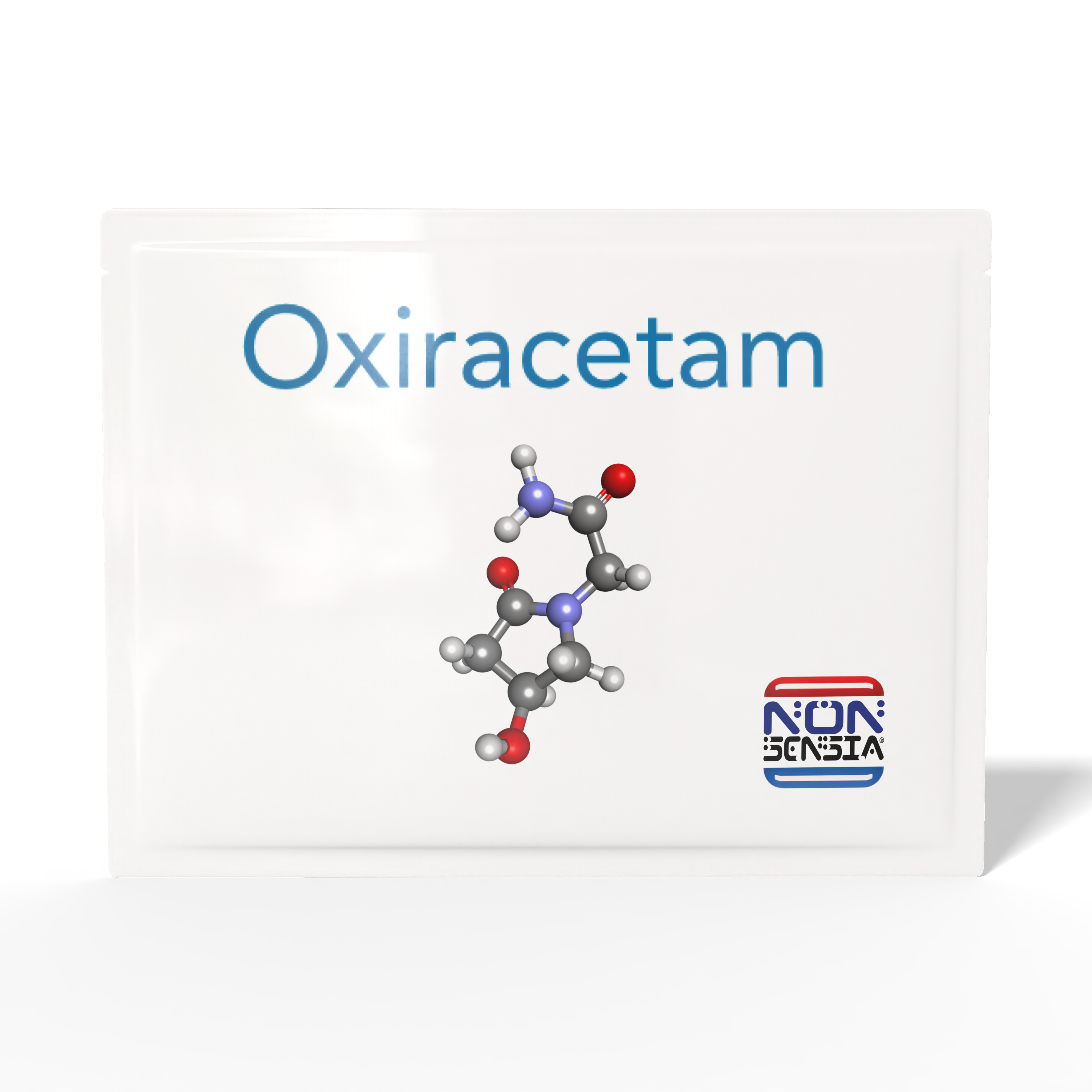
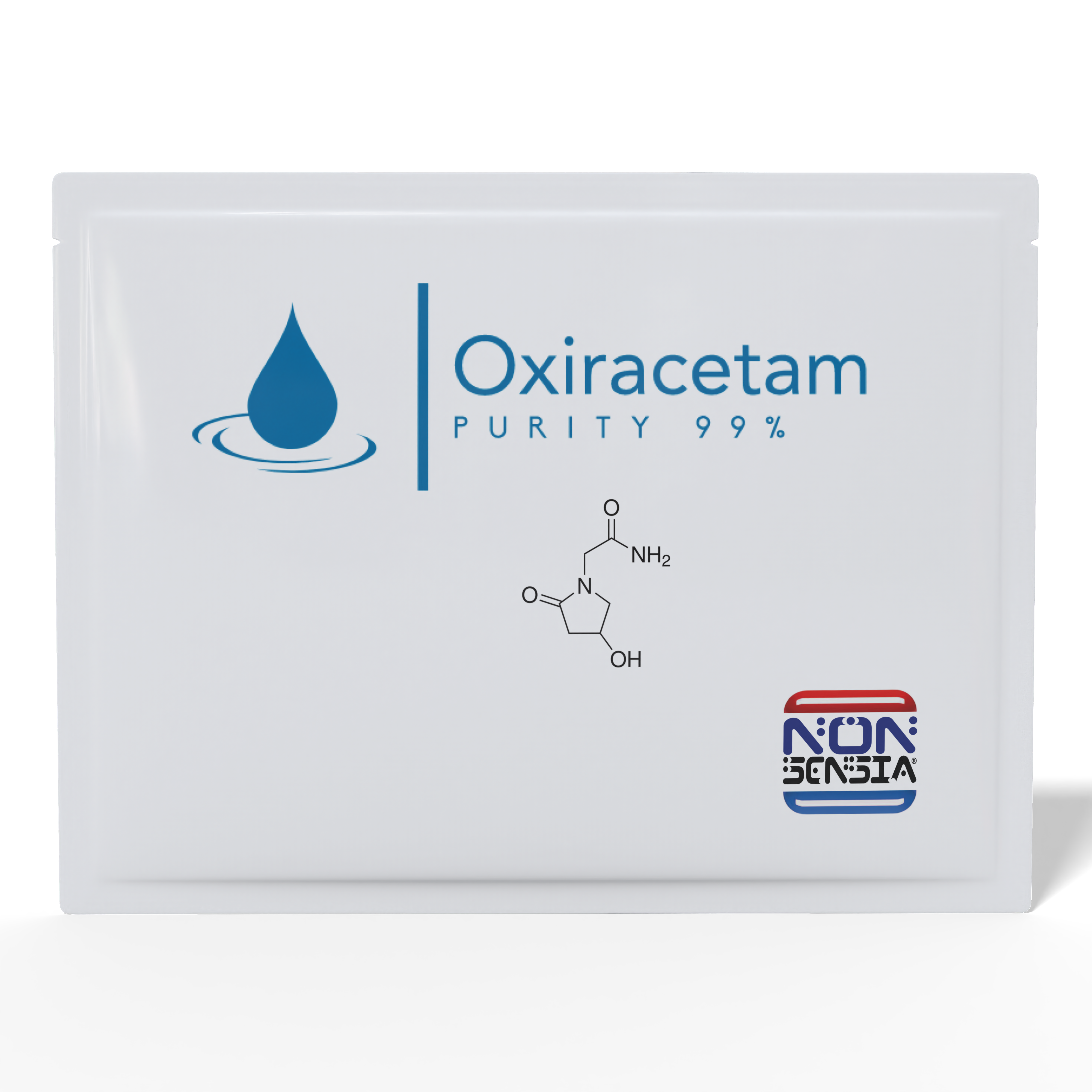
Oxiracetam ≥99% HPLC – Analytical Reference Standard, 1000 mg | CAS 62613-82-5
34,72 zł
Oxiracetam Reference Standard — CAS 62613-82-5, 2-(4-hydroxy-2-oxopyrrolidin-1-yl)acetamide, 1000 mg
Small, strongly polar hydroxy-lactam acetamide supplied for chromatographic identity, purity and chiral method-development work, with the stereochemical position of its registry record stated openly rather than assumed. Laboratory reagent and analytical reference material only — not for human or animal consumption, and not a medicinal product.
- Read this first — the registry record has no configuration in it: quoted verbatim, 0 defined and 1 undefined atom stereocentre, 0 defined and 0 undefined bond stereocentres, InChIKey ending
-UHFFFAOYSA-N. Undefined is not the same statement as racemic: one is the absence of a composition claim, the other is a falsifiable one - Net quantity: 1000 mg
- CAS / EC / CID / UNII: 62613-82-5 · 636-370-0 · PubChem 4626 · P7U817352G; deprecated CAS 68567-97-5 still travels in the record
- Formula / mass: C6H10N2O3 · 158.16 g·mol−1 · monoisotopic 158.06914219 Da
- Three CAS numbers, filed on each other’s records: 62613-82-5 (undefined), 68252-28-8 (4R), 88929-35-5 (4S). Each has been deposited as a synonym on a record it does not belong to, and one record carries (±)-Oxiracetam and (R)-(+)-Oxiracetam at the same time. Only the full InChIKey second block separates them cleanly
- Almost no analytical handles: XLogP3-AA −2.2 and TPSA 83.6 Å2 — the most water-preferring entry of its family, so it leaves a C18 column with the injection solvent. No aromatic ring, no ionisable group, no deposited UV spectrum; published methods detect at 210–214 nm, where the mobile phase sets the floor
- The degradant hides under the isotope peak: amide hydrolysis gives 4-hydroxy-2-oxo-1-pyrrolidineacetic acid at 159.05315777 Da — 0.98402 Da from the parent and only 0.01934 Da from the parent’s own 13C peak. Separating them by mass needs roughly 8,300 resolving power; the published method uses distinct fragment transitions instead
- Hydrate question, answered both ways: no hydrate of oxiracetam exists in the compound registry (measured, with amoxicillin trihydrate and quercetin dihydrate as working controls) — but a pentahydrate does exist in the crystallographic literature, as an S-oxiracetam·MgCl2·5H2O ionic cocrystal. This article is the anhydrous free molecule: charge 0, one covalently bonded unit
- Hygroscopic, and documented as such: moisture resistance was the stated purpose of a published cocrystal programme on this compound. Batch water content belongs in any quantitative calculation, and a cold container must reach room temperature before the seal is broken
- No experimental-properties section exists in the registry record — no melting point, no measured solubility, and no specific rotation for a compound whose whole identity question is configuration. Figures for melting point and solubility circulate in commercial listings; they are not registry values and are not repeated here
- Hazards and listings: Warning — H315, H319, aggregated from just 2 notifications, while the (4R) record, from a single notification, adds H335; no CLP Annex VI harmonised entry for either. Not on the WADA 2026 list — measured with a same-family positive control that fires, since fonturacetam (4-phenylpiracetam) does appear on that document
Every unit ships with lot documentation. The full registry set for all four records sharing this connectivity, the identity traps in detail, the arithmetic behind the isotope-peak collision, the methods that resolve configuration and the ones that cannot, the solid-form and moisture literature, spectral coverage and its gaps, regulatory position measured per jurisdiction with controls, and 40 cited sources are set out below.
Quick Payment
100% New
Fast Delivery
- Additional Information
Product classification — read before ordering. This item is a chemical reagent and analytical reference material. It is not a medicinal product, dietary supplement, food, feed, novel food or cosmetic, and it is not intended for human or animal consumption or for any in-vivo administration whatsoever. It is supplied exclusively to laboratories, research institutions and professional users for in-vitro analytical, chromatographic and method-development work. Scientific findings summarised on this page describe substances investigated in published laboratory and clinical research; they are reported here as bibliographic facts about that literature and are not product claims, dosage guidance, or a recommendation of any use of this reagent.
The registry record that carries the name of this substance has no configuration in it. Read sections 4 and 5 before ordering. Quoted verbatim from the record titled Oxiracetam [1]: defined atom stereocentre count 0, undefined atom stereocentre count 1, defined bond stereocentre count 0, undefined bond stereocentre count 0. Its InChIKey ends -UHFFFAOYSA-N, the suffix that means no stereochemistry recorded. The same record carries, among its own synonyms, both (±)-Oxiracetam and (R)-(+)-Oxiracetam — a racemate name and a single-enantiomer name filed against one stereochemically blank entry. Two further records hold the resolved forms, each with its own CAS number, and the published literature reports that they are not interchangeable: in rats, the same quantity of the (S) form delivered as the pure enantiomer gave roughly twice the exposure it gave when delivered inside the racemate [31]. This page is longer than most because that single undefined stereocentre propagates into every other section: into what a certificate can state, into which chromatographic method is capable of checking it, and into what a mass spectrum can and cannot tell you.
Key facts
- Substance
- Oxiracetam (INN, BAN, JAN; oxiracetamum) — 2-(4-hydroxy-2-oxopyrrolidin-1-yl)acetamide
- CAS
- 62613-82-5 (unresolved substance); deprecated CAS 68567-97-5 [1]
- Enantiomer CAS
- 68252-28-8 for (4R) [2]; 88929-35-5 for (4S) [3]
- EC / ECHA
- 636-370-0 · registry entry 100.164.173 [7]; the (4R) form holds a separate entry, the (4S) form holds none (section 13)
- PubChem CID
- 4626 [1]
- UNII
- P7U817352G
- Formula
- C6H10N2O3
- Molecular mass
- 158.16 g·mol−1
- Monoisotopic mass
- 158.06914219 Da
- InChIKey
IHLAQQPQKRMGSS-UHFFFAOYSA-N- Stereocentres
- 0 defined, 1 undefined — quoted verbatim from the record [1]
- Polarity
- XLogP3-AA −2.2; topological polar surface area 83.6 Å2 — the most water-preferring entry of its structural family (section 5)
- Chromophore
- None beyond two carbonyls; published methods detect at 210–214 nm [21][23]
- Experimental properties
- No such section exists in the registry record — no melting point, no measured solubility, no specific rotation (section 9)
- Moisture
- Hygroscopic; the published remedy was cocrystallisation, not drying [24]
- GHS
- Warning — H315, H319, aggregated from 2 notifications; no CLP Annex VI entry (section 12)
- WADA 2026
- Not listed; measured with a same-class positive control that fires (section 13) [10]
- Pack
- 1000 mg
On this page
- What this material is
- Identity and registry codes
- Identity traps: four ways to order the wrong thing
- Structure and stereochemistry
- The central problem: a molecule with no analytical handles
- The degradant that hides under the isotope peak
- Methods that work, methods that fail, and why
- Solid form, water, and the pentahydrate
- Physicochemical data, and the section that does not exist
- Spectra: what exists, and where it is filed
- What the enantiomer literature reports
- Hazard classification: three records, three answers
- Regulatory status
- Handling, storage and documentation
- What we certify and what we do not
- Terms of supply
- Questions and answers
1. What this material is
This page describes oxiracetam supplied as an analytical reference material: a weighed quantity of a single identified chemical substance, intended to serve as the point of comparison against which another sample is measured. Everything a laboratory later reports about an unknown — that a peak is this compound, that a batch conforms, that an impurity sits below a threshold — inherits the identity, the purity and the stability of one vial.
For most reagents that sentence is administrative. Here it opens a specific and unusually sharp problem, and the problem has three layers that reinforce one another.
The first layer is stereochemical. The molecule carries one stereogenic carbon, at ring position 4. The registry record that bears the substance name records that centre as undefined — not as R, not as S, and not as an explicit fifty-fifty mixture, but as unspecified [1]. Two further records hold the resolved forms and carry their own CAS numbers and their own literatures [2][3]. Configuration is therefore not a detail that a certificate may omit for tidiness; it is the axis along which this compound's records divide.
The second layer is that the usual instruments cannot see that axis, and for this molecule they can barely see the molecule at all. Oxiracetam has no aromatic ring, no extended conjugation, no basic nitrogen worth protonating and no acidic proton in the ordinary chromatographic window. Its computed partition coefficient is −2.2, the lowest in its structural family, and its polar surface area is the highest. Published quantitative methods detect it at 210 and 214 nm [21][23] — wavelengths at which the mobile phase, not the analyte, sets the practical floor. Section 5 works through what follows from that, and the conclusion is uncomfortable: a great many of the routine confirmations that would settle an identity question for an aromatic compound simply do not apply here.
The third layer is that the compound's principal hydrolysis product sits 0.98402 Da from the parent — closer to the parent than the parent's own carbon-13 isotope peak, and separated from it by 0.01934 Da. Section 6 sets out the arithmetic and the resolving power it demands. The short version is that a nominal-resolution instrument reports the degradant and the parent's isotopologue at the same place, which is why the one published method that quantifies both had to be built around distinct fragment transitions rather than around accurate mass [30].
Those three layers are why this card runs long. None of them is exotic chemistry; all of them are consequences of a small, polar, chiral molecule being handled with instruments designed for larger, more absorbing, more retentive ones. For the general terms on which this shop supplies reference materials, the surrounding reference standards category collects the rest of the catalogue on the same basis.
2. Identity and registry codes
Every identifier below is quoted from a named public registry. Where a registry holds more than one record for structures sharing this connectivity, that fact is stated rather than resolved silently, because for this compound the multiplicity is the point rather than an inconvenience.
| Preferred name | Oxiracetam (INN, BAN, JAN); Latin oxiracetamum |
|---|---|
| IUPAC name | 2-(4-hydroxy-2-oxopyrrolidin-1-yl)acetamide |
| CAS index style | 1-Pyrrolidineacetamide, 4-hydroxy-2-oxo- |
| CAS Registry Number | 62613-82-5 (six independent depositors agree on this value in the record) [1] |
| Deprecated CAS | 68567-97-5 — carried in the record as a withdrawn identifier [1] |
| EC number | 636-370-0 |
| ECHA registry entry | 100.164.173 [7] |
| PubChem CID | 4626 [1] |
| UNII (FDA) | P7U817352G |
| ChEBI | CHEBI:134788 |
| ChEMBL | CHEMBL36633 |
| DrugBank | DB13601 |
| KEGG | D07346 |
| DSSTox | DTXSID9045180 |
| HMDB | HMDB0255986 |
| NCI Thesaurus | C66271 |
| Nikkaji | J19.582K |
| MDL number | MFCD00242951 |
| Wikidata | Q415099 |
| ATC code | N06BX07, within ATC class N06B; an ATCvet code QN06BX07 exists in parallel [1] |
| Development codes | ISF 2522, CGP 21690, CGP 21690E, CT 848 |
| Trade names in the record | Neuromet, Neuractiv, Oriest, Neupan, Senex — historical entries in the synonym set, not statements about any current authorisation |
Machine-readable descriptors
| Canonical SMILES | C1C(CN(C1=O)CC(=O)N)O |
|---|---|
| Isomeric SMILES | C1C(CN(C1=O)CC(=O)N)O — identical to the canonical string, because there is no stereochemistry in this record to encode |
| InChI | InChI=1S/C6H10N2O3/c7-5(10)3-8-2-4(9)1-6(8)11/h4,9H,1-3H2,(H2,7,10) — note the absence of any /t, /m or /s layer |
| InChIKey | IHLAQQPQKRMGSS-UHFFFAOYSA-N |
| XLogP3-AA | −2.2 |
| Topological polar surface area | 83.6 Å2 |
| Hydrogen-bond donors / acceptors | 2 / 3 |
| Rotatable bonds | 2 |
| Heavy atoms / complexity | 11 / 192 |
| Formal charge / covalent units | 0 / 1 — free molecule, no counter-ion, no solvate in the registered entity |
The second row of that table deserves a second reading. For most chiral substances the canonical and isomeric SMILES strings differ, and the difference is exactly the stereochemistry: the isomeric string carries [C@H] or [C@@H] where the canonical one carries a bare C. Here the two strings are character-for-character the same. There is nothing for the isomeric form to add. Any system that imports this record and congratulates itself on having captured the stereochemistry has captured nothing, because none was offered.
The InChI string tells the same story from the other end. A fully specified chiral InChI ends with layers reading something like /t16-,21-/m1/s1. This one ends at the hydrogen layer. Compare the descriptor set of tadalafil, where two centres are fully specified and the stereo layer is present and load-bearing, or of noopept, which carries one defined centre. Oxiracetam sits in a third category: chiral, registered, and blank.
3. Identity traps: four ways to order the wrong thing
Four distinct confusions are live for this compound. Each is documented rather than hypothetical, and each was checked against the records named.
Trap one: three CAS numbers that appear on one another's records
The three substances below are chemically distinct and separately registered.
| Record | Configuration | CAS | InChIKey |
|---|---|---|---|
| CID 4626, titled Oxiracetam [1] | Undefined — 0 defined, 1 undefined | 62613-82-5 | IHLAQQPQKRMGSS-UHFFFAOYSA-N |
| CID 3051965 [2] | (4R) — 1 defined, 0 undefined | 68252-28-8 | IHLAQQPQKRMGSS-SCSAIBSYSA-N |
| CID 6603951, titled (S)-Oxiracetam [3] | (4S) — 1 defined, 0 undefined | 88929-35-5 | IHLAQQPQKRMGSS-BYPYZUCNSA-N |
| CID 71751359 [4] | Undefined, carbon-13 and nitrogen-15 labelled | 1346602-09-2 | IHLAQQPQKRMGSS-LORYZXSWSA-N |
Now read the synonym sets, which is where the trouble lives:
- The stereochemically undefined record carries (±)-Oxiracetam, (±)-4-Hydroxy-2-oxo-1-pyrrolidineacetamide, Oxiracetam(Random Configuration) and (R)-(+)-Oxiracetam among its depositor-supplied synonyms [1]. One record, three mutually exclusive descriptions of what is in the bottle.
- The (4R) record carries, in its removed-synonym history, both R-(+)-Oxiracetam and S-(−)-Oxiracetam, together with the CAS numbers 62613-82-5 and 88929-35-5 — that is, the racemate's number and its own mirror image's number [2].
- The (4S) record carries the depositor-supplied synonym Oxiracetam (mix) — a mixture name sitting on a single-enantiomer record — and, in its removed-synonym history, the racemate CAS 62613-82-5 [3].
What this means when ordering. A CAS number is normally the identifier that survives translation between a purchase order, an inventory system and a certificate. For this compound the three relevant numbers have each been deposited as a synonym on a record they do not belong to. A search that resolves a name to a CAS, or a CAS to a structure, can therefore land on the wrong stereochemical entity while every step of the lookup appears to have succeeded. The only identifiers that do not suffer this are the full InChIKeys in the table above, whose second blocks differ: -UHFFFAOYSA-, -SCSAIBSYSA- and -BYPYZUCNSA-. Those three fragments are the shortest reliable way to say which of the three you mean. The shared first block, IHLAQQPQKRMGSS, is common to all four records and to the labelled analogue, so any system that indexes on the skeleton alone has already merged them.
Trap two: the levorotatory name and the sinister descriptor are different systems
The single-enantiomer development programme reported in the clinical literature designates its substance L-oxiracetam [39][40], while the analytical and pharmacological work from the same body of research designates the eutomer (S)-oxiracetam [22][33]. Those are two different naming systems: L and D describe the sign of optical rotation or a relative configurational convention, while R and S describe absolute configuration by the Cahn–Ingold–Prelog rules. They coincide often enough that people treat them as synonyms, and they are not synonyms.
The registry synonym sets do supply the bridge: R-(+)-Oxiracetam and S-(−)-Oxiracetam both appear in the (4R) record's history [2], assigning the dextrorotatory sign to the (R) form and the levorotatory sign to the (S) form. On that basis L-oxiracetam and (S)-oxiracetam denote the same substance. We state the inference and its basis rather than the conclusion alone, because — as section 9 records — no measured specific rotation for this compound appears anywhere in the registries consulted for this page. The bridge rests on a synonym, not on a number.
Trap three: the missing hydrate, and the hydrate that does exist
Searches of the compound registry for oxiracetam hydrate, oxiracetam monohydrate, oxiracetam hemihydrate, (S)-oxiracetam monohydrate and (R)-oxiracetam monohydrate all return nothing. Those zeros were established against working positive controls on the same interface: amoxicillin trihydrate resolves to a record with a covalently bonded unit count of 4, and quercetin dihydrate to one with a count of 3. The search mechanism finds hydrates when hydrates exist. There is no registered hydrate of oxiracetam.
That is not, however, the end of the matter, because a hydrate of a different kind is in the crystallographic record. Shemchuk and colleagues cocrystallised the racemate with pharmaceutically acceptable inorganic salts and obtained an ionic cocrystal pentahydrate, reported as an S-oxiracetam·MgCl2·5H2O / R-oxiracetam·MgCl2·5H2O conglomerate [25]. Five waters per formula unit, and the enantiomers separating themselves into distinct crystals in the process. Section 8 returns to what that does and does not mean for a reference portion; the identity point here is narrower and worth stating plainly: the phrase “oxiracetam pentahydrate” describes something real in the literature and something that is not this substance. The article on this page is the anhydrous free molecule, formal charge zero, one covalently bonded unit [1].
Trap four: the family is a set of single-position edits
Oxiracetam is piracetam plus one oxygen. The arithmetic is exact: 158.06914219 minus 142.07422757 equals 15.99491462, one oxygen atom to eight decimal places [1][6]. A hydroxyl at ring position 4 is the entire structural difference, and it is also the difference between an achiral molecule and a chiral one.
| Compound | Formula | Monoisotopic mass (Da) | Defined / undefined atom stereocentres | XLogP3-AA |
|---|---|---|---|---|
| Oxiracetam | C6H10N2O3 | 158.06914219 | 0 / 1 | −2.2 |
| Piracetam | C6H10N2O2 | 142.07422757 | 0 / 0 | −1.3 |
| Levetiracetam | C8H14N2O2 | 170.10552769 | 1 / 0 | −0.3 |
| Fonturacetam | C12H14N2O2 | 218.10552769 | 0 / 1 | 0.1 |
| Nefiracetam | C14H18N2O2 | 246.13682782 | 0 / 0 | 1.4 |
| Aniracetam | C12H13NO3 | 219.08954328 | 0 / 0 | 1.6 |
| Pramiracetam | C14H27N3O2 | 269.21032711 | 0 / 0 | 0.8 |
| Coluracetam | C19H23N3O3 | 341.17394160 | 0 / 0 | 2.4 |
Read the fourth column down the table. Most members of this family are achiral, and for them a stereochemical certificate statement would be meaningless: aniracetam, pramiracetam and coluracetam have no stereocentre to resolve, and any optical rotation quoted for them is a claim the structure cannot support. Exactly two members carry a centre, and they carry it differently: levetiracetam's is defined in its registry record, which is what a resolved substance looks like, while oxiracetam's and fonturacetam's are undefined. The contrast is instructive precisely because all three are small ring-substituted acetamides. Being chiral does not make a record ambiguous. Being chiral and unresolved does.
The final column is the other axis of the family, and it is the one section 5 is built on. Oxiracetam is not merely the most polar entry in this table; it is more than a full log unit more water-preferring than the parent scaffold and nearly four log units removed from coluracetam. That hydroxyl bought a stereocentre and a hydrogen-bond donor at the same time, and the analytical consequences of the second are as large as the consequences of the first.
4. Structure and stereochemistry
Oxiracetam is a five-membered γ-lactam — a pyrrolidin-2-one — carrying a secondary hydroxyl at ring position 4 and an acetamide arm, –CH2–C(=O)–NH2, on the ring nitrogen. C-4 bears a hydrogen, a hydroxyl, and two different ring paths, and is therefore stereogenic. The registry states the consequences of that without ambiguity, and the four counters are quoted here verbatim because they are the shortest complete statement of the compound's stereochemical position [1]:
| Defined atom stereocentre count | 0 |
|---|---|
| Undefined atom stereocentre count | 1 |
| Defined bond stereocentre count | 0 |
| Undefined bond stereocentre count | 0 |
| Isotope atom count | 0 |
| Formal charge | 0 |
| Covalently bonded units | 1 — free molecule, no counter-ion |
| InChI stereo layer | None present |
Undefined is not the same as racemic
This distinction is the single most useful thing on this page for anyone writing a specification, and it is routinely collapsed.
Racemic is a composition claim: it asserts that the material contains the two enantiomers in equal amounts, and it is falsifiable — a chiral separation with an enantiomeric excess of 8 % refutes it. Undefined is the absence of a claim: it says the registered entity is the connectivity, and that the configuration at C-4 is not part of what has been registered. A material that is 97 % (S) is perfectly consistent with an undefined record. So is a material that is 50:50. So is one that was 50:50 when it left the plant and is no longer.
The two are conflated because the racemate CAS number 62613-82-5 is the one attached to the undefined record, and because (±)-Oxiracetam sits in its synonym list. But so does (R)-(+)-Oxiracetam, and so does Oxiracetam(Random Configuration) [1]. The record does not adjudicate between them. Only a measurement does, and section 7 lists the measurements capable of making it.
Why this matters more here than for most chiral reagents. Where a compound is supplied as a resolved single enantiomer, the certificate states a configuration and an enantiomeric excess, and a laboratory can decide whether the number is adequate. Where a compound is supplied as a racemate, the racemate is often exactly what is wanted — it is the only sample that guarantees two peaks of comparable area, which is the condition under which the resolution, the selectivity and the accuracy of an enantiomeric-excess measurement on a chiral column can be established at all. Feed a candidate chiral method a single enantiomer and a total separation failure looks identical to a clean result. That legitimate use is precisely why the composition needs to be stated rather than inherited from a registry field that does not state it.
Where oxiracetam sits among the chiral materials in this catalogue
The comparison across a catalogue sharpens the point. Tadalafil carries two defined centres and all four of its stereoisomers hold separate registry records — a harder problem in one sense, but a fully documented one, because every record says what it is. Alpha-GPC carries one defined centre and is the subject of a naming collision in which the opposite enantiomer's record carries the product's common name; oxiracetam's version of that collision is worse, because the name has landed on a record with no configuration at all. CDP-choline carries four defined centres and a computed logP of −4, which makes it the only entry in this catalogue more water-preferring than the compound on this page. At the other end, chlodantane, apigenin and mebicar are achiral, and for them the entire content of sections 3, 4 and 7 is inapplicable.
5. The central problem: a molecule with no analytical handles
Set the stereochemistry aside for a moment. Even for an identity question that ignores configuration entirely, oxiracetam is a difficult analyte, and the difficulty is legible directly in the computed descriptors.
| Descriptor | Value [1] | Consequence |
|---|---|---|
| XLogP3-AA | −2.2 | On a conventional C18 column with a normal organic gradient the analyte elutes at or near the void volume. Retention has to be engineered rather than assumed. |
| Topological polar surface area | 83.6 Å2 | Highest in its structural family. The molecule prefers water over almost any stationary phase built for lipophilic retention. |
| Hydrogen-bond donors / acceptors | 2 / 3 | Retention, peak shape and crystal packing are all governed by hydrogen bonding. This is the property that section 8 turns into a moisture problem. |
| Formal charge; ionisable groups | 0; none in the usable pH range | Neither a basic amine nor a carboxylic acid. Mobile-phase pH, the most familiar troubleshooting axis in reversed-phase work, does almost nothing here. Ion-pairing has nothing to pair with. |
| Aromatic rings; conjugation | None; none beyond two isolated carbonyls | No usable chromophore. Detection runs in the end-absorption region, where the mobile phase sets the limit. |
| Heavy atoms / complexity | 11 / 192 | A small, simple molecule. Fragmentation yields few structurally informative ions, which limits what tandem mass spectrometry can add. |
The wavelength problem, stated concretely
Two independently published, independently validated methods for this compound and its single enantiomer both detect in the deep ultraviolet: the enantioselective separation of Zhang and colleagues monitors at 214 nm [21], and the related-substance method of Wang and colleagues at 210 nm [23]. Those are not stylistic choices. They are where the only absorbance is.
Detection at 210–214 nm has three practical consequences that anyone qualifying this material should expect rather than discover. First, the mobile phase absorbs there too, so solvent purity, additive concentration and even dissolved oxygen move the baseline. Second, most organic impurities absorb there as well, so a chromatogram at 210 nm is crowded in a way that a chromatogram at 254 nm is not — selectivity has to come from the separation, because it will not come from the detector. Third, and most relevant to a reference material, a peak at the right retention time in the deep ultraviolet is weak evidence of identity. It is consistent with the analyte and with a great many other things.
The contrast with a strongly absorbing reference material is instructive. Apigenin is a flat conjugated flavone with an intense, structured ultraviolet spectrum; a diode-array trace across its absorption maxima is itself an identity check. Methylene blue absorbs so strongly in the visible that its concentration can be read by eye. Oxiracetam offers nothing comparable, and no ultraviolet spectrum for it has been deposited in the public record at all (section 10).
The retention problem
The published methods show three different answers to the same difficulty, and the spread is itself informative:
| Method | Approach | Source |
|---|---|---|
| Serum and urine assay | Reversed-phase determination in aqueous matrices, established at the originating laboratory | [27] |
| Plasma and urine assay | Column switching — a second column used to trap and refocus an analyte that will not stay on the first | [28] |
| Formulation assay with impurities | Separation of the parent from its impurities and from piracetam in the same run | [29] |
| Related substances in bulk material | An amino-bonded column with a 95:5 acetonitrile–water mobile phase acidified to pH 2.0 — hydrophilic-interaction conditions, the inverse of a reversed-phase gradient | [23] |
| Enantiomer separation in plasma | Normal phase: hexane–ethanol–trifluoroacetic acid, 78:22:0.1, on a polysaccharide chiral column | [21] |
| Enantiomer quantification in plasma, urine and faeces | Chiral column with a methanol–acetonitrile mobile phase, 15:85, containing 0.3 ‰ formic acid; reported resolution greater than 3.2 | [22] |
Column switching, hydrophilic interaction, normal phase and non-aqueous chiral elution are four different answers to one difficulty: a generic reversed-phase gradient gives this molecule almost no retention. Reversed-phase separations of it do exist — the serum and urine assay in the first row is one [27], and the tandem mass-spectrometric method discussed in section 6 runs on a C18 column [30] — but each is built around the retention problem rather than around a stock gradient. A laboratory that starts from a generic C18 method and a water–acetonitrile gradient should expect the analyte close to the injection solvent. The molecular-modelling study of Camilleri and colleagues addressed exactly this question for oxiracetam and its close structural neighbours, setting computed behaviour against observed chromatographic retention rather than reporting a retention time and stopping [20]. It remains the most useful starting point for anyone selecting a phase.
The compound argument for holding a certified standard. Weak retention, deep-ultraviolet detection and a simple fragmentation pattern are three independent reasons why an identity assignment for this molecule cannot rest on any single observation. That is not a reason to distrust the analysis; it is a reason for the comparison material to be the thing you are most confident about. Every method in the table above is a relative method: it establishes where the analyte comes out and how big the peak is, relative to something. If the something is wrong — wrong compound, wrong configuration, wrong water content — the method reproduces the error faithfully and passes its own suitability checks while doing so.
6. The degradant that hides under the isotope peak
The primary amide on the acetamide arm hydrolyses to a carboxylic acid. The product is 4-hydroxy-2-oxo-1-pyrrolidineacetic acid, abbreviated HOPAA in the analytical literature, and it is a registered substance in its own right [5]. Wan and colleagues built and validated a method that quantifies the parent and this degradant simultaneously in plasma, which is the clearest published acknowledgement that the pair travel together [30].
| Property | Oxiracetam [1] | HOPAA [5] |
|---|---|---|
| Formula | C6H10N2O3 | C6H9NO4 |
| Monoisotopic mass | 158.06914219 Da | 159.05315777 Da |
| Average mass | 158.16 g·mol−1 | 159.14 g·mol−1 |
| XLogP3-AA | −2.2 | −1.6 |
| Topological polar surface area | 83.6 Å2 | 77.8 Å2 |
| Defined / undefined atom stereocentres | 0 / 1 | 0 / 1 |
| InChIKey | IHLAQQPQKRMGSS-UHFFFAOYSA-N | BMOXYLBGPIDAAN-UHFFFAOYSA-N |
The arithmetic
Subtracting the two monoisotopic masses gives the mass of the transformation: 159.05315777 − 158.06914219 = 0.98401558 Da, which is the replacement of an NH by an O. Now compare that with the mass difference between a molecule and its own carbon-13 isotopologue, 1.00335484 Da. The parent's A+1 peak therefore falls at 159.07249703 Da, and the degradant falls at 159.05315777 Da.
The gap between the degradant and the parent's own isotope peak is 0.01934 Da. Separating them at the protonated masses, near m/z 160.06, requires a resolving power of roughly 8,300. A single quadrupole at unit resolution cannot do it; neither can a triple quadrupole running a full scan. Both will report a single feature at nominal m/z 160 whose intensity is the sum of two chemically different contributions — the natural carbon-13 abundance of the parent, which is a fixed and predictable fraction, and the degradant, which is not fixed and is precisely what you wanted to measure.
This is why the published method does not attempt to resolve them by mass at all. Wan and colleagues used multiple-reaction monitoring with distinct transitions: m/z 159.00 → 141.94 for the parent and 159.95 → 113.98 for the degradant, with piracetam as internal standard at 142.98 → 125.97 [30]. At unit resolution the degradant's precursor window also admits the parent's carbon-13 isotopologue; the product ions of the two are different. Selectivity comes from the second mass filter rather than from resolving power in the first. That is sound analytical engineering, and it is also an admission that the direct measurement was not available.
Two further observations follow, and both matter for a stored reference portion.
First, the degradant is also chiral, with the same undefined status. Its registry record reports 0 defined and 1 undefined atom stereocentre [5], and its title in the record is the racemic index form. Hydrolysis does not touch C-4, so an enantiomerically enriched parent yields a correspondingly enriched acid. A stereochemical measurement made on a partly hydrolysed sample is therefore measuring two chiral species at once, and a chiral method that does not also separate the acid will read their combined behaviour.
Second, the internal standard chosen in that work is piracetam [30], which differs from the analyte by exactly one oxygen, 15.99491462 Da [1][6]. It is a good choice for the reason a good internal standard is always chosen — near-identical chemistry, distinguishable mass — and it repeats the lesson of the labelled analogue in the next paragraph. When a technique cannot separate two things, the working solution is to make them differ in a dimension the technique can see.
The record that exists because of this problem
A fourth record shares this connectivity: oxiracetam-13C2,15N [4]. It carries two carbon-13 atoms and one nitrogen-15 atom, an isotope atom count of 3 against the parent's 0, and a monoisotopic mass of 161.07288675 Da — greater by 3.00374456 Da. Three mass units of separation is a comfortable margin at nominal resolution, and that is the entire reason the compound was synthesised. It exists to be countable alongside the analyte in an instrument that cannot otherwise tell them apart.
Note what the labelled analogue does not fix. Its stereocentre is undefined too — 0 defined, 1 undefined, exactly like the parent [4]. A labelled internal standard corrects for recovery, injection volume and matrix suppression. It cannot correct for configuration, because it shares the analyte's stereochemical blindness. Quantitative rigour and identity rigour are separate problems and need separate controls. The same point holds for the deuterated internal standards used with tadalafil and for isotopically labelled standards generally.
7. Methods that work, methods that fail, and why
Three families of technique are documented as capable of answering the configuration question for this compound. Each has a published method. Each requires something of known configuration to compare against, which returns the argument to the reference material.
Chiral chromatography, and the fact that it was solved early
Direct chromatographic separation of the oxiracetam enantiomers was demonstrated by Camilleri, Murphy and Thorpe in 1990 [19]. That date is worth registering: the separation has been available for the whole of the compound's modern analytical history, which means a laboratory reporting an unresolved result today is reporting a choice rather than a limitation.
Modern practice runs on polysaccharide-derived chiral stationary phases, and the two most fully described methods take opposite approaches to the mobile phase:
- Normal phase. Zhang and colleagues achieved baseline resolution on a polysaccharide column with hexane–ethanol–trifluoroacetic acid, 78:22:0.1, at 1.0 mL·min−1, with ultraviolet detection at 214 nm and linearity from 0.50 to 100 µg·mL−1 for both enantiomers [21].
- Polar organic mode with mass-spectrometric detection. Wang and colleagues used a methanol–acetonitrile mobile phase, 15:85, containing 0.3 ‰ formic acid at 0.9 mL·min−1, running for six minutes and reporting resolution greater than 3.2, over the same 0.5 to 100 µg·mL−1 range [22].
Both are non-aqueous or nearly so, which is the practical answer to section 5: a molecule that will not stay on a reversed-phase column stays perfectly well on a polysaccharide phase run in a solvent system where hydrogen bonding, not partitioning, does the retaining.
Achiral chromatography, and exactly what it does not tell you
The related-substance method of Wang and colleagues resolves the single enantiomer from four related impurities on an amino-bonded column under hydrophilic-interaction conditions, with the impurity structures characterised by mass spectrometry [23]. It is the most complete impurity method published for this scaffold, and a laboratory establishing a purity profile has a validated starting point rather than a blank sheet.
It is also, by construction, blind to enantiomeric composition. Enantiomers have identical retention on an achiral phase. A material that is 100 % (S), a material that is 50:50 and a material that is 100 % (R) give the same chromatogram, the same area-normalised purity figure and the same conclusion. An assay of “99.7 % by area normalisation” on an achiral column is a true statement that carries no information whatever about the axis this page is about. That is not a criticism of area normalisation; it is a statement about what it measures.
Mass spectrometry: what it settles and what it cannot
Electrospray ionisation of this compound gives a protonated molecule at nominal m/z 159 and a small set of product ions [30]. Those observations settle connectivity, and connectivity is a real and useful result. They settle nothing about configuration, because the two enantiomers are identical in every mass-spectrometric respect: same formula, same monoisotopic mass to the eighth decimal place, same fragmentation, same collision cross-section. No instrument, at any resolving power, separates a pair of enantiomers on mass alone.
The chiral method of Wang and colleagues [22] is the correct architecture for this reason: the mass spectrometer never sees an enantiomer question. The chiral column resolves the pair in time, and the mass spectrometer then quantifies two chromatographically separated peaks. Mass spectrometry supplies sensitivity and selectivity against the matrix; the column supplies the stereochemistry. Removing the chiral column and keeping the detector produces a method that looks modern, quantifies beautifully, and answers the wrong question.
Crystallisation as a separation method
The most unusual entry in this list is not a chromatographic technique at all. Shemchuk and colleagues achieved chiral resolution of the racemate by cocrystallisation with an inorganic salt: cocrystallising with magnesium chloride produced a conglomerate of separate S-oxiracetam·MgCl2·5H2O and R-oxiracetam·MgCl2·5H2O crystals, with ternary phase diagrams constructed to establish the compositions over which those ionic cocrystals are the only stable phases in suspension [25]. The same work grew and solved single crystals of the resolved S form.
A conglomerate is a mechanical mixture of enantiopure crystals rather than a crystal containing both enantiomers, which is why the separation works: the two forms build different crystals, and different crystals can in principle be separated. For a reference material this has a narrower and more immediate implication than the resolution itself. Crystallisation conditions can, for this compound, change the enantiomeric composition of what comes out of the flask. A recrystallisation performed to raise chemical purity is not, for a conglomerate-forming system, guaranteed to be stereochemically neutral.
What every one of these methods needs. Chiral chromatography needs a standard to establish which peak is which; elution order is a property of the column, the mobile phase and the temperature, not a law of nature. Any enantiomeric-excess figure needs a racemic sample to establish that the method can resolve the pair at all. The crystallisation route needs known material to identify which crystals are which. None of these techniques tells you which enantiomer you are holding without something of known configuration to compare against. That is what an analytical reference material is for, and it is why the composition statement on a certificate is not decoration.
8. Solid form, water, and the pentahydrate
The solid-state literature on this molecule is small, recent and almost entirely about one problem: the compound takes up water.
Wang, Chen and Lu addressed the point directly, in work whose stated purpose was enhancing the hygroscopic stability of the resolved S form via pharmaceutical cocrystals [24]. They prepared four cocrystals — the S form and the racemate, each with gallic acid and with 3,4-dihydroxybenzoic acid — and solved all four structures by single-crystal diffraction. In the gallic acid pair, two coformer molecules link two oxiracetam molecules through hydrogen bonds into a tetramer, and the tetramers assemble into sheets and then into a three-dimensional network. In the dihydroxybenzoic acid pair, the oxiracetam molecules form a one-dimensional helical chain, and the coformer links the chains into sheets. Their hygroscopic stability experiments reported that the resolved form's resistance to moisture uptake was much improved in the gallic acid cocrystal.
The premise of that entire programme is the fact a laboratory needs to know: the neat solid absorbs atmospheric water readily enough for it to be a formulation-level problem. That is not an inference from the hydrogen-bond count; it is the stated motivation of a published crystal-engineering study.
The crystallographic record, and what is missing from it
| Entry | Composition | Space group | Cell volume | Source |
|---|---|---|---|---|
| 4506722 | C13H16N2O8 — oxiracetam with gallic acid, 1:1 | P21 (Sohncke) | 1371.88 Å3 | [24] |
| 4506723 | C13H16N2O8 — same composition | P21/c (centrosymmetric) | 1375.10 Å3 | [24] |
| 4506724 | C13H16N2O7 — oxiracetam with 3,4-dihydroxybenzoic acid, 1:1 | C2 (Sohncke) | 1397.12 Å3 | [9][24] |
| Oxiracetam alone, in any form — not present under this name in the database searched | ||||
Two things in that table repay attention.
First, the two gallic acid entries have the same composition and near-identical densities, 1.589 and 1.586 g·cm−3, but different space groups. One is P21, a Sohncke group that can accommodate only one hand; the other is P21/c, which contains an inversion centre. A centrosymmetric space group maps every molecule onto its mirror image, so the oxiracetam content of the second structure cannot be a single enantiomer. That is a structural statement read directly off the deposited symmetry, not an interpretation of the authors' intent: the deposit set contains one enantiopure and one necessarily racemic form of the same cocrystal composition. It is a compact demonstration of the general point that the same molecular composition can be assembled from resolved or unresolved material, and that the difference is visible in the crystal even when it is invisible in the chromatogram.
Second, and more consequential for a certificate: every entry returned under this compound name in the database searched is a cocrystal. No structure of oxiracetam by itself appears there. That zero is a statement about this database and this search term, not about the crystallographic literature as a whole: Shemchuk and colleagues report that single crystals of the resolved S form were grown and its structure determined [25], and that structure is not among the three entries above. For a laboratory the practical consequence is narrower than “no structure exists” and still real — powder-diffraction identification of a batch's crystal form has no reference pattern for the plain substance in the open database consulted here, so a specification that hoped to name a polymorph has to source its reference pattern elsewhere and say where.
The pentahydrate, and why it is not this product
The ionic cocrystals of Shemchuk and colleagues carry five water molecules per formula unit: S-oxiracetam·MgCl2·5H2O and its mirror image [25]. This is the only stoichiometric hydrate in the literature for this compound, and it is a hydrate of a magnesium chloride ionic cocrystal rather than of oxiracetam. As section 3 records, the compound registry holds no hydrate record for oxiracetam at all, a zero established against working positive controls.
The most recent solid-form work extends the picture in a direction that matters for identity. Spoletti and colleagues showed that piracetam and oxiracetam form solid solutions — molecular, cocrystalline and ionic cocrystalline — in which the two closely related molecules occupy shared lattices across a composition range, with the resulting structure depending on the ratio between them [26]. They report that the structural diversity is controlled when the resolved S form is used in place of the racemate. Two implications follow directly. Structurally adjacent members of this family can co-crystallise with one another, so crystalline appearance is not a compositional statement. And the resolved and unresolved materials do not behave identically in the solid state, which is one more reason a certificate that is silent on configuration is silent about something that matters.
Three operational rules follow from the moisture behaviour. Gravimetric work is moisture-sensitive. A hygroscopic solid weighed in an uncontrolled atmosphere carries sorbed water onto the balance, and where the material anchors a quantitative calibration the batch water content belongs in the calculation rather than in a footnote. The container is part of the specification. A cold container opened in a warm room condenses water directly onto a solid that wants it; equilibrate the sealed container to ambient temperature before breaking the seal, which for this compound matters more than the storage temperature itself. Caking is a signal. A previously free-flowing powder that has lost that character has taken up moisture, and the portion should be re-qualified rather than dried in place and trusted.
9. Physicochemical data, and the section that does not exist
Most cards in this catalogue contain a table of experimental physical constants with a source named against each value. This one cannot, and the reason is worth stating exactly rather than glossing.
The registry record for this compound has no experimental properties section at all. Not a section with gaps in it — no section [1]. There is no melting point, no measured aqueous solubility, no measured partition coefficient, no density, no refractive index, no pKa, no vapour pressure and no specific rotation. Every number in section 2 above and in the descriptor table in section 5 is computed, and the record labels them as such. The same is true of both resolved-enantiomer records [2][3].
The absence was checked rather than assumed. The equivalent section is populated in the records of other compounds in this catalogue, so the retrieval is capable of returning it; for this substance the heading is simply not present in the record. Where a value is missing here, it is missing from the public record, and this page does not fill the gap from memory or from a supplier catalogue.
The gap that matters most: no specific rotation
Of everything absent, one omission is in a different category from the rest.
Optical rotation is the oldest, cheapest and most widely available chiroptical measurement in existence. A polarimeter is standard equipment in laboratories that will never own a chiral column. For a compound whose entire identity problem is the configuration at a single carbon, the one measurement a routine laboratory could actually make to address that problem has no reference value deposited in the public record — not for the racemate, where it would be zero by definition and therefore uninformative, and not for either resolved form, where it would be the whole answer. The registry synonyms assign the (+) sign to the (R) form and the (−) sign to the (S) form [2], which fixes the direction but supplies no magnitude, no solvent, no concentration and no temperature. A laboratory measuring a rotation on this material therefore obtains a number with nothing to compare it against, unless it holds a standard of confirmed configuration.
What circulates commercially, and why this page does not repeat it
Melting points and aqueous-solubility figures for this substance do circulate in commercial catalogue listings. None of them appears in any registry consulted for this page, and none is reproduced here. That is a deliberate omission rather than an oversight: a physical constant printed on a catalogue page and a physical constant measured on the batch in a customer's hand are different objects, and publishing the first invites it to be used in place of the second. Where a procedure needs a physical constant for this material, the value determined on the specific lot and stated on its documentation is the one to use.
The same caution applies to the polarity descriptors quoted throughout this page. XLogP3-AA of −2.2 and a polar surface area of 83.6 Å2 are excellent predictors of chromatographic behaviour and were used as such in section 5. They are computed values, and section 5 says so each time. They are not measurements, and a certificate that reported them as such would be reporting an algorithm's output as an observation.
10. Spectra: what exists, and where it is filed
The deposited spectroscopic record for this compound is thin, and — unusually — it is also misfiled in a way that matters. The table below is the complete inventory across the three records.
| Technique | Record titled Oxiracetam [1] | (4R) record [2] | Record titled (S)-Oxiracetam [3] |
|---|---|---|---|
| 1H NMR | Absent | Absent | Present — Varian CFT-20 |
| 13C NMR | Present | Absent | Absent |
| 2D NMR (COSY, HSQC, HMBC) | Absent | Absent | Absent |
| UV-Vis | Absent | Absent | Absent |
| FTIR | Present — Bruker IFS 85, KBr pellet | Absent | Absent |
| ATR-IR | Present — Bio-Rad FTS, neat | Absent | Absent |
| Raman | Present — FT-Raman | Absent | Present |
| GC-MS | Present | Absent | Absent |
| LC-MS / MS-MS | Absent | Absent | Absent |
| Crystal structure reference | Absent | Absent | Present — a cocrystal, entry 4506724 [9] |
Four observations follow, and each is uncomfortable in its own way.
First, the only deposited proton spectrum in this family is filed against the resolved S record, not against the record that carries the substance name. A laboratory that looks up oxiracetam, finds CID 4626 and reads its spectral section will correctly conclude that no proton spectrum is deposited. That conclusion is true of the record and false of the compound: the spectrum exists, one record over [3]. Proton NMR is the technique that most directly distinguishes this molecule from piracetam — the added hydroxyl and the methine proton at C-4 are exactly what changes — so this is not a trivial misfiling.
Second, there is no ultraviolet spectrum anywhere in the record, while every published quantitative method for the compound that does not use mass spectrometry relies on ultraviolet detection at 210 or 214 nm [21][23]. The physics is not in doubt: two isolated carbonyls absorb weakly in the deep ultraviolet, which is precisely why those wavelengths were chosen. But the absorptivity used to build a calibration has to come from the method paper or from the batch, because it does not come from a reference record.
Third, there is no deposited LC-MS or tandem mass spectrum, for a compound whose most sensitive published assays are liquid chromatography with tandem mass spectrometry [22][30]. The transitions cited in section 6 come from a method paper, not from a spectral library. A laboratory setting up a confirmation for this analyte is building its transition list from the primary literature rather than matching against a deposited spectrum.
Fourth, the carbon-13 spectrum carries the name of the laboratory where the compound was made. The deposited spectrum is attributed to R. Pellegata at the Institute for Biomedical Research of ISF S.p.A., Trezzano sul Naviglio, Milan [1] — the same Pellegata who, with Pinza and Pifferi, published the improved lactam synthesis that underpins this chemistry [14]. That is a pleasing continuity, and it is also a limitation to state honestly: a spectrum from a single sample at a single laboratory is one measurement, not a consensus. The attenuated-total-reflectance infrared and Raman spectra in the same record trace to one supplier lot, the same catalogue number against both, which given the solid-form sensitivity of vibrational spectroscopy discussed in section 8 is a real constraint on how much a spectral match can be asked to prove.
11. What the enantiomer literature reports
This section reports bibliographic facts about published research. It describes what investigators observed in laboratory and clinical studies conducted with materials manufactured, tested and administered under regulatory supervision. It describes neither this article nor any use of it, and nothing in it is a product claim.
The reason it appears on a reference-material page at all is narrow and specific: the published record is the evidence that the two enantiomers of this compound are not interchangeable, and that is the fact from which every specification consequence in sections 4, 7 and 15 follows. If the two forms behaved identically, an undefined stereocentre would be a bookkeeping curiosity. The literature says they do not.
The finding that separated the two forms
Li and colleagues reported that the S form, and not the R form, was the effective component in a rat model of chronic cerebral hypoperfusion, with the two enantiomers compared directly and the metabolic consequences mapped by imaging mass spectrometry and liquid chromatography with tandem mass spectrometry [33]. The title of that paper states the conclusion as flatly as a title can: the S form is the active component of the unresolved material. Later work reported a proposed molecular route for the resolved form's activity in a rodent ischaemic model [35]. The analytical literature adopted the vocabulary directly — Wang and colleagues describe the S form as the eutomer in the opening of their bioanalytical method paper [22].
Where the pharmacokinetic literature agrees, and where it does not
This is the part most worth reading carefully, because the studies do not all point the same way and the divergence is informative rather than embarrassing.
| Study system | Reported finding | Source |
|---|---|---|
| Rats, oral, stereoselective HPLC | Exposure to the S form was higher from the pure enantiomer than from the unresolved material at matched enantiomer content; co-administration of the R form reduced the S form's peak concentration | [31] |
| Beagle dogs, oral, enantioselective HPLC | Disposition not stereoselective; chiral inversion not observed; the profile of the S form resembled that of the unresolved material | [21] |
| Beagle dogs, oral, crossover, UPLC-MS/MS | Concentrations of the S form significantly higher than the R form at 1.5 and 2 hours; enantiomers retained their original configuration | [32] |
| Dogs, acute and 13-week repeated oral study | For the S form: delayed time to peak, extended elimination half-life, increased apparent volume of distribution, lower clearance than the unresolved material | [34] |
| Healthy human volunteers, single and multiple intravenous infusion | Disposition of the resolved S form characterised in humans | [36] |
| Healthy human volunteers, oral, phase I | No chiral transformation observed; the resolved form excreted largely unchanged, 55.03 % in urine and 36.16 % in faeces; half-life 6.12 to 6.60 hours | [37] |
| Healthy human volunteers, chiral UPLC-MS/MS in three matrices | Interconversion not observed in plasma, urine or faeces; cumulative 24-hour urinary excretion 92.16 % for the resolved form and 85.92 % for the unresolved material | [22] |
| Healthy human volunteers, intravenous and oral (1984) | More than 90 % of an intravenous quantity recovered unchanged in urine within 48 hours; absolute oral availability 75 ± 7 % | [38] |
The rat and dog studies disagree, and both are published. In rats, the two forms interfere with one another: the numbers reported are a fall in the S form's peak concentration from 21.3 ± 5.0 to 13.2 ± 4.2 µg·mL−1 when the R form was co-administered, and an area under the curve for the S form of 96.7 ± 15.5 µg·h·mL−1 from the pure enantiomer against 50.1 ± 16.3 µg·h·mL−1 from twice as much unresolved material — that is, from the same quantity of the S form [31]. In beagle dogs, one study found the disposition of the two forms not stereoselective and the profile of the resolved form similar to the unresolved material [21], while another found the S concentrations significantly higher than the R at two time points [32]. We report the divergence rather than choosing a winner. Species differ, study designs differ, and a page that averaged them would be inventing a consensus that the literature does not contain.
One finding is consistent across every study that looked for it, and it is the one with the clearest bearing on a reference material: the enantiomers do not interconvert. Four studies in two species — beagle dogs [21][32] and human volunteers [22][37] — using different analytical methods and examining plasma, urine and faeces, looked for chiral inversion and did not find it. The rat work cited on this page [31] is an exposure comparison, and no rodent study is among the sources for this particular finding. Configuration, once fixed, stays fixed in the systems that were examined for it. That is good news for a stored standard, and it stands in sharp contrast to tadalafil, for which photochemical epimerisation is documented and turns the substance into its own designated impurity. Oxiracetam's stability problem is hydrolysis and water uptake, not racemisation.
The comparison that was eventually run head to head
The clinical literature contains a directly relevant design. A multicentre randomised trial registered as NCT04205565 [12] compared the resolved form, the unresolved material and placebo in three parallel arms — a design that asks the eutomer question directly rather than by inference. The protocol was published separately, in 2024 [39], and the results in 2025 [40], reporting 590 participants, an active-comparator arm of the unresolved material carrying half again the quantity of the resolved arm, and a least-squares mean difference on the primary outcome favouring the resolved arm over the unresolved one of 4.54, with a 95 % confidence interval of 1.85 to 7.23. Secondary outcomes did not differ between the two active arms.
The arithmetic of those two arms is the part relevant here. An arm carrying 4 g of the resolved form contains 4 g of the eutomer; an arm carrying 6 g of the unresolved material contains, at nominal fifty-fifty composition, 3 g of the eutomer and 3 g of the other form [40]. The comparison is therefore not equimolar in the eutomer. The trial reports do not name that asymmetry among their stated limitations, which concern loss to follow-up; a reader interested in the eutomer question has to carry the caveat unaided. The reason to mention it on this page is not the clinical conclusion, which is not ours to draw, but the plain fact that the quantity of the eutomer in a sample of unresolved material is a calculation, and the calculation depends on a composition figure that the registry record does not supply.
The synthetic literature, and where the enantiomers come from
Resolved material has been made by three distinct routes, and the spread of dates shows the problem being attacked repeatedly rather than solved once.
| Approach | What it delivers | Source |
|---|---|---|
| Improved general synthesis of γ-, δ- and ε-lactams | The ring-forming methodology of the originating laboratory | [14] |
| Chiral-pool route from malic acid | Enantioselective access to the resolved compound from a naturally resolved starting material | [16] |
| Tetramic-acid intermediates | An efficient route to the racemic compound, in five steps and 43 % overall yield | [17] |
| Both enantiomers of 4-amino-3-hydroxybutanoic acid, with conformational calculations on the oxazolidinone intermediates | The chiral building block underlying this scaffold | [15] |
| Copper(I)–NHC catalysed asymmetric silyl transfer to unsaturated lactams | Asymmetric synthesis of the resolved (R) form | [18] |
| Cocrystallisation with an inorganic salt | Resolution of the racemate in the solid state, without a chiral stationary phase | [25] |
The relevance to a purchaser is direct. Material from a chiral-pool or asymmetric route is enantiomerically enriched by construction; material from the tetramic-acid route is racemic by construction; material that has been recrystallised from a conglomerate-forming system may be neither, depending on the crystallisation. The synthetic history determines the stereochemical composition, and the synthetic history is not recoverable from a chromatogram on an achiral column.
12. Hazard classification: three records, three answers
The registry carries aggregated hazard notifications for two of the three stereochemical records. Reading them side by side is the most compact illustration available of what those aggregated percentages actually are.
| Record | Signal word | Hazard statements | Classes | Basis |
|---|---|---|---|---|
| Titled Oxiracetam [1] | Warning | H315 (100 %), H319 (100 %) | Skin Irrit. 2; Eye Irrit. 2A | 39 reports by companies from 2 notifications |
| (4R) [2] | Warning | H315 (100 %), H319 (100 %), H335 (100 %) | Skin Irrit. 2; Eye Irrit. 2A; STOT SE 3 | 1 company from 1 notification |
| (4S) [3] | No classification section present in the record | — | ||
Read the percentages for what they are. One hundred per cent agreement across two notifications is unanimity among two parties. One hundred per cent agreement across one notification is one company's opinion expressed as a percentage. These figures count notifiers, not experiments; they are not confidence intervals on a toxicological finding, and a percentage close to one hundred says nothing about the size of the evidence base behind it. The clearest demonstration is in the table itself: the racemate and its (R) enantiomer are, for irritation purposes, the same substance, and they carry different classifications — the resolved form adds respiratory irritation and a specific-target-organ class that the unresolved record does not have. That difference reflects who filed, not what the molecule does.
There is no harmonised classification. Neither European registry entry carries an index number under Annex VI of the CLP Regulation [7][8]. Everything above is self-classification by suppliers, none of it legally binding as a harmonised classification, and a different supplier may lawfully classify the same substance differently. The safety data sheet accompanying a delivered batch is the controlling document for the material as shipped.
13. Regulatory status
Each statement in this section is a measurement against a named document, and each negative statement was made with a positive control run on the same document so that a genuine zero can be distinguished from a search that failed.
Anti-doping
Oxiracetam is not listed on the World Anti-Doping Code Prohibited List for 2026 [10]. Searching the list returns zero occurrences of the name. That zero is meaningful because the same search of the same document returns bromantan twice, modafinil four times, meldonium twice, trimetazidine twice, ostarine twice, higenamine twice and the amphetamine stem seven times — and a deliberately absurd control string returns zero. The instrument fires when it should and stays silent when it should.
The most instructive control is closer to home. The list does contain a member of this structural family: fonturacetam, given on the list under the parenthetical form 4-phenylpiracetam (carphedon), appears once as an entry among the stimulants, name plus parenthetical, and twice in the index — once under its own name and once under the parenthetical [10]. A search for racetams on that document therefore finds racetams. The zero for oxiracetam reflects the list, not a blind spot in the search.
A cautionary note about that same measurement. A naive case-insensitive search of the 2026 list for the string piracetam returns two hits, which looks at first glance like evidence that the parent compound is prohibited. Inspecting the context shows that both hits are inside 4-phenylpiracetam — the parenthetical gloss on fonturacetam. The parent compound does not appear on the list in its own right. This is a working example of why a count is not a finding until the hits have been looked at: the same string can be a listed substance in one place and a fragment of a different substance's name in another, and only the context distinguishes them.
Controlled substances
Oxiracetam does not appear in the Polish schedules of narcotic drugs and psychotropic substances. Searching the consolidated text of the schedules [41] returns zero occurrences for both the English and the Polish transliterated spellings, against positive controls in the same document returning 27 occurrences for the amphetamine stem and two for the cocaine stem. The two amending instruments issued since that consolidation add no occurrence of the name either.
It does not appear in the United States alphabetical listing of controlled substances either [42]; the same document returns 26 occurrences for the amphetamine stem, two for ketamine and one for modafinil. One nuance deserves stating because it is easy to misread: the registry record does carry a United States forensic-laboratory data-system annotation, listing oxiracetam under a stimulants heading with an addition date of June 2014 [1]. That system records what forensic laboratories report encountering. Appearing in a reporting system is not the same as appearing in a schedule, and the schedules themselves, searched with working positive controls, do not list it.
Medicinal product status
| Jurisdiction and register | Result for oxiracetam | Positive control on the same query |
|---|---|---|
| Poland — Register of Medicinal Products, active-substance field [11] | 0 records, for the English, Latin and Polish transliterated spellings alike | Piracetamum returns 30 records; ibuprofenum returns 225; tadalafilum returns 87 |
| United States — FDA drug label database [13] | 0 labels | Piracetam also returns 0; tadalafil returns 141 and levetiracetam 167, so the query works |
| European Chemicals Agency inventory [7][8] | Entry 100.164.173 for the unresolved substance; entry 100.271.239 for the (4R) form; no entry at all for CAS 88929-35-5, the (4S) form | Four other queries on the same interface returned populated entries, so the single zero is a real zero |
| Clinical trial registry [12] | One registered interventional study naming this compound, phase 3, sponsored from China, estimated enrolment 591 participants, last recorded status recruiting | The same query for piracetam returns a full page of studies |
Two of those rows are worth dwelling on.
The Polish result is a clean zero against the sharpest available control. Piracetam — the same scaffold minus one oxygen, from the same pharmacological family, queried through the identical field on the identical endpoint — returns thirty authorised products. A field that discriminates that finely between two compounds differing by a single hydroxyl is a field whose zero means something.
The European inventory asymmetry is the more surprising result. The unresolved substance holds an EC number and a registry entry. So does the (4R) form. The (4S) form — the one the pharmacological literature identifies as the eutomer [33] and the one the clinical development programme is built on [37][40] — holds neither, and its CAS number returns nothing from the inventory. That is a statement about who has placed which substance on the European market and in what quantity, not a statement about chemistry. It is nonetheless a fact a purchaser should know, because it means the resolved S form is, in European chemicals-inventory terms, a substance without an entry.
Beyond those measurements, the compound holds an international nonproprietary name, a British Approved Name, a Japanese Accepted Name and the ATC code N06BX07 [1], and it has been developed and marketed as a medicinal product in territories outside the European Union and the United States, which is the origin of the clinical literature summarised in section 11. Naming or authorisation in one jurisdiction confers no status in any other, and none of it attaches to the article on this page, which is supplied as a laboratory reagent under the terms in section 16. Purchasers are responsible for determining and complying with the requirements applicable at the destination before ordering.
14. Handling, storage and documentation
The guidance below follows from the classification in section 12 and the solid-state findings in section 8. It concerns handling of a laboratory reagent by trained personnel and nothing else.
| Personal protection | Nitrile gloves, safety spectacles with side shields, laboratory coat. The classification includes skin and serious eye irritation; the (R) record adds respiratory irritation. Control dust-generating operations in a fume hood or balance enclosure. |
|---|---|
| Moisture — the controlling requirement | Keep tightly closed and dry. Hygroscopicity is documented rather than inferred: it is the stated motivation of a published crystal-engineering programme on this compound [24]. Consider a desiccated secondary container for portions in frequent use. |
| Temperature and the cold-container rule | Ambient storage in a sealed container is adequate. If the material is refrigerated, the container must reach room temperature before the seal is broken. Opening a cold container in a warm room condenses water directly onto a solid that wants it, and for this compound that precaution matters more than the storage temperature itself. |
| Water content in the calculation | Where the material anchors a quantitative calibration, the batch water content — by Karl Fischer titration or loss on drying — belongs in the arithmetic. A hygroscopic solid weighed in an uncontrolled atmosphere carries sorbed water onto the balance, and that water is counted as analyte unless it is subtracted. |
| Caking | Loss of free-flowing character indicates moisture uptake. Re-qualify the portion rather than drying it in place and continuing to use it quantitatively. |
| Solution preparation | The compound is strongly water-preferring, so aqueous stocks are straightforward to make. Their stability is the question: the primary amide hydrolyses to the acid described in section 6, and that degradant is nearly invisible at nominal mass resolution. Prepare fresh for quantitative work, or establish solution stability experimentally under the intended conditions before relying on a stock. |
| Recrystallisation | Approach with caution if stereochemical composition matters. This system forms conglomerates with an inorganic coformer [25] and solid solutions with piracetam [26]; a recrystallisation undertaken to raise chemical purity is not guaranteed to leave enantiomeric composition unchanged. |
| Light | Protect from prolonged light exposure as ordinary practice for a quantitative reference material. Unlike tadalafil, no photochemical epimerisation pathway is documented for this compound, and the stability literature reports no chiral inversion in any system studied [21][22][32][37]. |
| Segregation and waste | Store away from strong oxidising agents and strong acids and bases, as for any organic solid bearing amide and alcohol functionality. Dispose of the substance and its container through an authorised waste contractor in accordance with local regulations. Do not discharge to drain. |
| Records | Record lot number, date opened and storage location. For a hygroscopic solid the number of times a container has been opened is more informative than the elapsed time since receipt. |
15. What we certify and what we do not
This section exists because the difference between a supplier's statement and a certified value is the difference a reference material is bought for. We would rather state the boundary plainly than let a page imply more than it can support.
| Claim | Status |
|---|---|
| Chemical identity: CAS, EC, formula, masses, InChI, InChIKey, stereodescriptor counts | Quoted from named public registries [1][2][3][5][7][8], each identifier traceable to its source |
| Regulatory statements in section 13 | Measured against named documents and interfaces [10][11][12][13][41][42], each negative accompanied by a positive control run on the same document |
| Literature summarised in sections 6 to 11 | Every claim carries a citation with a resolvable identifier |
| Purity figure for the specific lot supplied | Not certified on this page. Any purity statement applies to the lot it was measured on and belongs on lot documentation, not in catalogue copy |
| Enantiomeric composition or enantiomeric excess | Not certified on this page. The registry record for this substance reports the stereocentre as undefined, and this page does not convert that into a composition claim. Establishing one requires a chiral method from section 7. Where enantiomeric composition is material to your work, ask for it explicitly and expect a method to be named alongside the number |
| Specific rotation | Not certified, and no reference value exists. Section 9 sets out the gap. A rotation measured on this material has nothing in the public record to be compared against |
| Solid form: polymorph, habit, solvate or amorphous state | Not certified. Every structure returned under this compound name in the open database searched is a cocrystal (section 8), so no reference diffraction pattern for the unsolvated compound is available there; a structure of the resolved S form is reported in the primary literature [25] but is not in that set |
| Water content | Not certified on this page. Given the documented hygroscopicity this is the batch value most worth having, and it belongs on lot documentation for the specific portion supplied |
| Content of the hydrolysis product HOPAA | Not certified on this page. Section 6 explains why it is easy to miss and what method architecture is needed to see it |
| Pharmacopoeial status | This material is not supplied as a pharmacopoeial reference standard, and no pharmacopoeial monograph is reproduced or paraphrased here. We will not summarise limits we have not read |
| Physical constants: melting point, measured solubility, density | Not stated. No experimental-properties section exists in the registry record for this substance (section 9), and figures circulating in commercial listings are not registry values and are not reproduced here |
16. Terms of supply
This material is supplied as a laboratory reagent and analytical reference material, for in-vitro laboratory use by qualified personnel in an appropriately equipped facility. It is not a medicinal product, not a dietary supplement, not a food, feed or cosmetic ingredient, and it is not supplied for administration to humans or animals in any form or by any route.
By ordering, the purchaser confirms that they are a professional user acquiring the material for laboratory purposes; that they will handle it in accordance with section 14 and their own institutional risk assessment; that they will not administer it to humans or animals, nor supply it to any person who intends to; and that they are responsible for compliance with all laws applicable at the destination, which for a substance holding an international nonproprietary name and an ATC code may include requirements that do not apply to ordinary reagents.
Nothing on this page is medical advice, nor an offer of a medicinal product, nor guidance on the use of any medicine. Statements about published clinical research in section 11 describe that research and the materials used in it; they describe neither this article nor any use of it.
17. Questions and answers
- Is this material racemic or a single enantiomer?
- The registry record that carries the substance name does not say, and neither will we without a measurement. Quoted verbatim, it reports 0 defined and 1 undefined atom stereocentre, and its InChIKey ends
-UHFFFAOYSA-N[1]. That is the formal statement that the registered entity is the connectivity and that configuration at C-4 is not part of it. Undefined and racemic are different statements: the second is a falsifiable composition claim, the first is the absence of one. Section 4 works through the distinction, and section 15 states what we consequently do not certify. - Why does one registry record carry both a racemate name and a single-enantiomer name?
- Because depositor-supplied synonyms are contributed by many parties and are not reconciled against the record's own stereodescriptors. The record with the undefined centre carries (±)-Oxiracetam, Oxiracetam(Random Configuration) and (R)-(+)-Oxiracetam simultaneously [1]. It is not a contradiction the registry resolves; it is one a purchaser has to notice.
- Which identifier can I actually rely on to say which form I mean?
- The full InChIKey. All four records share the first block,
IHLAQQPQKRMGSS, which encodes connectivity only; the second blocks differ —-UHFFFAOYSA-for the undefined record,-SCSAIBSYSA-for the (4R) form,-BYPYZUCNSA-for the (4S) form [1][2][3]. CAS numbers are less safe here than usual, because all three relevant numbers have been deposited as synonyms on records they do not belong to. - Is L-oxiracetam the same thing as (S)-oxiracetam?
- On the evidence available, yes, and the evidence is a synonym rather than a measurement. The registry synonym history assigns the (+) sign to the (R) form and the (−) sign to the (S) form [2], so a levorotatory designation points to the (S) form. We state the basis because L/D and R/S are different notation systems that happen to agree here, and because no measured specific rotation for this compound appears in any registry consulted for this page.
- Can I confirm the identity of this material by LC-MS/MS?
- You can confirm connectivity, which is a real result. You cannot confirm configuration: enantiomers share a formula, a monoisotopic mass to the eighth decimal place, a fragmentation pattern and a collision cross-section, and no resolving power separates them. If configuration matters, the mass spectrometer has to sit behind a chiral column, which is exactly how the published chiral method is built [22].
- Why do the published methods detect at 210 and 214 nm?
- Because that is where the only absorbance is. The molecule has no aromatic ring and no extended conjugation; two isolated carbonyls are the entire chromophore [21][23]. Deep-ultraviolet detection means the mobile phase sets the practical floor, that most organic impurities absorb alongside the analyte, and that a peak at the right retention time is weak evidence of identity on its own. No ultraviolet reference spectrum for this compound is deposited in the public record.
- Why does it elute at the void volume on my C18 column?
- Because its computed partition coefficient is −2.2 and its polar surface area is 83.6 Å2 — the most water-preferring combination in its structural family [1]. There is also no ionisable group, so mobile-phase pH gives you almost no leverage. The published solutions were column switching [28], hydrophilic-interaction conditions on an amino-bonded phase [23] and normal-phase or polar-organic elution on chiral columns [21][22]. A generic reversed-phase gradient is the wrong starting point for this analyte.
- What is HOPAA and why should I care about 0.98 Da?
- HOPAA is 4-hydroxy-2-oxo-1-pyrrolidineacetic acid, the hydrolysis product of the primary amide, and a registered substance in its own right [5]. Its monoisotopic mass sits 0.98402 Da above the parent's, which puts it 0.01934 Da from the parent's own carbon-13 isotope peak — a gap requiring roughly 8,300 resolving power to open. At unit resolution the degradant and the parent's isotopologue arrive at the same nominal mass. The published method handles this with distinct fragment transitions rather than accurate mass [30].
- Is there an oxiracetam hydrate?
- Not in the compound registry. Searches for the monohydrate, hemihydrate and unspecified hydrate all return nothing, against working positive controls — amoxicillin trihydrate and quercetin dihydrate both resolve to records with multiple covalently bonded units. A pentahydrate does exist in the crystallographic literature, but it is a hydrate of a magnesium chloride ionic cocrystal, not of oxiracetam [25]. The article on this page is the anhydrous free molecule: formal charge zero, one covalently bonded unit [1].
- Is it hygroscopic, and how much does that matter?
- Yes, and it matters most on the balance. The evidence is not a descriptor calculation but the stated motivation of a published crystal-engineering study whose purpose was to improve the resolved form's resistance to moisture uptake [24]. For a reference portion the consequences are practical: batch water content belongs in any quantitative calculation, a refrigerated container must be brought to ambient temperature before opening, and caking is a signal to re-qualify rather than a cosmetic defect.
- Do the enantiomers interconvert during storage or analysis?
- Nothing in the published record suggests they do. Four independent studies in two species — beagle dogs [21][32] and human volunteers [22][37] — using different analytical methods and examining plasma, urine and faeces, looked for chiral inversion and did not find it. No rodent study is among the sources for that finding. Configuration, once fixed, appears to stay fixed in the systems examined for it. The stability problems for this compound are amide hydrolysis and water uptake, not racemisation.
- Why is there no melting point or measured solubility on this page?
- Because the registry record has no experimental-properties section at all — not a section with gaps, but no section [1]. Every physical number quoted here is computed and labelled as such. Figures for both do circulate in commercial catalogue listings; they are not registry values, and printing them would put a catalogue number where a batch measurement belongs.
- Why is the only proton NMR spectrum filed under a different record?
- We do not know why, and we report it as it stands rather than smoothing it over. The record titled Oxiracetam holds a carbon-13 spectrum, infrared, Raman and a gas-chromatographic mass spectrum, but no proton spectrum [1]; the proton spectrum is deposited against the resolved S record [3]. A laboratory searching only the first record will correctly conclude that no proton spectrum is deposited and be wrong about the compound.
- Is oxiracetam prohibited in sport, or controlled?
- Not on the 2026 Prohibited List, and not in the Polish or United States schedules searched — every zero taken with positive controls firing on the same document, including a member of this same structural family that is listed, which shows the search finds racetams when they are there [10]. One nuance: the registry record carries a United States forensic-laboratory reporting-system annotation. That records what laboratories encounter, not what the schedules control.
- Can this material be used to check the purity of related pyrrolidinones?
- Within limits, yes, and the limits are worth naming. It is a registry-anchored member of a family whose members differ by single-position edits, so it serves as a retention and mass marker — it differs from piracetam by exactly one oxygen, 15.99491462 Da [1][6]. What it cannot do is settle a configuration question for anything, including itself, on an achiral method. For achiral comparators in the same catalogue — aniracetam, pramiracetam, coluracetam — that limitation is irrelevant, because those molecules have no stereocentre at all.
- Is it supplied as a salt?
- No. The registry record reports a formal charge of zero and one covalently bonded unit, which is a free molecule with no counter-ion [1]. Compare procaine hydrochloride, whose record reports two covalently bonded units because the salt is two ions; that field is the quickest way to settle a salt-versus-base question from a registry record alone.
- Do you supply documentation with the material?
- Lot documentation accompanies the material. What that documentation does and does not cover is set out in section 15, including the items this page does not certify: enantiomeric composition, specific rotation, solid form, water content and hydrolysis-product content. We would rather name those gaps than let a document imply coverage it does not have.
References
Registry and structural records
- National Center for Biotechnology Information. 2026. "PubChem Compound Summary for CID 4626, Oxiracetam." PubChem. https://pubchem.ncbi.nlm.nih.gov/compound/4626.
- National Center for Biotechnology Information. 2026. "PubChem Compound Summary for CID 3051965, 2-[(4R)-4-Hydroxy-2-oxopyrrolidin-1-yl]acetamide." PubChem. https://pubchem.ncbi.nlm.nih.gov/compound/3051965.
- National Center for Biotechnology Information. 2026. "PubChem Compound Summary for CID 6603951, (S)-Oxiracetam." PubChem. https://pubchem.ncbi.nlm.nih.gov/compound/6603951.
- National Center for Biotechnology Information. 2026. "PubChem Compound Summary for CID 71751359, Oxiracetam-13C2,15N." PubChem. https://pubchem.ncbi.nlm.nih.gov/compound/71751359.
- National Center for Biotechnology Information. 2026. "PubChem Compound Summary for CID 11126541, 1-Pyrrolidineacetic acid, 4-hydroxy-2-oxo-, (±)-." PubChem. https://pubchem.ncbi.nlm.nih.gov/compound/11126541.
- National Center for Biotechnology Information. 2026. "PubChem Compound Summary for CID 4843, Piracetam." PubChem. https://pubchem.ncbi.nlm.nih.gov/compound/4843.
- European Chemicals Agency. 2026. "2-(4-Hydroxy-2-oxopyrrolidin-1-yl)acetamide — substance information, EC 636-370-0, CAS 62613-82-5, registry entry 100.164.173." ECHA. https://chem.echa.europa.eu/100.164.173.
- European Chemicals Agency. 2026. "2-[(4R)-4-Hydroxy-2-oxopyrrolidin-1-yl]acetamide — substance information, EC 835-216-1, CAS 68252-28-8, registry entry 100.271.239." ECHA. https://chem.echa.europa.eu/100.271.239.
- Crystallography Open Database. 2025. "COD entry 4506724 — S-oxiracetam with 3,4-dihydroxybenzoic acid, space group C2." COD. https://www.crystallography.net/cod/4506724.html.
Regulatory documents and trial registries
- World Anti-Doping Agency. 2026. "World Anti-Doping Code International Standard: Prohibited List 2026." WADA. https://www.wada-ama.org/en/prohibited-list.
- Urząd Rejestracji Produktów Leczniczych, Wyrobów Medycznych i Produktów Biobójczych. 2026. "Rejestr Produktów Leczniczych — active-substance search." https://rejestry.ezdrowie.gov.pl/rpl/search/public.
- U.S. National Library of Medicine. 2026. "NCT04205565 — A Randomized, Double-blind, Positive Drug/Placebo Parallel Controlled, Multicenter, Phase III Clinical Trial of L-oxiracetam Injection to Improve Memory and Cognitive Impairment in Patients With Craniocerebral Injury." ClinicalTrials.gov. https://clinicaltrials.gov/study/NCT04205565.
- U.S. Food and Drug Administration. 2026. "openFDA Drug Labeling Database, substance-name query." https://open.fda.gov/apis/drug/label/.
Synthesis and stereochemical control
- Pellegata, R., M. Pinza, and G. Pifferi. 1978. "An Improved Synthesis of γ-, δ-, and ε-Lactams." Synthesis 1978 (8): 614–616. https://doi.org/10.1055/s-1978-24834.
- Bongini, A., G. Cardillo, M. Orena, G. Porzi, and S. Sandri. 1987. "A New Synthesis of Both the Enantiomers of 4-Amino-3-hydroxybutanoic Acid (GABOB) and MM2 Calculations for Rotamers of the Intermediate Oxazolidin-2-ones." Tetrahedron 43 (19): 4377–4383. https://doi.org/10.1016/S0040-4020(01)90313-8.
- Almeida, J. F., J. Anaya, N. Martin, M. Grande, J. R. Moran, and M. C. Caballero. 1992. "New Enantioselective Synthesis of 4-Hydroxy-2-oxopyrrolidine-N-acetamide (Oxiracetam) from Malic Acid." Tetrahedron: Asymmetry 3 (11): 1431–1440. https://doi.org/10.1016/0957-4166(92)80020-W.
- Laffan, D. D. P., M. Bänziger, L. Duc, A. R. Evans, J. F. McGarrity, and T. Meul. 1992. "An Efficient Synthesis of Racemic 4-Hydroxy-2-oxo-1-pyrrolidineacetamide (Oxiracetam) Using Tetramic-Acid Intermediates." Helvetica Chimica Acta 75 (3): 892–900. https://doi.org/10.1002/hlca.19920750323.
- Pace, V., J. P. Rae, and D. J. Procter. 2014. "Cu(I)–NHC Catalyzed Asymmetric Silyl Transfer to Unsaturated Lactams and Amides." Organic Letters 16 (2): 476–479. https://doi.org/10.1021/ol4033623.
Separation and assignment of configuration
- Camilleri, P., J. A. Murphy, and C. Thorpe. 1990. "Direct Chromatographic Separation of the Enantiomers of Oxiracetam." Journal of Chromatography 508: 208–211. https://doi.org/10.1016/S0021-9673(00)91255-X.
- Camilleri, P., J. A. Murphy, M. R. Saunders, and C. J. Thorpe. 1991. "Molecular Modelling Studies and the Chromatographic Behaviour of Oxiracetam and Some Closely Related Molecules." Journal of Computer-Aided Molecular Design 5 (4): 277–284. https://doi.org/10.1007/BF00126662.
- Zhang, Q., W. Yang, Q. Zhang, Y. Yang, J. Li, Y. Lu, Y. Zheng, J. He, D. Zhao, and X. Chen. 2015. "Enantioselective HPLC Determination of Oxiracetam Enantiomers and Application to a Pharmacokinetic Study in Beagle Dogs." Journal of Chromatography B 993–994: 9–13. https://doi.org/10.1016/j.jchromb.2015.04.033.
- Wang, Y., Y. Liu, Y. Sha, J. Li, L. Han, H. Chen, S. Su, N. Li, X. Chen, and D. Zhao. 2024. "Development and Validation of a Chiral UPLC-MS/MS Method for Quantifying S-Oxiracetam and R-Oxiracetam in Human Plasma, Urine and Feces: Application to a Phase-I Clinical Pharmacokinetic Study." Journal of Pharmaceutical and Biomedical Analysis 239: 115881. https://doi.org/10.1016/j.jpba.2023.115881.
- Wang, C., H. Dong, H. Liu, Z. Sun, A. Yuan, J. Wu, and Y. Hu. 2020. "Using HPLC to Analyze (S)-Oxiracetam and Four Related Substances in the Bulk Drug of (S)-Oxiracetam." Journal of Pharmaceutical and Biomedical Analysis 180: 113072. https://doi.org/10.1016/j.jpba.2019.113072.
Solid form, moisture and crystal engineering
- Wang, Z.-Z., J.-M. Chen, and T.-B. Lu. 2012. "Enhancing the Hygroscopic Stability of S-Oxiracetam via Pharmaceutical Cocrystals." Crystal Growth & Design 12 (9): 4562–4566. https://doi.org/10.1021/cg300757k.
- Shemchuk, O., L. Song, N. Tumanov, J. Wouters, D. Braga, F. Grepioni, and T. Leyssens. 2020. "Chiral Resolution of RS-Oxiracetam upon Cocrystallization with Pharmaceutically Acceptable Inorganic Salts." Crystal Growth & Design 20 (4): 2602–2607. https://doi.org/10.1021/acs.cgd.9b01725.
- Spoletti, E., T. Wen, F. Leng, N. Boukioud, J. C. Lacey, S. Darwish, O. Shemchuk, K. Robeyns, T. Leyssens, and M. Lusi. 2025. "Piracetam and Oxiracetam Afford Molecular, Cocrystalline, and Ionic Cocrystalline Solid Solutions." Crystal Growth & Design 25 (16): 6754–6763. https://doi.org/10.1021/acs.cgd.5c00735.
Chromatography of the substance and its degradant
- Visconti, M., R. Spalluto, T. Crolla, G. Pifferi, and M. Pinza. 1987. "Determination of Oxiracetam in Human Serum and Urine by High-Performance Liquid Chromatography." Journal of Chromatography B: Biomedical Sciences and Applications 416: 433–438. https://doi.org/10.1016/0378-4347(87)80532-7.
- Lecaillon, J. B., C. Souppart, F. Le Duigou, and J. P. Dubois. 1989. "Determination of Oxiracetam in Plasma and Urine by Column-Switching High-Performance Liquid Chromatography." Journal of Chromatography B: Biomedical Sciences and Applications 497: 223–230. https://doi.org/10.1016/0378-4347(89)80021-0.
- Gagliardi, L., D. De Orsi, G. Cavazzutti, D. Tonelli, and S. Zappoli. 1994. "HPLC Determination of Oxiracetam, Its Impurities, and Piracetam in Pharmaceutical Formulations." Analytical Letters 27 (5): 879–885. https://doi.org/10.1080/00032719408007358.
- Wan, X., H. Wang, P. Ma, L. Xi, J. Sun, Z. He, X. Zhang, and X. Liu. 2014. "Simultaneous Determination of Oxiracetam and Its Degraded Substance in Rat Plasma by HPLC-MS/MS and Its Application to Pharmacokinetic Study after a Single High-Dose Intravenous Administration." Journal of Chromatography B 969: 95–100. https://doi.org/10.1016/j.jchromb.2014.07.041.
Comparative studies of the resolved and unresolved forms
- Zhang, Q., W. Yang, Y. Yang, H. Xing, Q. Zhang, J. Li, Y. Lu, J. He, S. Yang, D. Zhao, and X. Chen. 2015. "Comparative Pharmacokinetic Studies of Racemic Oxiracetam and Its Pure Enantiomers after Oral Administration in Rats by a Stereoselective HPLC Method." Journal of Pharmaceutical and Biomedical Analysis 111: 153–158. https://doi.org/10.1016/j.jpba.2015.03.039.
- Wang, W., H. Ji, T. Li, Y. Jia, and H. Xie. 2016. "Pharmacokinetic Comparisons of S-Oxiracetam and R-Oxiracetam in Beagle Dogs." Acta Pharmaceutica 66 (2): 279–287. https://doi.org/10.1515/acph-2016-0013.
- Li, W., H. Liu, H. Jiang, C. Wang, Y. Guo, Y. Sun, X. Zhao, X. Xiong, X. Zhang, K. Zhang, Z. Nie, and X. Pu. 2017. "(S)-Oxiracetam Is the Active Ingredient in Oxiracetam That Alleviates the Cognitive Impairment Induced by Chronic Cerebral Hypoperfusion in Rats." Scientific Reports 7 (1): 10052. https://doi.org/10.1038/s41598-017-10283-4.
- Liu, T. T., X. M. Guo, Z. Y. Rong, X. F. Ye, J. F. Wei, A. P. Wang, and H. T. Jin. 2019. "Comparative Toxicity and Toxicokinetic Studies of Oxiracetam and (S)-Oxiracetam in Dogs." Xenobiotica 49 (9): 1054–1062. https://doi.org/10.1080/00498254.2018.1528027.
- Fan, W., Y. Zhang, X. Li, and C. Xu. 2021. "S-Oxiracetam Facilitates Cognitive Restoration after Ischemic Stroke by Activating α7nAChR and the PI3K-Mediated Pathway." Neurochemical Research 46 (4): 888–904. https://doi.org/10.1007/s11064-021-03233-0.
- Liang, D., J. Shen, Y. Jia, M. Dai, X. Li, L. Zhou, W. Wang, B. Yang, J. Shao, Y. Jiang, H. Xie, and H. Sun. 2021. "Pharmacokinetic Properties of S-Oxiracetam after Single and Multiple Intravenous Infusions in Healthy Volunteers." European Journal of Drug Metabolism and Pharmacokinetics 46 (6): 793–805. https://doi.org/10.1007/s13318-021-00718-9.
- Zhang, T., Y. Tao, J. Pu, M. Zhu, L. Wan, and C. Tang. 2024. "Safety, Tolerability, and Pharmacokinetics of Oral (S)-Oxiracetam in Chinese Healthy Volunteers: A Randomized, Double-Blind, Controlled Phase I Study." European Journal of Pharmaceutical Sciences 192: 106621. https://doi.org/10.1016/j.ejps.2023.106621.
- Perucca, E., A. Albrici, G. Gatti, R. Spalluto, M. Visconti, and A. Crema. 1984. "Pharmacokinetics of Oxiracetam Following Intravenous and Oral Administration in Healthy Volunteers." European Journal of Drug Metabolism and Pharmacokinetics 9 (3): 267–274. https://doi.org/10.1007/BF03189650.
- Liu, T., M. Liu, M. Nie, Z. Zhao, X. Liu, Y. Qian, Y. Yu, Z. Sha, C. Wu, J. Yuan, W. Jiang, C. Lv, L. Mi, Y. Tian, J. Zhang, and R. Jiang. 2024. "Effect of L-Oxiracetam and Oxiracetam on Memory and Cognitive Impairment in Mild-to-Moderate Traumatic Brain Injury Patients: Study Protocol for a Randomized Controlled Trial." Aging Medicine 7 (3): 341–349. https://doi.org/10.1002/agm2.12335.
- Liu, T., J. Wang, Z. Zhao, W. Jiang, M. Zhang, Y. Yu, Y. Liu, M. Liu, L. Chen, H. Zhang, Y. Hong, B. Li, R. Yu, H. Ji, L. Mi, B. Zhao, C. Lv, C. Liu, J. Zhang, and R. Jiang. 2025. "Efficacy and Safety of L-Oxiracetam on Cognitive Function in Patients with Traumatic Brain Injury: A Multicentre, Randomised, Double-Blind, Phase 3 Clinical Trial." Signal Transduction and Targeted Therapy 10 (1): 401. https://doi.org/10.1038/s41392-025-02492-5.
Controlled-substance schedules
- Minister Zdrowia. 2024. "Obwieszczenie Ministra Zdrowia z dnia 17 czerwca 2024 r. w sprawie ogłoszenia jednolitego tekstu rozporządzenia Ministra Zdrowia w sprawie wykazu substancji psychotropowych, środków odurzających oraz nowych substancji psychoaktywnych." Dziennik Ustaw 2024, poz. 1139; amended by Dz.U. 2025 poz. 598 and Dz.U. 2026 poz. 934. https://api.sejm.gov.pl/eli/acts/DU/2024/1139/text.pdf.
- U.S. Drug Enforcement Administration, Diversion Control Division. 2026. "Controlled Substances — Alphabetical Order." https://www.deadiversion.usdoj.gov/schedules/orangebook/c_cs_alpha.pdf.