Pramiracetam ≥99% – Analytical Reference Standard | CAS 68497-62-1
- Home
- Pramiracetam ≥99% – Analytical Reference Standard | CAS 68497-62-1
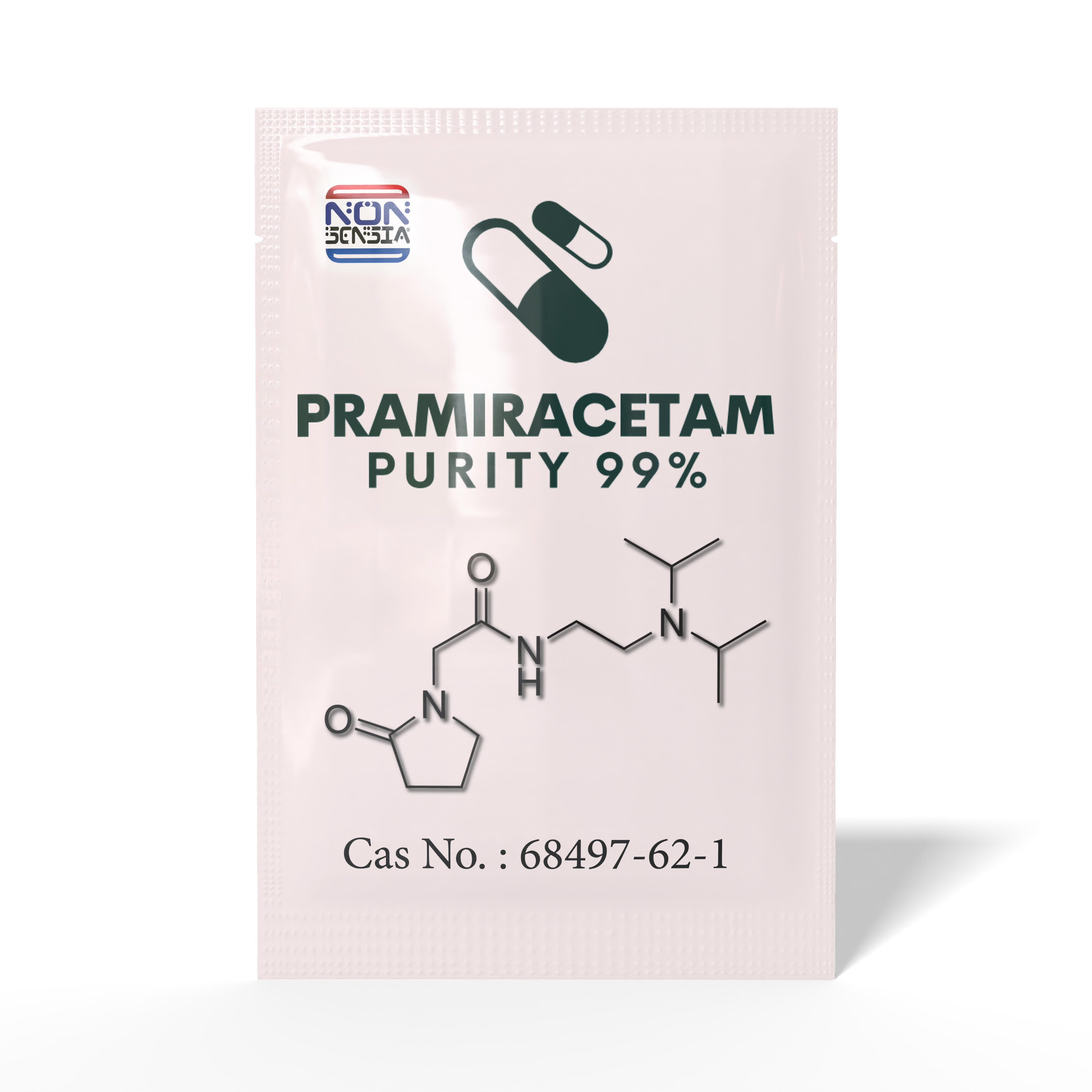
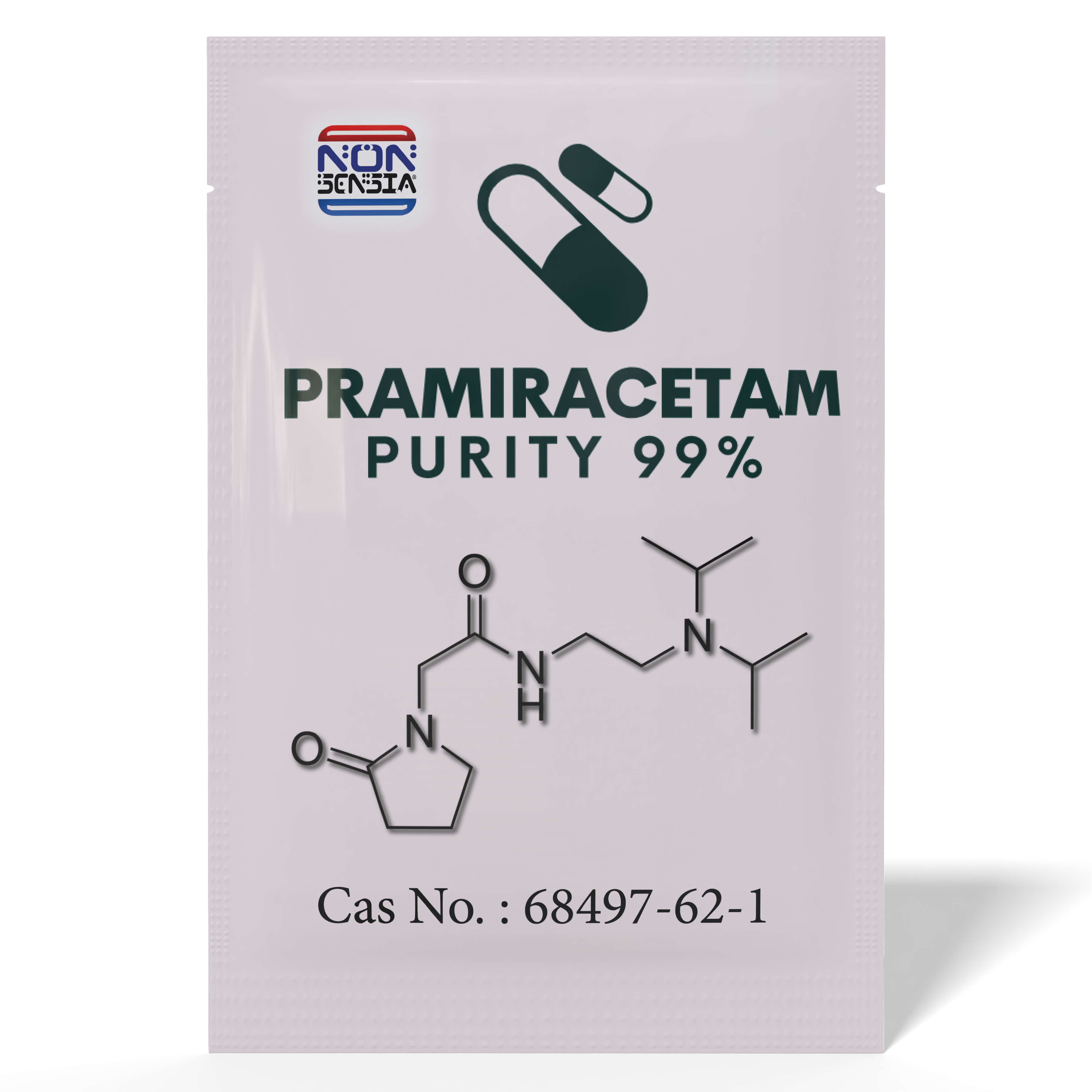
Pramiracetam ≥99% – Analytical Reference Standard | CAS 68497-62-1
30,85 zł
Pramiracetam Reference Standard — CAS 68497-62-1, free base, 1000 mg
Achiral 2-oxopyrrolidine-1-acetamide, supplied with an explicit form declaration for chromatographic, spectroscopic and method-development work. Laboratory reagent and analytical reference material only — not for human or animal consumption, and not a medicinal product.
- Read this first: six forms of this molecule are registered — free base, monohydrate, dihydrate, hydrochloride, hydrochloride hydrate and hydrogen sulfate — running from 269.38 to 367.46 g·mol−1. That is a 26.7% spread, and the routine identity test cannot see any of it
- Net quantity: 1000 mg — and the form that quantity refers to is stated on the lot documentation, because it changes the arithmetic by up to a quarter
- The core problem: 1000 mg of the hydrogen sulfate is 733.1 mg of base; the hydrochloride gives 880.8 mg; the dihydrate gives 882.0 mg. A calibration built on the wrong assumption passes every suitability check and is displaced, reproducibly, run after run
- Neither LC nor MS will warn you: electrospray reports the same protonated cation at m/z 270.2176 from all six, because the counter-ion and the water of crystallisation never enter the spectrum. Counter-ion chromatography, Karl Fischer, infrared and powder diffraction are what resolve form
- A coincidence that closes the gravimetric route: the dihydrate at 305.41 and the hydrochloride at 305.84 differ in average mass by 0.43, which is 0.14%. Their monoisotopic masses differ by 0.04445 Da
- Stereochemistry: 0 defined and 0 undefined stereocentres, atom and bond alike; InChIKey ends
-UHFFFAOYSA-N; the structure line carries no stereo markers. The molecule is achiral — there is no enantiomeric excess to certify and no optical rotation to quote - Data gaps, measured with controls: the registry holds no experimental-properties section at all for the base or the sulfate — no melting point, no solubility, no density, no pKa — and no NMR spectrum of any kind. Melting figures around 160–162 °C circulate in commercial listings; they are not registry values
- What does exist: nine openly licensed tandem mass-spectrometry accessions with precursor 270.2176, fragments 169.0971 / 228.1703 / 128.1434 / 102.1276, nine collision energies and a stated column. Everything but the calibrant
- Identifiers: CAS 68497-62-1 · EC 806-175-7 · UNII 4449F8I3LE · PubChem CID 51712 · C14H27N3O2 · 269.38 g·mol−1 · monoisotopic 269.21032711 Da
- Hazards: the free base carries a Warning and H302 aggregated from one notification; the hydrogen sulfate is recorded as Not Classified. Same inventory, same molecule, opposite verdicts — and no harmonised classification for either
- WADA 2026 and controlled-substance schedules: not listed — measured, with controls firing. One racetam is prohibited in sport and a different one is scheduled in the United States; neither is this compound
Full registry data for all six forms, the conversion arithmetic in full, the deposited tandem spectra with fragment assignments, the methods that resolve salt from base from hydrate, the measured absences with their positive controls, the regulatory position in three jurisdictions and 37 cited sources are set out below.
Out of stock
Quick Payment
100% New
Fast Delivery
- Additional Information
Product classification — read before ordering. This item is a chemical reagent and analytical reference material. It is not a medicinal product, dietary supplement, food, feed, novel food or cosmetic, and it is not intended for human or animal consumption or for any in-vivo administration whatsoever. It is supplied exclusively to laboratories, research institutions and professional users for in-vitro analytical, chromatographic and method-development work. Scientific findings summarised on this page describe substances investigated in published laboratory and clinical research; they are reported here as bibliographic facts about that literature and are not product claims, guidance on use, or a recommendation of any use of this reagent.
The strongest analytical fact about this compound: six weighable forms, one mass spectrum, and no experimental property on record for any of them. The public registry holds six non-isotopic forms sharing this molecule's connectivity — free base, monohydrate, dihydrate, hydrochloride, hydrochloride hydrate and hydrogen sulfate — with molecular masses running from 269.38 to 367.46 g·mol−1 [1][2][3][4][5][6]. Weigh the heaviest of them out believing it to be the lightest and 26.7% of what lands on the balance is counter-ion rather than the molecule you meant to weigh. Two of them, the dihydrate at 305.41 and the hydrochloride at 305.84, differ in average molecular mass by 0.43, which is 0.14% [3][5]. Electrospray mass spectrometry reports the same protonated cation at m/z 270.2176 from every one of them, because the counter-ion and the water never enter the spectrum [1][10]. And the registry contains no experimental-properties section at all — no melting point, no solubility, no density, no dissociation constant — for the base or for the sulfate, so there is nothing published to check a delivery against [1][2]. Sections 3 to 6 set out what follows. Section 8 sets out how that absence was measured rather than assumed.
Key facts
- Substance
- Pramiracetam (INN; pramiracetamum), free base; development code CI-879
- Systematic name
- N-[2-[di(propan-2-yl)amino]ethyl]-2-(2-oxopyrrolidin-1-yl)acetamide [1]
- CAS
- 68497-62-1 (free base) · 72869-16-0 (hydrogen sulfate) · 75733-50-5 (hydrochloride) [1][2][3]
- EC number
- 806-175-7 (free base) · 682-699-8 (hydrogen sulfate) [1][2]
- UNII
- 4449F8I3LE (base) · OP7O7MNS9P (sulfate) · WIU553VC0S (hydrochloride) [1][2][3]
- PubChem CID
- 51712 (base) [1]
- Formula
- C14H27N3O2 (base) [1]
- Molecular mass
- 269.38 g·mol−1 (base). Hydrogen sulfate 367.46; hydrochloride 305.84; monohydrate 287.40; dihydrate 305.41; hydrochloride hydrate 323.86 [1][2][3][4][5][6]
- Monoisotopic mass
- 269.21032711 Da (base); the exact-mass and monoisotopic-mass fields carry identical values in the record [1]
- InChIKey
ZULJGOSFKWFVRX-UHFFFAOYSA-N[1]- Stereocentres
- 0 defined atom, 0 undefined atom, 0 defined bond, 0 undefined bond — the molecule is achiral (section 7) [1]
- Computed descriptors
- XLogP3-AA 0.8; TPSA 52.7 Å2; 1 donor, 3 acceptors; 7 rotatable bonds; 19 heavy atoms; complexity 308 — all computed, none measured [1]
- Experimental properties
- None in the registry record, for the base or the hydrogen sulfate (measured with a positive control — section 8) [1][2]
- NMR spectra deposited
- None — neither 1H nor 13C (section 9) [1]
- GHS
- Free base: Warning, H302, Acute Tox. 4, aggregated from 1 notification. Hydrogen sulfate: Not Classified, 2 of 2 reports. Same inventory, opposite verdicts (section 11) [1][2][12]
- Regulatory status
- ATC N06BX16 and ATCvet QN06BX16 assigned; INN granted; no current authorisation traced in Poland or the United States (section 12) [1][13][16][18]
- WADA 2026
- Not listed — measured, with controls firing, and with the class-level caveat in section 12 [14]
- Pack
- Several weights are offered; the arithmetic in section 4 is worked for a 1000 mg unit and scales linearly
On this page
- What this material is
- Identity and registry codes
- Identity traps: six forms and three ambiguous names
- The weighing problem, in numbers
- Why the routine identity test cannot see the form
- What does resolve the form
- Structure and stereochemistry
- The empty shelf: measuring an absence properly
- Spectra: what exists, what does not
- The analytical anchors that do exist
- Hazard classification: one substance, two verdicts
- Regulatory status
- The literature: how much, and when it stopped
- Handling, storage and documentation
- What we certify and what we do not
- Terms of supply
- Questions and answers
1. What this material is
This page describes pramiracetam supplied as an analytical reference material: a weighed quantity of a single identified chemical substance, intended to serve as the point of comparison against which another sample is measured. A reference material has one job, and it is a narrow one. Everything a laboratory subsequently reports about a sample — its identity, its assay value, its impurity profile — inherits the identity, the declared form and the stability of one vial.
For most substances in this catalogue the identity question is the interesting one and the form question is a footnote. Here the order is reversed. Pramiracetam's connectivity is not in doubt: it resolves cleanly and reproducibly through several independent channels, and section 2 sets out the identifiers with their sources. What is in doubt for any given vial of commercial material is which of six registered forms of that connectivity is actually in it, and that is not a pedantic question. It changes the mass on the balance by up to 26.7%, and it is invisible to the technique most laboratories reach for when they confirm identity.
Two further facts shape this page and are worth stating before the detail. First, the public record for this compound holds no experimental physical property whatsoever — no melting point, no solubility, no density, no dissociation constant — for the free base or for the hydrogen sulfate [1][2]. Second, it holds no nuclear magnetic resonance spectrum of any kind [1]. Both are measured claims, established with positive controls on the same instrument and the same file, and section 8 shows the controls. The practical consequence is blunt: a delivery of this substance cannot be checked against published reference values, because there are almost none to check it against.
The compound belongs to the 2-oxopyrrolidine-1-acetamide series — the structural family opened by piracetam and defined systematically in the 1984 medicinal-chemistry paper that introduced pramiracetam itself under the code CI-879 [19]. Descriptions calling this compound a pyrimidine analogue of choline circulate widely in commercial listings; they are excluded by the compound's own systematic name and by its structure line. The ring is a five-membered 2-oxopyrrolidine carrying one nitrogen, not a six-membered pyrimidine carrying two, and the amine present is a tertiary dialkylamine rather than the quaternary ammonium centre that defines choline [1]. Choline-carrying reference materials are separate articles with separate registry records: in this catalogue those are alpha-GPC and CDP-choline.
For the general terms on which this shop supplies reference materials, the surrounding reference standards category collects the rest of the catalogue on the same basis.
2. Identity and registry codes
Every identifier below is quoted from a named public source. The connectivity was confirmed through channels that do not depend on one another: the compound name and the CAS number both resolve to the same registry record; an independent drug database returns the same formula, the same average mass and the same exact mass; and a cross-reference service keyed on the InChIKey returns the same set of secondary identifiers [1][8][9].
| Preferred name | Pramiracetam (INN); Latin pramiracetamum; WHO Drug Dictionary entry present [1] |
|---|---|
| CAS Registry Number | 68497-62-1 — six occurrences in the record's CAS field [1]; independently returned by the drug-database entry [8] |
| EC number | 806-175-7 [1] |
| PubChem CID | 51712 [1] |
| UNII | 4449F8I3LE [1] |
| ChEBI | CHEBI:135110 [1][9] |
| ChEMBL | CHEMBL159776; maximum development phase recorded as 2 [1][9] |
| DrugBank / DrugCentral | DB13247 / 2234 [1][9] |
| KEGG | D08405 [1][8] |
| DSSTox | DTXSID60218604 (substance) / DTXCID70141095 (compound) [1] |
| NCI Thesaurus | C84171 [1] |
| Nikkaji | J18.594I [1] |
| MDL number | MFCD00867219 [1] |
| Wikidata | Q415746 [1][9] |
| Metabolomics Workbench | 154076 [1] |
| HMDB | No identifier — the record carries none. That is a statement about the record, not a gap awaiting a value [1] |
| ATC / ATCvet | N06BX16 / QN06BX16 [1][13] |
| Development code | CI-879 — assigned in the introducing paper [19]; see the caveat in section 3 |
| Environmental monitoring | Carries a NORMAN Suspect List Exchange classification in the record [1] |
Machine-readable descriptors
| IUPAC name | N-[2-[di(propan-2-yl)amino]ethyl]-2-(2-oxopyrrolidin-1-yl)acetamide |
|---|---|
| CAS index name | 1-Pyrrolidineacetamide, N-[2-[bis(1-methylethyl)amino]ethyl]-2-oxo- |
| SMILES | CC(C)N(CCNC(=O)CN1CCCC1=O)C(C)C |
| InChI | InChI=1S/C14H27N3O2/c1-11(2)17(12(3)4)9-7-15-13(18)10-16-8-5-6-14(16)19/h11-12H,5-10H2,1-4H3,(H,15,18) |
| InChIKey | ZULJGOSFKWFVRX-UHFFFAOYSA-N |
| XLogP3-AA | 0.8 (computed) |
| Topological polar surface area | 52.7 Å2 (computed) |
| Hydrogen-bond donors / acceptors | 1 / 3 (computed) |
| Rotatable bonds | 7 (computed) |
| Heavy atoms / complexity | 19 / 308 (computed) |
| Formal charge / covalently bonded units | 0 / 1 — the record for CID 51712 describes a free base with no counter-ion |
Two of these deserve a second look, because they bear directly on claims that circulate about this substance in commercial descriptions. The computed XLogP3-AA of 0.8 describes a compound of modest lipophilicity, nearer hydrophilic than greasy; descriptions calling the free base poorly soluble in water sit awkwardly beside that number, beside a tertiary amine that forms salts readily, and beside the fact that several of the registered forms are salts, which are soluble by construction. We give no solubility figure of our own, because none is on record and a reasoned expectation is not a measurement. A reader should nonetheless know that the circulating claim has no published measurement behind it either.
The seven rotatable bonds are the other. This is a flexible, open-chain molecule, unlike the rigid fused ring systems elsewhere in this catalogue — tadalafil, for instance, whose fused tetracyclic core leaves it one rotatable bond against this molecule’s seven [1]. Flexibility is one reason its solid-state behaviour deserves to be treated as an open question rather than an assumption, and it is one reason the hydrate forms in section 3 are chemically unsurprising rather than curiosities.
3. Identity traps: six forms and three ambiguous names
The registry holds twelve records sharing this molecule's parent connectivity. Six of them are distinct, non-isotopic, weighable materials; the remainder are duplicates, charged species, an aggregate record and one deliberately mass-shifted analogue. All twelve were retrieved in a single query on the parent connectivity of CID 51712, and their properties were read from the same property service, so the table below is one measurement rather than a compilation of separate lookups.
| Record | Form | Formula | Average mass | Monoisotopic mass (Da) |
|---|---|---|---|---|
| CID 51712 | Free base — this product | C14H27N3O2 | 269.38 | 269.21032711 |
| CID 70609292 | Monohydrate | C14H29N3O3 | 287.40 | 287.22089180 |
| CID 110169260 | Dihydrate | C14H31N3O4 | 305.41 | 305.23145648 |
| CID 3050410 | Hydrochloride (USAN pramiracetam hydrochloride) | C14H28ClN3O2 | 305.84 | 305.18700480 |
| CID 156786427 | Hydrochloride hydrate | C14H30ClN3O3 | 323.86 | 323.19756950 |
| CID 51711 | Hydrogen sulfate (USAN pramiracetam sulfate) | C14H29N3O6S | 367.46 | 367.17770683 |
| CID 50986694 | Duplicate hydrochloride record, same InChIKey as CID 3050410 | C14H28ClN3O2 | 305.84 | 305.18700480 |
| CID 139074758 | Duplicate hydrogen sulfate record, same InChIKey as CID 51711 | C14H29N3O6S | 367.46 | 367.17770683 |
| CID 51382091 | Protonated cation alone, formal charge +1 | C14H28N3O2+ | 270.39 | 270.21815214 |
| CID 23622619 | Sulfate dianion salt record | C14H27N3O6S2− | 365.45 | 365.16205676 |
| CID 168320089 | Two-to-one aggregate record | C28H54N6O4 | 538.8 | 538.42065423 |
| CID 176484955 | Pramiracetam-d4, deuterium-labelled analogue | C14H27N3O2 | 273.41 | 273.23543410 |
The dihydrate and the hydrochloride weigh the same
Read the two bold rows together. The dihydrate has an average molecular mass of 305.41; the hydrochloride has 305.84. The difference is 0.43, which is 0.14% — comfortably inside the uncertainty of any argument built on nominal masses, elemental percentages rounded to the usual tolerances, or a gravimetric factor taken from a supplier sheet. Two chemically different solids, one containing chloride and one containing water, are indistinguishable at the level of average mass. Their monoisotopic masses differ by 0.04445 Da, which is resolvable, but only by a technique that measures the intact solid rather than the ion it produces in an electrospray source — and section 5 explains why that qualification removes the usual instrument from consideration.
Three names that do not resolve to one thing
Three ways of naming this substance are ambiguous against the public databases, and each ambiguity has a different cause.
| Designator | What it resolves to | Why |
|---|---|---|
CI-879, unqualified | The hydrogen sulfate record, not the base [2] | The bare code appears in the sulfate's synonym list alongside CI-879 sulfate, while the base carries the qualified synonym CI-879 free base. The introducing paper assigns the code to the compound itself [19], so the primary source and the database disagree about scope |
Pramiracetam hydrate | Three records at once — base, monohydrate and sulfate [1][2][4] | The synonym is attached to more than one record. A name that returns three answers is not an identifier |
| Historic trade names Pramistar, Neupramir, Remen | The hydrochloride record [3] | They appear in the hydrochloride's synonym list and in none of the sulfate's. Yet the one published crystal structure of this compound is of the hydrogen sulfate [21][20]. The finished-product form and the structurally characterised form are not the same salt |
A depositor artefact worth naming so that it stops propagating. The free-base record's synonym list contains the entry Benzoic acid, o-(p-toluyl)-, which is a completely different compound — a substituted benzoic acid with no structural relationship to this molecule [1]. It is a contamination on the depositor side of a public database, not a property of the substance. Any process that harvests synonym lists mechanically into a catalogue, a search index or a structured-data block will carry it across. We name it here rather than silently dropping it, because a reader who encounters it elsewhere should know what it is.
The one record that is deliberately different
CID 176484955, pramiracetam-d4, carries four deuterium atoms in place of four hydrogens [7]. Its InChI ends in an isotopic layer, /i7D2,9D2, and its isotope atom count is 4 rather than 0. Its monoisotopic mass is 273.23543410 Da — greater than the base by 4.02510699 Da, four times the mass difference between deuterium and protium.
Two details about that record are instructive. First, its molecular formula field reads C14H27N3O2, identical to the free base, because the formula convention does not distinguish the isotope. A system that compares formulas will treat the labelled internal standard and the analyte as the same substance. Second, its InChIKey is ZULJGOSFKWFVRX-BSFGQKQYSA-N: the first fourteen characters are identical to the base, because the first block of an InChIKey encodes connectivity only. Indexing or deduplicating on that skeleton merges the free base, the protonated cation and the labelled internal standard into one entity.
The wider point is the same one that surfaces for chiral reference materials for a different reason: when a technique cannot separate two things, the working solution is to make them differ in a dimension the technique can see. A deuterated internal standard exists precisely because mass spectrometry could not otherwise tell the reference from the analyte. It is sound analytical engineering and a standing admission of what the instrument cannot do unaided.
4. The weighing problem, in numbers
The arithmetic below is the whole practical content of section 3. It answers one question: if a vial contains 1000 mg of a given form, how much of the free base is in it?
| Form | Mass (g·mol−1) | Factor to base | Base in 1000 mg | Shortfall against a base assumption |
|---|---|---|---|---|
| Free base | 269.38 | 1.0000 | 1000.0 mg | — |
| Monohydrate | 287.40 | 0.9373 | 937.3 mg | 6.3% |
| Dihydrate | 305.41 | 0.8820 | 882.0 mg | 11.8% |
| Hydrochloride | 305.84 | 0.8808 | 880.8 mg | 11.9% |
| Hydrochloride hydrate | 323.86 | 0.8318 | 831.8 mg | 16.8% |
| Hydrogen sulfate | 367.46 | 0.7331 | 733.1 mg | 26.7% |
Read in the other direction, 1000 mg of free base is equivalent to 1364 mg of the hydrogen sulfate. Neither direction is more correct than the other; what matters is that the document accompanying the material says which one applies.
Why this is a quiet error rather than a loud one. An analyst who prepares a calibration standard from material of an undeclared form does not get a failure. The chromatography is fine, the peak shape is fine, the system-suitability criteria pass, the correlation coefficient is excellent, and the calibration line is beautifully linear. It is simply displaced — by up to 26.7% — and every sample quantified against it carries that displacement, reproducibly, run after run. There is no diagnostic in the run that reveals it, because nothing in the run is wrong. The error lives entirely in the number written on the balance sheet before the instrument was switched on.
Two things make the risk concrete rather than theoretical for this particular compound. The hydrogen sulfate is the form with the published crystal structure [21], so it is unquestionably a real, isolable material and not a database abstraction. And the hydrochloride is the form carrying the historic trade names [3], so it is the form most likely to be encountered in material of pharmaceutical provenance. Between them they cover the two most probable origins of commercial material, and they differ from the base by 26.7% and 11.9% respectively.
This is a general problem for substances that exist as both base and salt, and other cards in this catalogue meet it in their own way — procaine hydrochloride is the straightforward case, where the form is declared in the product name itself and no arithmetic is needed. Compounds that exist in only one form, such as apigenin, do not have this problem at all. Pramiracetam is at the difficult end of the range because it has six forms, no experimental data to distinguish them, and a routine identity test that is blind to all of it.
5. Why the routine identity test cannot see the form
This is the central analytical fact about pramiracetam as a reference material, and it deserves stating plainly.
Electrospray mass spectrometry reports the same ion from all six forms. The deposited spectra for this compound are recorded in positive electrospray mode with a precursor of m/z 270.2176, assigned as [M+H]+ [1][10]. That ion is the protonated free base. A hydrochloride delivers it, because the chloride stays behind in the mobile phase. A hydrogen sulfate delivers it, because the sulfate stays behind too. A monohydrate and a dihydrate deliver it, because the water of crystallisation is lost long before the ion reaches the analyser. The counter-ion and the water of crystallisation are precisely the things that distinguish the six forms, and they are precisely the things electrospray discards.
Nor does fragmentation help, because fragmentation is a property of the cation and the cation is the same in every case. The bulk of the deposited product-ion data comes from a single laboratory campaign — nine accessions, one compound, nine collision energies from 15% to 180% nominal, all at the same retention time of 1.856 min on the same column [10]. It is not quite the whole of it: a tenth product-ion record sits in the same section from a different depositor on a quadrupole time-of-flight analyser, carrying the same precursor and the same two principal fragments [1]. The pattern they describe is stable and useful, and it says nothing at all about form.
| Collision energy | Principal product ions (m/z, relative intensity) | SPLASH identifier |
|---|---|---|
| 15% nominal | 270.2176 (999); 169.0971 (8) | splash10-00di-0090000000-3d8ab3cd2b0649b45ebb |
| 30% nominal | 270.2175 (999); 169.0971 (371); 228.1703 (61); 128.1434 (36); 102.1276 (28) | splash10-00di-0390000000-883f38066dc126c97a04 |
| 45% nominal | 169.0971 (999); 98.06 (296); 270.2176 (176); 228.1705 (67); 128.1432 (52) | splash10-014i-2920000000-f58275f2966073670f0f |
The mass differences in that table are worth working through, because they are arithmetic a reader can check rather than assertions to be taken on trust. Each of the assignments below is our own reading of the mass difference, not an annotation deposited with the spectra, and it is labelled as such.
| Transition | Difference | Corresponds to |
|---|---|---|
| 270.2176 → 228.1703 | 42.0473 | Loss of propene from one isopropyl group (C3H6, 42.0470) |
| 270.2176 → 169.0971 | 101.1205 | Loss of the whole diisopropylamine head (C6H15N, 101.1205) |
| 102.1276 as an ion | — | The diisopropylamine head retained as the charged fragment (C6H16N+, 102.1277) |
| 98.06 as an ion | — | The pyrrolidinone end of the molecule (C5H8NO+, 98.0600) |
The two complementary fragments at 169.0971 and 102.1276 are the useful pair: between them they cut the molecule at the amide nitrogen and report both halves. A method built on the transitions 270.2 → 169.1 and 270.2 → 102.1 is a good method for this compound. It is also completely silent on whether the material weighed out to build it was base, salt or hydrate.
Two further techniques inherit the same blindness for the same reason. Reversed-phase chromatography separates the neutral or protonated analyte, not the salt, because the salt dissociates on dissolution; retention time is a property of the ion in the mobile phase and is not diagnostic of form. Gas chromatography, for which a spectrum is also deposited [1], requires the volatile free base and therefore cannot see a counter-ion at all. The result is that the three most commonly available confirmatory techniques for a small organic molecule are, for this particular question, all reporting on the same thing.
6. What does resolve the form
Four families of measurement answer the question that section 5 shows mass spectrometry cannot. None of them is exotic; all of them require the intact solid rather than an ion derived from it.
Counter-ion determination
The most direct answer is to measure the counter-ion itself rather than the cation. Chloride and sulfate are both routinely determined by ion chromatography with conductivity detection, and both give a stoichiometric answer: a 1:1 hydrochloride contains 11.6% chloride by mass, and the 1:1 hydrogen sulfate reported in the crystal structure contains 26.4% hydrogen sulfate by mass [21]. A free base contains neither. This measurement is cheap, unambiguous and almost never performed on reference materials, because the question it answers is usually assumed to have been settled elsewhere.
Water content
Karl Fischer titration distinguishes anhydrous material from the monohydrate and the dihydrate directly. The expected water contents follow from the masses in section 3: 6.3% for the monohydrate, 11.8% for the dihydrate, and 5.6% for the hydrochloride hydrate. Thermogravimetric analysis gives the same information as a mass-loss step and adds the temperature at which the water leaves, which distinguishes surface moisture from water bound in the lattice. For a compound with seven rotatable bonds and three hydrogen-bond acceptors, hydrate formation is chemically ordinary rather than surprising, and the registry's inclusion of both a monohydrate and a dihydrate record indicates that both have been prepared [4][5].
Vibrational spectroscopy
Infrared and Raman spectroscopy are exquisitely sensitive to exactly the distinction at issue here. Protonating the tertiary amine to form a salt shifts the amide carbonyl region, introduces N–H+ stretching absorption, and adds the counter-ion's own bands — sulfate absorbs strongly around 1050–1100 cm−1, and the free base has nothing there. Water of crystallisation contributes broad O–H absorption above 3200 cm−1. These are large, obvious spectral differences, not subtleties.
And here the record turns awkward. Three vibrational spectra are deposited for this compound — FTIR in potassium bromide, attenuated-total-reflectance infrared, and FT-Raman — and all three were recorded on one sample, from one supplier, under one catalogue number: Composynth Chemicals PRA0143 [1]. The deposited entries state the technique, the instrument, the source of the spectrum and the source of the sample. They do not state which form that sample was. The techniques most capable of answering the form question are represented in the public record by three measurements of a single material of undeclared form. That is not a criticism of the depositors, who recorded what they had; it is a description of what the record can and cannot be used for.
Powder diffraction and the one published structure
X-ray powder diffraction fingerprints the solid form directly and would distinguish all six unambiguously. The public record contains no powder pattern for this compound. What it does contain, in the literature rather than the registry, is one single-crystal structure, published in 2008 [21] — and it is a structure of the hydrogen sulfate, not the free base. The title names the compound as an ammonium hydrogen sulfate, which fixes the stoichiometry as a protonated tertiary amine paired with one hydrogen sulfate anion and independently corroborates the 367.46 mass in section 3.
That 2008 paper also settles a claim that is easy to get wrong. It is not the only structural study of this cation: the paper's own related-literature section points to an earlier determination by Bandoli and co-workers in 1987 [20] — of the acetonitrile solvate of the same hydrogen sulfate, which the 2008 authors call closely similar to their own, both structures being built from ribbons of hydrogen-bonded ions. That paper reported the solid-state structure alongside homonuclear two-dimensional proton NMR in solution. A solvate is a further solid form of this cation, and it does not appear in the registry table in section 3 at all. Anyone stating that a single structure exists for this compound is overstating the isolation of the 2008 work, and the correction comes from the 2008 work itself.
The honest form of the NMR statement. Section 9 reports that no NMR spectrum is deposited in the public registry, and that is measured and true. It does not follow that no NMR data for this compound has ever been recorded. The 1987 study reports two-dimensional proton NMR of the sulfate in solution [20], and the 2022 methodological literature on related racetams shows that quantitative proton NMR is a mature approach for this compound class [23]. The correct statement is narrow: the public chemical registry holds no deposited spectrum you can download and compare against. Widening it into no NMR exists would be a different claim, and a false one.
7. Structure and stereochemistry
Pramiracetam is an open-chain molecule built from three pieces: a five-membered 2-oxopyrrolidine ring (a γ-lactam with one nitrogen), an acetamide bridge attached at the ring nitrogen, and a diisopropylaminoethyl chain on the amide nitrogen. Three nitrogens in total — lactam, amide and tertiary amine — and two oxygens, both carbonyl. The registry record states its stereochemistry without ambiguity [1]:
| Defined atom stereocentre count | 0 |
|---|---|
| Undefined atom stereocentre count | 0 |
| Defined bond stereocentre count | 0 |
| Undefined bond stereocentre count | 0 |
| Atom stereocentre count / bond stereocentre count | 0 / 0 |
| Isotope atom count | 0 |
| Formal charge | 0 |
| Covalently bonded units | 1 — free base, no counter-ion |
The molecule is achiral. Every carbon in it is either part of a ring with a local mirror plane, part of a methylene chain, or an isopropyl methine carrying two identical methyl groups. There is no centre with four different substituents anywhere in the structure.
Three independent lines of evidence agree on this, which matters because a single field in a single database is a weaker basis than it looks. First, the six stereodescriptor counts above are all zero. Second, the InChIKey's middle block reads UHFFFAOYSA, the value that indicates no stereochemical layer is present [1]. Third, the record's structure line and its connectivity line are character-for-character identical — CC(C)N(CCNC(=O)CN1CCCC1=O)C(C)C contains no @, no @@, and no directional bond markers [1]. Three descriptions generated by different code paths from the same structure agree that there is nothing stereochemical to describe.
A rare case where an absence is fully verifiable, and worth using. Most of this page concerns things that cannot be established from the public record. Achirality is the opposite: it is settled, checkable in thirty seconds by anyone with the InChIKey, and it removes an entire category of specification. There is no chiral method to develop, no enantiomeric excess to certify, no enantiomeric impurity to control, and no risk of stereochemical inversion in storage. It also means that any claim of optical rotation, of a dextrorotatory or laevorotatory form, or of an R- or S- designation for this compound is fabricated by construction — there is nothing for such a claim to refer to. Figures of that kind do appear in commercial listings for compounds in this family; for this one, the registry excludes them outright.
The contrast across a catalogue is instructive, because stereochemistry is not uniform even within closely related series. Tadalafil carries two defined centres and four separately registered stereoisomers, all sharing one exact mass. L-DOPA is defined by its configuration to the point that the letter is part of its name. Coluracetam and aniracetam, like pramiracetam, have none at all. For pramiracetam the entire analytical budget that a chiral compound would spend on enantioseparation is available to spend on the form question instead — which is the right allocation, because the form question is the one that actually costs 26.7%.
8. The empty shelf: measuring an absence properly
A claim that data does not exist is easy to make and easy to get wrong. It fails in two directions: you can look in the wrong place and report an absence that is really your own error, or you can look in the right place with a broken instrument and report a zero that means nothing. Both failures produce the same output — a confident nothing. So every absence on this page was established by running the same query against something that is present, and confirming that the query comes back populated before the empty result was trusted.
| Question asked | Result for pramiracetam | Control, same instrument, same run |
|---|---|---|
| Does the registry record hold an experimental-properties section? | No such section exists anywhere in the record's contents tree [1] | The computed-properties branch of the same tree, parsed by the same code, returns 18 populated entries. The parser fires |
| The same, for the hydrogen sulfate | No such section [2] | The sulfate record's identifier and hazard branches parse normally in the same pass |
| Is any NMR spectrum deposited? | No NMR section anywhere in the record’s contents tree — the string “NMR” appears in the record only inside PubChem’s own section boilerplate and source descriptions, never as a deposited spectrum [1] | The infrared branch of the same record returns a populated set of entries in the same pass |
| Is the substance on the anti-doping list for 2026? | Zero occurrences [14] | Same document: modafinil 4, bromantan 2, meldonium 2 |
| Is it in the Polish controlled-substance schedules, as currently amended? | Zero occurrences in the consolidated text and in both post-consolidation amendments [15] | Consolidated text: the amphetamine stem 27, the cocaine stem 2. 2025 amendment: the amphetamine stem 1. 2026 amendment: the tetrahydrocannabinol entry it rewrites |
| Is there an authorised medicine of this name in Poland? | Zero records, and zero for each historic trade name [16] | Same interface: paracetamol 43, piracetam 2 |
| Is it on the United States controlled-substances list? | Zero occurrences [17] | Same document: amphetamine 25, cocaine 2, modafinil 1 |
| Is there a current United States product label? | No matching record [18] | Same interface: sildenafil returns 166 records |
| Does the substance carry a statistical usage unit in the international classification index? | Code assigned; the unit field is blank [13] | Same index page, same subgroup: piracetam and pipradrol carry populated unit fields. The field exists and is capable of holding a value |
Every control fired. The zeros above are therefore findings about the world rather than artefacts of the search, and we state them as findings. Where a control did not fire, the honest verdict is not established, and one such case is set out immediately below rather than buried.
One measurement that failed, reported as a failure
The European chemicals agency could not be queried directly. We attempted to retrieve the substance record for EC 806-175-7 from the agency's own interface. Every attempt failed — and so did the same query for formaldehyde, EC 200-001-8, a substance that is certainly present. That the control failed alongside the target is the whole point. Re-measured from a second host on 23 August 2026, the agency answered HTTP 403 to the substance query, to the inventory landing page and to its own site root alike, so the block is at the host and not at one query path. A zero obtained under those conditions is not a finding; it is an instrument failure. Accordingly, the classification data in section 11 and the EC numbers in section 2 are quoted from the inventory summary embedded in the chemical registry record [1][2][12], which is a secondary rendering of the agency's data rather than the agency's own response. We flag that rather than presenting a secondary source as a primary one.
What is not on the record, itemised
Because the experimental-properties section is absent in its entirety, the list of missing values is the list of values a laboratory would normally look up first:
| Melting point or melting range | Absent |
|---|---|
| Boiling point | Absent |
| Water solubility | Absent, in any form — numeric or qualitative |
| Solubility in organic solvents | Absent |
| Density | Absent |
| Dissociation constant | Absent |
| Measured partition coefficient | Absent; only the computed XLogP3-AA of 0.8 exists |
| Physical description, colour or form | Absent |
| Vapour pressure | Absent |
| Hygroscopicity | Absent — notable, given that two hydrate forms are registered |
Numbers do circulate for some of these. Melting figures around 160–162 °C, descriptions of a white odourless powder, statements that the substance is poorly soluble in water, and instructions to store it between 2 and 8 °C are all common in commercial listings for this compound. None of them appears in the registry record for either form. That does not make them false; it makes them unsourced, and it makes them ambiguous in a second way besides, because a melting figure for a compound with six forms means nothing unless it says which form it describes. We report the state of the record rather than repeating a figure whose provenance we cannot show, and section 15 records the same position as a limitation on what we certify.
Where the missing numbers most plausibly are
The compound was characterised in the early 1980s in an industrial medicinal-chemistry programme [19]. Melting point, solubility and synthetic procedure were certainly measured then, because a series of amnesia-reversal compounds cannot be developed without measuring them. Those numbers are most likely in the full text of that paper and in the internal documentation behind it, neither of which is openly accessible. We flag this as the probable location of the missing data rather than treating the compound as though the measurements were never made. What we will not do is reproduce plausible-looking values from an unnamed source; that is precisely how unsourced melting points and solubility claims come to be attached to molecules that have neither on record.
9. Spectra: what exists, what does not
Deposited spectroscopic data for pramiracetam is uneven in a way that maps almost exactly onto the problems in sections 4 to 6, and the pattern of the gaps is not random.
| Technique | Present | Provenance |
|---|---|---|
| 1H NMR | No | — |
| 13C NMR | No | — |
| Two-dimensional NMR | No | — |
| UV-Vis | No | — |
| X-ray powder diffraction | No | — |
| FTIR (KBr) | Yes | Bio-Rad FTS; spectrum from Forensic Spectral Research; sample from Composynth Chemicals, catalogue PRA0143 |
| ATR-IR | Yes | ATR-Neat, DuraSamplIR II, same instrument, same sample PRA0143 |
| FT-Raman | Yes | Forensic Spectral Research, same sample PRA0143 |
| GC-MS | Yes | DigiLab GmbH |
| LC-MS/MS | Yes — nine accessions, and one further record | MassBank records deposited by an environmental-chemistry group; Exploris 240 Orbitrap, LC-ESI-QFT, positive electrospray, higher-energy collisional dissociation, nine collision energies, licensed CC BY-SA. A tenth product-ion record from a separate depositor, acquired on a quadrupole time-of-flight instrument, is present in the same section [1] |
Three observations follow, and each is uncomfortable in a different way.
First, there is no NMR spectrum of any kind. Not proton, not carbon, not two-dimensional. This is the gap that matters most, because NMR is one of the few routine techniques that can distinguish a salt from a free base — protonation of the tertiary amine shifts the isopropyl and methylene resonances measurably, and water of crystallisation appears as its own signal in a dry aprotic solvent. The technique best placed to answer this compound's central question has no reference spectrum deposited for it. A laboratory that runs a proton spectrum on this material has a spectrum with nothing public to compare it against, which returns to the point made in section 6: the comparison has to come from a standard of declared form, or it does not exist.
Second, there is no ultraviolet spectrum, and this one has a structural explanation rather than being a mere deposition gap. The molecule has no aromatic ring and no extended conjugation — two isolated amide carbonyls are its only chromophores, and they absorb weakly and only in the far ultraviolet, below about 220 nm. That is a genuinely awkward region for routine liquid chromatography, where mobile-phase components absorb strongly. It is a structural reason to prefer mass-spectrometric or refractive-index detection over ultraviolet detection for this compound, and it distinguishes pramiracetam sharply from aromatic reference materials such as paracetamol or benzocaine, where an ultraviolet method is the obvious first choice.
Third, and least obvious: the three vibrational spectra are not three independent confirmations. The FTIR, the ATR-IR and the Raman spectrum were all recorded on one sample, from one supplier, under one catalogue number [1]. Three techniques applied to a single material tell you three things about that material. They do not tell you that a second lot would look the same, and — given sections 3 to 6 — they do not tell you which form that single material was. Vibrational spectroscopy is the family most sensitive to salt formation and hydration, so single-sample provenance is a real limitation here rather than a pedantic one. A different form of the same substance would legitimately give a different infrared spectrum while being the same compound, and a comparison against these deposited spectra would flag it as a mismatch.
10. The analytical anchors that do exist
Sections 8 and 9 are a catalogue of absences, so it is worth being equally precise about what is present, because it is more than nothing and it is unusually well documented.
A complete, freely licensed tandem mass spectrometry set
The nine deposited MassBank accessions constitute a genuinely usable method starting point [10]. They give the precursor, the fragments, nine collision energies, the column, the retention time under those conditions, the instrument type and the ionisation polarity, and they carry an open licence. Every parameter needed to reproduce the acquisition is stated. What the set cannot supply is the one thing a laboratory must provide for itself: material of declared identity and declared form against which to calibrate. The transitions are described; the calibrant is not. That is the precise gap a reference standard fills.
| Parameter | Value from the record | Status |
|---|---|---|
| Precursor ion | m/z 270.2176, [M+H]+ | Deposited |
| Quantifier transition | 270.2 → 169.1 | Deposited fragment; the pairing is our recommendation |
| Qualifier transition | 270.2 → 102.1 or 270.2 → 228.2 | Deposited fragments; the pairing is our recommendation |
| Column used for the deposited data | C18, 3.5 µm, 2.1 × 50 mm | Deposited |
| Retention time under those conditions | 1.856 min | Deposited — and transferable only with the full gradient, which is not |
| Ionisation | Positive electrospray | Deposited |
| Internal standard | A deuterium-labelled analogue is registered, offset by 4.0251 Da [7] | Registered as a compound; availability is a separate question |
| Detection wavelength | — | Not available. No ultraviolet spectrum is deposited and the chromophore is weak; determine it on your own instrument if you must use ultraviolet detection |
| Solid-form reference pattern | — | Not available. Single-crystal work exists only for the hydrogen sulfate — the 2008 determination [21] and the closely similar acetonitrile solvate determined in 1987 that it cites [20]; no powder pattern of any form is deposited, for any of the six |
The separation problem this compound shares with its neighbours
Pramiracetam belongs to a series in which several members differ by a single substituent on a common 2-oxopyrrolidine-1-acetamide skeleton, and the 1984 paper that introduced it defined that series explicitly by preparing and comparing its members [19]. A chromatographic method for pramiracetam therefore has to resolve it not only from its own degradation products but from structurally adjacent compounds that a laboratory may well hold on the same shelf — aniracetam, oxiracetam and noopept among them.
Two 2022 papers show what mature method development for this compound class looks like, and both are about other racetams rather than this one: a quantitative proton NMR procedure for two anticonvulsant racetams [23], and a pair of spectrophotometric methods for resolving racetam mixtures in finished products [24]. They are cited here for exactly what they are — evidence that the analytical chemistry of this family is being actively developed, and evidence of where pramiracetam sits within that effort, which is outside it. Section 13 gives the numbers behind that statement.
11. Hazard classification: one substance, two verdicts
The registry carries aggregated classification data for both principal forms of this compound, drawn from the European inventory of notified classifications. Read side by side, the two entries are a case study in how thin a self-classification can be.
| Free base, CID 51712 | Hydrogen sulfate, CID 51711 | |
|---|---|---|
| Signal word | Warning | None |
| Hazard statement | H302 (100%): harmful if swallowed | Not Classified |
| Hazard class | Acute toxicity, oral, category 4 | Not Classified |
| Precautionary codes | P264, P270, P301+P317, P330, P501 | — |
| Pictogram field | Empty in the record despite the classification | — |
| Basis of the aggregation | 38 reports by companies, from 1 notification | 2 reports by companies, from 2 notifications; recorded as not meeting the criteria in 100% of reports |
| Harmonised classification | No trace of a harmonised entry in the record | No trace of a harmonised entry in the record |
What the percentage figures actually count. The free base's H302 carries 100% agreement, which sounds decisive until the denominator is read: the aggregation rests on a single notification. One hundred per cent of one is one. The sulfate's not classified verdict rests on two notifications, which is barely better. Neither figure is a confidence interval on a toxicological finding; both are counts of opinions submitted by companies placing the substance on the market, and the record says so. Between them, the same molecule in two salt states carries opposite conclusions in the same inventory. The sensible reading is not that one is right and the other wrong, but that the notified classification for this substance carries very little information either way, and that nothing in it is legally binding as a harmonised classification.
The one toxicological datum, and where it sits
The record for the hydrogen sulfate carries a single deposited lethal-dose value, sourced through a toxicology database to a 1983 pharmacology journal: LD50, mouse, oral, 4355 mg·kg−1 [11]. Converting by the factor in section 4, that corresponds to roughly 3192 mg·kg−1 expressed as free base. The free-base record carries no lethal-dose value at all.
Two observations follow, and both cut against reading the classification too confidently in either direction. The category-4 acute oral toxicity band runs from 300 to 2000 mg·kg−1; the only deposited lethal-dose figure for this substance sits above that band, by roughly a factor of two. And it sits on the form that is not classified, while the form that is classified has no toxicological data deposited against it. That is not a contradiction that can be resolved from the record; it is a description of how sparse the record is. A laboratory should treat the substance according to the more cautious of the two classifications and its own risk assessment, which is what section 14 recommends, and should not read either entry as a finding about safety in use.
Descriptions asserting a high safety profile for this compound circulate in commercial listings. They are not supported by the registry, which for the free base says the opposite, and they are not supported by the lethal-dose figure either, which describes a different form and in any case measures acute lethality in a rodent rather than anything about a person. We make no safety claim of our own beyond the handling guidance in section 14.
12. Regulatory status
Each statement in this section is a measurement against a named document, and each negative statement was made with a positive control on the same document so that a zero can be distinguished from a broken search. The controls are shown in section 8 and repeated here where they carry a specific nuance.
Anti-doping
Pramiracetam does not appear on the World Anti-Doping Code Prohibited List for 2026 [14]. Searching the extracted text of the list returns zero occurrences. That zero is meaningful because the same search of the same document returns modafinil four times, bromantan twice and meldonium twice.
The class-level claim is false, and the false-positive check is what shows it. A naive search of the list for the stem racetam returns four hits, which at first glance suggests that racetams as a class appear on it. Reading each hit in context shows that all four belong to one compound: fonturacetam, which appears under that name and under its synonym 4-phenylpiracetam, once each in the substance section and once each in the index. A search for piracetam returns two hits, and both of those are substring matches inside 4-phenylpiracetam — piracetam itself is not on the list. So the correct statement is narrow and specific: one racetam is prohibited and pramiracetam is not one of them. A statement that racetams are permitted in sport would be wrong, and counting occurrences rather than reading them in context is exactly how one would arrive at it.
Controlled substances
Pramiracetam does not appear in the Polish schedules of narcotic drugs, psychotropic substances and new psychoactive substances [15]. That statement is measured against the schedules as they currently stand, which is three documents rather than one: the 2024 consolidated text and the two amending regulations issued after it, in 2025 and in July 2026, both of which amend the substance tables themselves. Searching all three returns zero occurrences for the compound name and zero for the stem racetam. The positive controls fire in each: the consolidated text returns 27 occurrences of the amphetamine stem and two of the cocaine stem, the 2025 amendment returns the amphetamine stem and the entry α-PHiP, and the 2026 amendment returns the tetrahydrocannabinol entry it rewrites. Citing the consolidated text alone would have been a measurement against a superseded document, which is why the amendments are named here and in the reference.
It does not appear on the United States alphabetical list of controlled substances either [17]. Zero occurrences, against 25 for amphetamine, two for cocaine and one for modafinil in the same document.
And here the class-level claim fails a second time, in a different jurisdiction. Searching the same United States list for the stem racetam returns exactly one hit, and it is brivaracetam — schedule V, an anticonvulsant carrying its own administrative code on the list. So a racetam is a controlled substance in the United States, and a different racetam is prohibited in sport, and neither of them is this one. Two independent regulatory instruments both contain a racetam and neither contains pramiracetam. That is a stronger and more useful statement than any claim about the class, and it is only reachable by reading the hits rather than counting them.
Medicinal product status
There is no authorised medicinal product named pramiracetam in Poland [16]. The public register returns zero records for the substance name and zero for each of the three historic trade names associated with this compound. The positive controls fire: paracetamol returns 43 records, and — more informatively, because it is a member of the same chemical series — piracetam returns two.
The same register, searched the other way. A product-name search excludes an authorised product called pramiracetam, but would not by itself exclude one containing pramiracetam under some other name. The register also exposes an active-substance field, and that was queried too: it returns zero for pramiracetam, against controls on the same field in the same interface returning 37 for piracetam and 292 for paracetamol [16]. Both directions of the query agree and all four controls fire, so the conclusion does not rest on the product-name search alone.
Outside Poland, the registry's own descriptive summary records that the substance was previously approved in some eastern European countries under three trade names and was also previously approved in the United States with orphan drug designation [1]. Both statements are in the past tense in the source. Consistent with that, the compound's development-phase field in the medicinal chemistry database records a maximum of phase 2 [1], and a search of the current United States product-label interface returns no record for it while returning 166 for sildenafil in the same query [18]. We have not queried the orphan-designation register directly, and we do not restate the orphan claim as our own finding — it is quoted, with its source named, as a secondary statement.
Classification codes
The substance holds an international non-proprietary name and an anatomical-therapeutic-chemical code, N06BX16, with a veterinary counterpart QN06BX16 [1][13]. The code sits under N — nervous system, N06 — psychoanaleptics, in the N06B group and its residual N06BX subgroup, whose full titles are given in the index itself. Holding a code of this kind is a classification fact, not an authorisation: codes are assigned to substances so that usage statistics can be compared internationally, and assignment does not imply that any product is currently authorised anywhere.
One detail in that index is worth reporting because it required a control to interpret. The index entry for pramiracetam carries the code and the name but an empty statistical-unit field — the field the index uses for drug-utilisation comparison. Other entries in the same subgroup carry populated values in that same field on the same page — piracetam 2.4 g oral and 6 g parenteral, pipradrol 30 mg oral [13]. So the blank is a real blank rather than a page that does not display the field, and it is consistent with a substance that holds a classification code without a current market presence to measure.
What we did not check
We did not query the orphan-designation register, the European novel-food catalogue, or the Australian poisons standard. Statements about those instruments therefore do not appear on this page in either direction. The substance's status under food law in any jurisdiction is outside both our measurement and the scope of an article that is not supplied as food.
13. The literature: how much, and when it stopped
The size and the age of a compound's literature are themselves analytical facts, because they determine whether a published method exists to copy. For this substance both are unusually easy to state, and both are unfavourable.
| Compound | Biomedical index, title and abstract | Bibliographic index |
|---|---|---|
| Pramiracetam | 40 (43 across all fields) | 22 |
| Oxiracetam | 214 | 198 |
| Piracetam | 1730 | 863 |
| Modafinil | 2147 | 1849 |
| Caffeine | 37111 | 23272 |
Pramiracetam has roughly one forty-third of the literature of piracetam and one fifth of the literature of oxiracetam — less than the compound it is most often compared with. Against caffeine the ratio is about one to nine hundred.
The shape of that literature matters as much as its size. Retrieving all 43 records and reading their publication years gives a clear picture: the core of the work falls between 1983 and 1996, tracking the original industrial development programme, and only six of the 43 records are from this century. The most recent record of any kind is from 2014 [25]. The most recent substantial review is from 2010 [26]. A literature whose newest entry is a decade old is not one in which a validated modern method is waiting to be found.
Two targeted counts make the gap concrete. A search combining the compound with analytical terms — chromatography, mass spectrometry, determination, assay, method validation, impurities — returns nine records, of which exactly one is a dedicated method paper about this compound: a 1983 gas-chromatographic assay with nitrogen-specific detection [22]. A search combining the compound with structural terms — synthesis, crystal structure, polymorph, solid state, salt, sulfate — returns twenty records, of which exactly one is a structural determination [21]. There is no published, validated liquid-chromatographic or tandem-mass-spectrometric method for pramiracetam. A laboratory building one starts from the deposited spectra in section 10 and from first principles, and it needs material of declared form and declared purity to anchor them, because there is no monograph to copy.
What the literature does contain, described as literature
The following is a bibliographic summary of published work on this compound. It describes what has been studied and reported by others. It is not a description of this article, of any property of this article, or of anything a purchaser should do with it.
The compound was introduced in 1984 as one of a series of amnesia-reversal compounds built on the 2-oxopyrrolidine-1-acetamide skeleton, and that paper is the origin of both the structure and the development code [19]. Preclinical behavioural and electrophysiological work followed from the originating group [27] and from independent laboratories [28], and mechanistic work examined effects on choline transport in isolated tissue preparations [29] and on nitric-oxide synthase activity in rat cortex [30]. Human pharmacokinetics were characterised in the mid-1980s [31] and again independently in Italy in 1992 [32]; both are summarised within a broader comparative review of pharmacokinetics in this therapeutic area [33]. Controlled human studies include a scopolamine-challenge study in healthy volunteers [34] and a placebo-controlled study in young men after head injury and anoxia [35], and the compound appears as one arm in a pilot study comparing drug therapy with memory training [36]. Not all findings were positive: a 1996 study of hypobaric hypoxia in animals reported the compound's action to be only moderate, and said so in its title [37]. Later work is sparse and topically scattered, the most recent being a 2014 study of antiaggregant mechanisms of pyrrolidone derivatives in a rodent model [25].
Two observations about that body of work bear on a reference material rather than on pharmacology. First, essentially all of it predates the routine availability of tandem mass spectrometry, which is why the only dedicated assay is a gas-chromatographic one from 1983 [22]. Second, almost none of it states which form of the compound was administered or analysed — the very question sections 3 to 6 are about. That is not a criticism of work done to the conventions of its time; it is a reason why the form question cannot be settled by reading the literature and has to be settled by documentation accompanying the material.
14. Handling, storage and documentation
The guidance below follows from the classification in section 11 and from the absence of experimental data in section 8. It concerns handling of a laboratory reagent by trained personnel in an appropriately equipped facility, and nothing else.
| Personal protection | Nitrile gloves, safety glasses, laboratory coat. Weigh in a fume hood or under local exhaust. The free base carries a notified acute oral toxicity classification [1]; treat the material accordingly and to your own institutional risk assessment rather than to the more permissive of the two entries in section 11 |
|---|---|
| Moisture | Store dry, in a tightly closed container, with desiccant. This is the one storage instruction on this page with a specific, structural justification: a monohydrate and a dihydrate of this compound are both registered [4][5], so water uptake changes the material into a different registered form, and that change carries a mass penalty of 6.3% or 11.8% on any subsequent weighing. No hygroscopicity measurement is on record, which argues for caution rather than against it |
| Temperature | Ambient, in a closed container, unless your own stability data says otherwise. Instructions to store this substance at 2–8 °C circulate widely; no melting point, decomposition temperature or stability study is on public record for either form to support or refute them [1][2]. What refrigeration certainly does is invite condensation when a cold container is opened in a warm room, which given the row above is an active disadvantage |
| Light | Store in the dark as a default. No photostability data is on record for this compound. We state that as an unknown rather than as a reassurance |
| Solution preparation | No solubility figure exists for any form [1][2], so a stock concentration cannot be specified from the literature. The computed partition coefficient of 0.8 and the salt-forming tertiary amine both suggest that aqueous and alcoholic media are reasonable first attempts, but that is an expectation and not a measurement, and it is labelled as one. Determine solubility on the material you hold and record what you find |
| Weighing | Record the form the mass refers to, every time, on the worksheet as well as in the notebook. This is the single most useful habit for this particular compound, for the reason set out in section 4 |
| Waste | Halogen-free organic chemical waste, in accordance with local regulations. Do not release to drains. The compound appears on an environmental suspect list [1], which is a reason to take that instruction literally rather than as boilerplate |
| Records | Record lot number, date opened, storage location and — for this compound above all — the declared form and the source of that declaration |
15. What we certify and what we do not
This section exists because the difference between a supplier's statement and a certified value is the difference a reference material is bought for. We would rather state the boundary plainly than let a page imply more than it can support.
| Claim | Status |
|---|---|
| Chemical identity of the free base: CAS, formula, masses, InChI, InChIKey, stereodescriptors | Quoted from named public registries [1][8][9], each identifier traceable to its source, connectivity confirmed through independent channels |
| Masses and identifiers of the other five registered forms | Quoted from the registry records for those forms [2][3][4][5][6] |
| Achirality | Established, on three independent descriptions of the same structure (section 7). This is the one property on this page we regard as settled beyond reasonable doubt |
| Regulatory statements in section 12 | Measured against named documents [13][14][15][16][17][18], each negative accompanied by a positive control on the same document |
| Classification data in section 11 | Quoted from the inventory summary embedded in the registry record [1][2][12]. The agency's own interface could not be queried — see the failure notice in section 8. This is a secondary source and is labelled as one |
| Literature summarised in section 13 | Every claim carries a citation with a resolvable identifier; three entries are cited by bibliographic index number because no digital object identifier exists for them, which was checked against the bibliographic index rather than assumed |
| Melting point, appearance, solubility, storage temperature | Not asserted. No experimental-properties section exists in the public record for either principal form (section 8). We do not reproduce figures we cannot source, and we note that any such figure is doubly ambiguous for this compound because it would also have to say which form it describes |
| Solid form of the material supplied — base, salt, hydrate | Established only by the lot documentation accompanying the material, not by this page. Section 4 sets out why this is the single most consequential item on the list. Ask for it, and check that the mass on the label refers to the form named |
| Purity figure for the specific lot supplied | Not certified on this page. The purity given in the catalogue heading is a specification floor, not a measurement on your vial. The assay value that applies to the material you receive is the one on its lot documentation, and that is the figure to quote in a method or a report |
| Water content | Not certified. Given that two hydrates are registered, this is a real omission rather than a formality |
| Enantiomeric or optical purity | Not applicable, and no such figure will ever be issued. The molecule is achiral. A certificate offering an enantiomeric excess for this compound would be describing something that does not exist |
| Pharmacopoeial status | This material is not supplied as a pharmacopoeial reference standard. We are not aware of a monograph for this compound in a major pharmacopoeia, and we have not searched paid compendial databases; the correct statement is that we did not find one, not that none exists |
| Suitability for any particular method | Not asserted. The method starting point in section 10 is assembled from deposited data and clearly labelled where our own inference begins |
16. Terms of supply
This material is supplied as a laboratory reagent and analytical reference material, for in-vitro laboratory use by qualified personnel in an appropriately equipped facility. It is not a medicinal product, not a dietary supplement, not a food, feed or cosmetic ingredient, and it is not supplied for administration to humans or animals in any form or by any route.
By ordering, the purchaser confirms that they are a professional user acquiring the material for laboratory purposes; that they will handle it in accordance with section 14 and their own institutional risk assessment; that they will not administer it to humans or animals, nor supply it to any person who intends to; and that they are responsible for compliance with all laws applicable at the destination, which for a substance holding an international non-proprietary name may include requirements that do not apply to ordinary reagents.
Nothing on this page is medical advice, nor an offer of a medicinal product, nor guidance on the use of any medicine. Statements about published research in section 13 describe that research; they describe neither this article nor any use of it.
17. Questions and answers
- What is the single most important thing to check when this material arrives?
- Which form the stated mass refers to. Six forms of this compound are registered — free base, monohydrate, dihydrate, hydrochloride, hydrochloride hydrate and hydrogen sulfate — and their molecular masses run from 269.38 to 367.46 g·mol−1 [1][2][3][4][5][6]. A quantity of hydrogen sulfate contains 26.7% less of the parent molecule than the same quantity of free base. Nothing in a chromatogram will tell you which you have.
- Why can I not just confirm the form by mass spectrometry?
- Because electrospray ionisation removes exactly the thing that distinguishes the forms. The deposited spectra show a precursor at m/z 270.2176, which is the protonated free base [1][10]. A hydrochloride, a sulfate, a monohydrate and a dihydrate all deliver that same ion, because the chloride, the sulfate and the water of crystallisation stay behind. The spectrum is a faithful report on the cation and completely silent on what was around it in the solid.
- Then how would I determine the form?
- Four routes, described in section 6. Measure the counter-ion directly by ion chromatography; measure water by Karl Fischer titration or thermogravimetry; run an infrared or Raman spectrum, where salt formation and hydration produce large and obvious differences; or run powder diffraction, which fingerprints the solid form outright. All four examine the intact solid rather than an ion derived from it, which is the whole point.
- The dihydrate and the hydrochloride both weigh about 305. Is that a coincidence?
- It is, and it is an inconvenient one. Their average molecular masses are 305.41 and 305.84, a difference of 0.43 or 0.14% [3][5]. Any argument that rests on nominal mass, on a rounded elemental percentage or on a gravimetric factor from a datasheet cannot separate them. Their monoisotopic masses differ by 0.04445 Da, which is resolvable in principle — but only by a measurement made on the solid, and the usual measurement is made on the ion.
- Is this substance chiral? Can I get a figure for enantiomeric purity?
- No, and no. The registry record states 0 defined atom stereocentres, 0 undefined atom stereocentres, 0 defined bond stereocentres and 0 undefined bond stereocentres [1]. The InChIKey's middle block reads
UHFFFAOYSA, indicating no stereochemical layer, and the record's structure line contains no stereochemical markers at all. Three independent descriptions agree. There is no enantiomeric excess to certify because there are no enantiomers, and any certificate offering one for this compound would be describing something that does not exist. - What is the melting point?
- Unknown from the public record. The registry record for this compound contains no experimental-properties section at all, for the free base or for the hydrogen sulfate — measured by parsing the entire contents tree, with the computed-properties branch returning 18 populated entries in the same pass as a control [1][2]. Figures around 160–162 °C circulate in commercial listings; they are not registry values, and they are ambiguous in a second way besides, because a melting figure for a six-form compound has to say which form it describes.
- Is it soluble in water?
- No solubility value of any kind is on the public record [1][2]. What can be said is structural rather than measured, and it is labelled that way: the computed partition coefficient is 0.8, which describes a compound closer to hydrophilic than to lipophilic, and several of the registered forms are salts, which are soluble by construction. Descriptions calling this substance poorly soluble in water circulate widely and have no published measurement behind them. Determine it on the material you hold, and you will have generated a datum that does not currently exist in the public record.
- Why is there no NMR spectrum in the public record?
- We do not know, and we report it as a gap rather than fill it. The registry holds infrared, attenuated-total-reflectance infrared, Raman, gas-chromatographic mass spectrometry and nine tandem mass-spectrometry accessions, and no NMR of any kind — measured with the infrared branch of the same record as a positive control in the same parsing pass [1]. That said, the narrow claim is the true one: no spectrum is deposited. NMR data for the sulfate does exist in the older literature, in a 1987 study that reported two-dimensional proton NMR alongside a crystal structure [20].
- Is there a published method I can copy?
- One, and it is from 1983: a gas-chromatographic assay in plasma with nitrogen-specific detection [22]. A targeted search of the biomedical literature combining this compound with analytical terms returns nine records, of which that is the only dedicated method paper. There is no published validated liquid-chromatographic or tandem-mass-spectrometric method for pramiracetam. The deposited tandem spectra in section 10 are a good starting point, and they need a calibrant of declared form that only lot documentation can supply.
- Why does the hazard classification differ between the base and the sulfate?
- Because both are self-classifications submitted by companies, and very few companies submitted. The free base carries a warning and an acute oral toxicity statement at 100% agreement — aggregated from one notification. The hydrogen sulfate is recorded as not meeting the hazard criteria, on two reports from two notifications [1][2][12]. Neither is a harmonised classification and neither is legally binding as one. The honest reading is that the notified data for this substance carries little information in either direction; handle to the more cautious entry and to your own risk assessment.
- Is there any toxicological measurement on record?
- One: an oral lethal-dose value in mice of 4355 mg·kg−1, deposited against the hydrogen sulfate record and sourced to a 1983 pharmacology journal [11]. The free-base record carries none. The figure sits above the acute-toxicity category-4 band of 300 to 2000 mg·kg−1, which is one more reason to read the classification in section 11 as thin rather than as decisive in either direction.
- Is pramiracetam prohibited in sport?
- Not on the 2026 Prohibited List [14]. Zero occurrences, while the same search of the same document returns modafinil four times, bromantan twice and meldonium twice, so the zero reflects the list and not a failed search. One caution: a search for the stem racetam returns four hits, and all four belong to fonturacetam, which is listed. The class-level statement therefore cannot be made in either direction: one racetam is on the list, and pramiracetam is not it.
- Is it a controlled substance?
- Not in Poland and not in the United States, on the documents we measured [15][17], each with positive controls firing. The Polish measurement covers the consolidated schedule text and both amendments issued after it, in 2025 and in July 2026, so it describes the schedules as they currently stand rather than a superseded snapshot. The same caution applies as above and from the other direction: the only racetam on the United States alphabetical list is brivaracetam, in schedule V. So a racetam is controlled there, a different racetam is prohibited in sport, and pramiracetam is neither. Compliance in your own jurisdiction remains your responsibility.
- Is it an approved medicine anywhere?
- Not that we could establish. The Polish register returns zero for the substance name and zero for each of three historic trade names, against controls of 43 for paracetamol and 2 for piracetam [16]. The current United States product-label interface returns no record, against 166 for sildenafil [18]. The registry's own summary describes historic approvals in the past tense and records a maximum development phase of 2 [1]. We quote that summary as a secondary statement rather than restating it as our own finding.
- The compound holds an international classification code. Does that make it a medicine?
- No. It holds an international non-proprietary name and the classification code N06BX16, with a veterinary counterpart [1][13]. Codes of that kind are assigned so that usage statistics can be compared between countries; assignment is not authorisation. The index entry for this compound carries the code and the name but leaves the statistical-unit field empty, while the neighbouring entry for piracetam on the same page carries a value — so the blank is a genuine blank, not a display artefact [13].
- Why does this page spend so long on things that are missing?
- Because for this compound the absences are the operationally important facts. There is no experimental property to check a delivery against, no NMR spectrum to compare, no powder pattern to fingerprint the solid, no validated modern method to copy, and no monograph to defer to. A page that listed only what exists would give an impression of coverage that the record does not support. The one thing that is fully settled — achirality — is stated as settled, and the rest is stated as what it is.
- Does it need refrigeration?
- We make no case for it. No melting point, decomposition temperature or stability study is on public record for either principal form [1][2]. Instructions to store this compound between 2 and 8 °C circulate in commercial listings without a cited source. What the material demonstrably does need is dry storage, because two hydrate forms are registered [4][5] and water uptake converts it into a different registered form with a different mass — and refrigerating a container that is then opened in a warm room invites exactly the condensation that argues against.
- Do you supply a certificate of analysis?
- Lot documentation accompanies the material. What that documentation does and does not cover is set out in section 15, including the items we do not certify: purity for the individual lot in catalogue copy, water content, and solid form beyond what the lot paperwork states. For this compound the form declaration is the item worth reading first, and we would rather name the boundary than let a certificate imply coverage it does not have.
References
Registry and chemical database records
- National Center for Biotechnology Information. 2026. "PubChem Compound Summary for CID 51712, Pramiracetam." PubChem. https://pubchem.ncbi.nlm.nih.gov/compound/51712.
- National Center for Biotechnology Information. 2026. "PubChem Compound Summary for CID 51711, Pramiracetam Sulfate." PubChem. https://pubchem.ncbi.nlm.nih.gov/compound/51711.
- National Center for Biotechnology Information. 2026. "PubChem Compound Summary for CID 3050410, Pramiracetam Hydrochloride." PubChem. https://pubchem.ncbi.nlm.nih.gov/compound/3050410.
- National Center for Biotechnology Information. 2026. "PubChem Compound Summary for CID 70609292, Pramiracetam Hydrate." PubChem. https://pubchem.ncbi.nlm.nih.gov/compound/70609292.
- National Center for Biotechnology Information. 2026. "PubChem Compound Summary for CID 110169260, Pramiracetam Dihydrate." PubChem. https://pubchem.ncbi.nlm.nih.gov/compound/110169260.
- National Center for Biotechnology Information. 2026. "PubChem Compound Summary for CID 156786427, Pramiracetam Hydrochloride Hydrate." PubChem. https://pubchem.ncbi.nlm.nih.gov/compound/156786427.
- National Center for Biotechnology Information. 2026. "PubChem Compound Summary for CID 176484955, Pramiracetam-d4." PubChem. https://pubchem.ncbi.nlm.nih.gov/compound/176484955.
- Kanehisa Laboratories. 2026. "KEGG DRUG Entry D08405, Pramiracetam; with related entries D05592 (hydrochloride) and D05593 (sulfate)." KEGG. https://www.genome.jp/entry/D08405.
- European Bioinformatics Institute. 2026. "UniChem Cross-References for InChIKey ZULJGOSFKWFVRX-UHFFFAOYSA-N." EMBL-EBI. https://www.ebi.ac.uk/unichem/.
- Beck, B., and J. Hollender. 2026. "MassBank Records MSBNK-Eawag-EQ01163701 to EQ01163709: Pramiracetam, LC-ESI-QFT, MS2, Positive Mode." MassBank Europe, Eawag — Swiss Federal Institute of Aquatic Science and Technology. https://massbank.eu/MassBank/RecordDisplay?id=MSBNK-Eawag-EQ01163702.
- United States National Library of Medicine. 2026. "ChemIDplus Toxicity Record for Pramiracetam Sulfate: LD50, Mouse, Oral, 4355 mg/kg; original source Drugs under Experimental and Clinical Research 9 (1983): 853." Distributed through PubChem. https://pubchem.ncbi.nlm.nih.gov/compound/51711#section=Toxicity.
Regulatory and classification sources
- European Chemicals Agency. 2026. "Classification and Labelling Inventory: Notified Classifications for Pramiracetam (EC 806-175-7) and Pramiracetam Sulfate (EC 682-699-8)." ECHA. Quoted as summarised in the registry record; the agency interface returned a gateway error to direct query, including for the control substance — see section 8. https://echa.europa.eu/information-on-chemicals/cl-inventory-database.
- WHO Collaborating Centre for Drug Statistics Methodology. 2026. "ATC/DDD Index 2026: N06BX16 Pramiracetam; N06BX03 Piracetam." Norwegian Institute of Public Health. Index page last updated 20 January 2026. https://atcddd.fhi.no/atc_ddd_index/?code=N06BX16.
- World Anti-Doping Agency. 2026. "World Anti-Doping Code International Standard: Prohibited List 2026." WADA. In effect 1 January 2026. https://www.wada-ama.org/en/prohibited-list.
- Minister Zdrowia. "Rozporządzenie w sprawie wykazu substancji psychotropowych, środków odurzających oraz nowych substancji psychoaktywnych." Consolidated text Dz.U. 2024 poz. 1139, as amended by Dz.U. 2025 poz. 598 (30 April 2025) and Dz.U. 2026 poz. 934 (7 July 2026), both of which amend Annex 1. Measured on all three. Internetowy System Aktów Prawnych. https://api.sejm.gov.pl/eli/acts/DU/2024/1139/text.html; https://api.sejm.gov.pl/eli/acts/DU/2025/598/text.pdf; https://api.sejm.gov.pl/eli/acts/DU/2026/934/text.pdf.
- Urząd Rejestracji Produktów Leczniczych, Wyrobów Medycznych i Produktów Biobójczych. 2026. "Rejestr Produktów Leczniczych — wyszukiwanie publiczne." https://rejestry.ezdrowie.gov.pl/rpl/search/public.
- United States Drug Enforcement Administration, Diversion Control Division. 2026. "Controlled Substances — Alphabetical Order." https://www.deadiversion.usdoj.gov/schedules/orangebook/c_cs_alpha.pdf.
- United States Food and Drug Administration. 2026. "openFDA Drug Label API." https://open.fda.gov/apis/drug/label/.
Origin, structure and solid state
- Butler, Donald E., Ivan C. Nordin, Yvon J. L'Italien, Lynette Zweisler, Paul H. Poschel, and John G. Marriott. 1984. "Amnesia-Reversal Activity of a Series of N-[(Disubstituted-amino)alkyl]-2-oxo-1-pyrrolidineacetamides, Including Pramiracetam." Journal of Medicinal Chemistry 27 (5): 684–691. https://doi.org/10.1021/jm00371a023.
- Bandoli, Giuliano, Marino Nicolini, Giuseppe C. Pappalardo, Antonio Grassi, and Bruno Perly. 1987. "Solid-State Structure and Solution Conformation of … N-[2-(N,N-Diisopropylamino)ethyl]-2-oxo-1-pyrrolidinacetamide Sulphate: X-Ray and Homonuclear Two-Dimensional 1H NMR Studies." Journal of Molecular Structure 157 (4): 311–320. Title abbreviated. https://doi.org/10.1016/0022-2860(87)87039-4.
- Bambagiotti-Alberti, Massimo, Gianluca Bartolucci, Bruno Bruni, Silvia A. Coran, and Massimo Di Vaira. 2008. "Diisopropyl{2-[2-(2-oxopyrrolidin-1-yl)acetamido]ethyl}ammonium Hydrogen Sulfate." Acta Crystallographica Section E: Structure Reports Online 64 (6): o1160. https://doi.org/10.1107/S1600536808015341.
Analytical methods for this compound and its series
- Chang, Tsun, and R. Montalbo Young. 1983. "Gas Chromatographic Assay of Pramiracetam in Human Plasma Using Nitrogen Specific Detection." Journal of Chromatography B: Biomedical Sciences and Applications 274: 346–349. https://doi.org/10.1016/s0378-4347(00)84441-2.
- Mansour, Noura M., Dina T. El-Sherbiny, Fawzia A. Ibrahim, and Hussein I. El-Subbagh. 2022. "Taguchi Approach for Optimization of a Green Quantitative 1H-NMR Practice for Characterization of Levetiracetam and Brivaracetam in Pharmaceuticals." Journal of AOAC International 105 (6): 1516–1527. https://doi.org/10.1093/jaoacint/qsac077.
- Mansour, Noura M., Dina T. El-Sherbiny, Fawzia A. Ibrahim, and Hussein I. El-Subbagh. 2022. "Analysis of Two Mixtures Containing Racetams in Their Pharmaceuticals Using Simple Spectrophotometric Methodologies." Annales Pharmaceutiques Françaises 80 (6): 885–896. https://doi.org/10.1016/j.pharma.2022.06.001.
Published pharmacological and clinical literature
- Zhilyuk, V. I., A. E. Levykh, and V. I. Mamchur. 2014. "A Study of the Mechanisms for Antiaggregant Activity of Pyrrolidone Derivatives in Rats with Chronic Hyperglycemia." Bulletin of Experimental Biology and Medicine 156 (6): 799–802. https://doi.org/10.1007/s10517-014-2454-8.
- Malykh, Andrei G., and M. Reza Sadaie. 2010. "Piracetam and Piracetam-Like Drugs: From Basic Science to Novel Clinical Applications to CNS Disorders." Drugs 70 (3): 287–312. https://doi.org/10.2165/11319230-000000000-00000.
- Poschel, B. P. H., P. M. Ho, F. W. Ninteman, and M. J. Callahan. 1985. "Pharmacologic Therapeutic Window of Pramiracetam Demonstrated in Behavior, EEG, and Single Neuron Firing Rates." Experientia 41 (9): 1153–1156. https://doi.org/10.1007/BF01951704.
- Murray, Colin L., and Hans C. Fibiger. 1986. "The Effect of Pramiracetam (CI-879) on the Acquisition of a Radial Arm Maze Task." Psychopharmacology 89 (3): 378–381. https://doi.org/10.1007/BF00174378.
- Shih, Y. H., and T. A. Pugsley. 1985. "The Effects of Various Cognition-Enhancing Drugs on In Vitro Rat Hippocampal Synaptosomal Sodium Dependent High Affinity Choline Uptake." Life Sciences 36 (22): 2145–2152. https://doi.org/10.1016/0024-3205(85)90311-x.
- Corasaniti, Maria Tiziana, Anna Maria Paoletti, Enrico Palma, Teresa Granato, Michele Navarra, and Giuseppe Nisticò. 1995. "Systemic Administration of Pramiracetam Increases Nitric Oxide Synthase Activity in the Cerebral Cortex of the Rat." Functional Neurology 10 (3): 151–155. No digital object identifier exists for this record; cited by index number. https://pubmed.ncbi.nlm.nih.gov/8557218/.
- Chang, Tsun, R. Montalbo Young, J. R. Goulet, and G. J. Yakatan. 1985. "Pharmacokinetics of Oral Pramiracetam in Normal Volunteers." The Journal of Clinical Pharmacology 25 (4): 291–295. https://doi.org/10.1002/j.1552-4604.1985.tb02841.x.
- Auteri, A., P. Blardi, G. Celasco, G. Segre, and R. Urso. 1992. "Pharmacokinetics of Pramiracetam in Healthy Volunteers after Oral Administration." International Journal of Clinical Pharmacology Research 12 (3): 129–132. No digital object identifier exists for this record; cited by index number. https://pubmed.ncbi.nlm.nih.gov/1473879/.
- Parnetti, Lucilla. 1995. "Clinical Pharmacokinetics of Drugs for Alzheimer's Disease." Clinical Pharmacokinetics 29 (2): 110–129. https://doi.org/10.2165/00003088-199529020-00005.
- Mauri, Marco, Elena Sinforiani, Fabio Reverberi, Paola Merlo, and Giorgio Bono. 1994. "Pramiracetam Effects on Scopolamine-Induced Amnesia in Healthy Volunteers." Archives of Gerontology and Geriatrics 18 (2): 133–139. https://doi.org/10.1016/0167-4943(94)00542-7.
- McLean, Alvin, Jr., Diana D. Cardenas, Donna Burgess, and Elkan Gamzu. 1991. "Placebo-Controlled Study of Pramiracetam in Young Males with Memory and Cognitive Problems Resulting from Head Injury and Anoxia." Brain Injury 5 (4): 375–380. https://doi.org/10.3109/02699059109008110.
- De Vreese, Luc P., Mirco Neri, Roberto Boiardi, Piero Ferrari, Luca Belloi, and Gianfranco Salvioli. 1996. "Memory Training and Drug Therapy Act Differently on Memory and Metamemory Functioning: Evidence from a Pilot Study." Archives of Gerontology and Geriatrics 22 (Suppl. 1): 9–22. https://doi.org/10.1016/0167-4943(96)86906-8.
- Maresová, Dana, and Pavel Mareš. 1996. "The Action of Pramiracetam on Consequences of Hypobaric Hypoxia Is Only Moderate." Physiological Research 45 (3): 245–248. No digital object identifier exists for this record; cited by index number. https://pubmed.ncbi.nlm.nih.gov/9200217/.