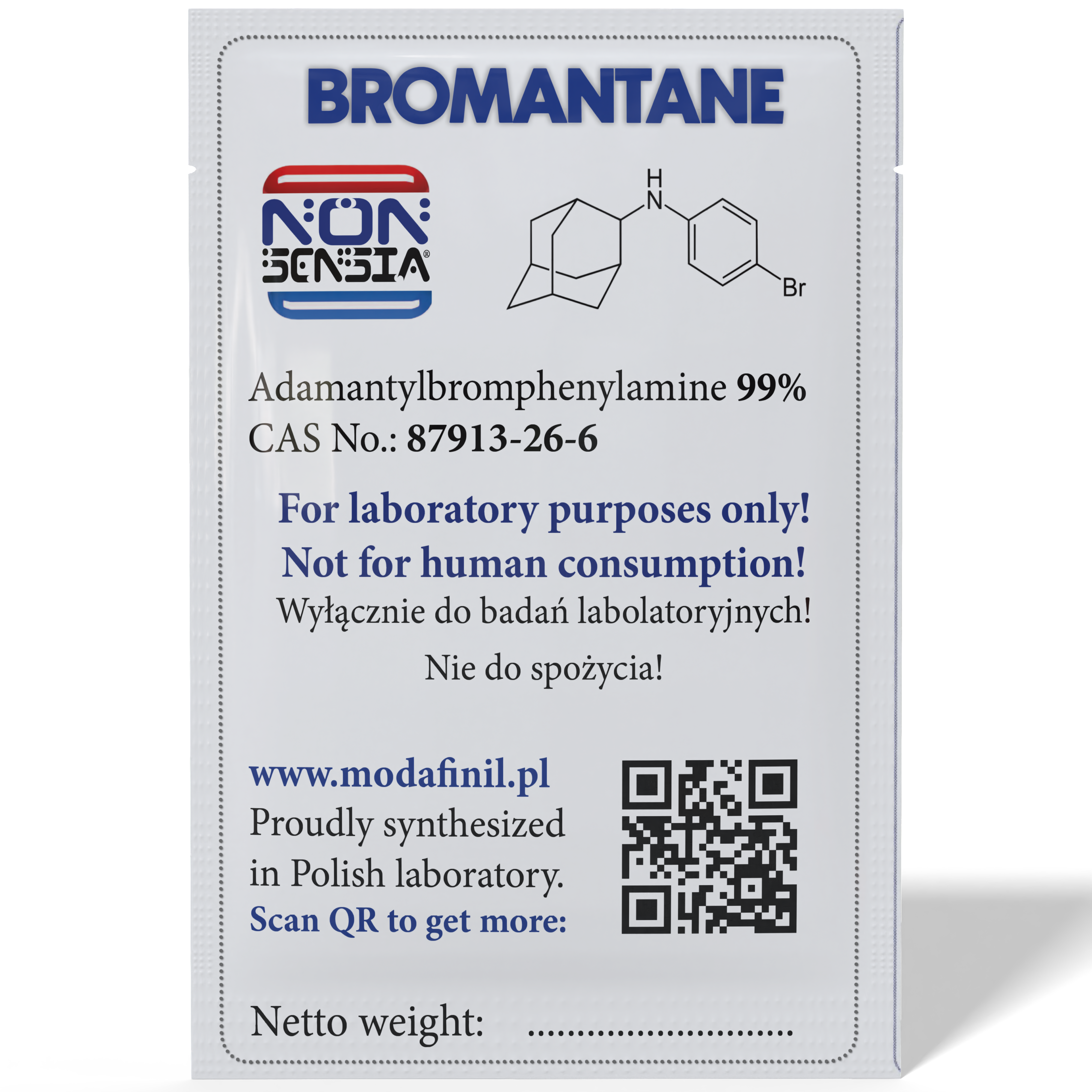
Product classification — read before ordering. This item is a chemical reagent and analytical reference material. It is not a medicinal product, dietary supplement, food, feed, novel food or cosmetic, and it is not intended for human or animal consumption or for any in-vivo administration whatsoever. It is supplied exclusively to laboratories, research institutions and professional users for in-vitro analytical, chromatographic and method-development work. Scientific findings summarised on this page describe substances investigated in published laboratory and clinical research; they are reported here as bibliographic facts about that literature and are not product claims, dosage guidance, or a recommendation of any use of this reagent.
Doping-control note. Bromantan is listed by name in section S6.A, non-Specified Stimulants, of the World Anti-Doping Agency 2026 Prohibited List, and is prohibited in-competition [2]. This page states that fact because it is the principal reason an accredited laboratory needs a characterised reference material for the substance. It is not an invitation to use the material in any other way, and any such use falls outside the terms of supply set out in section 15.
Key facts
- Substance
- Bromantane (WHO Drug Dictionary name), also bromantan and bromontan — N-(4-bromophenyl)adamantan-2-amine
- CAS
- 87913-26-6 (superseded registry number 138308-72-2)
- Formula / mass
- C16H20BrN · 306.24 g·mol−1 · monoisotopic 305.07791 Da
- Grade
- Analytical reference standard, ≥99.75% by HPLC (area normalisation); batch value on Certificate of Analysis
- Quantity
- Eight pack sizes from 1 g to 500 g, crystalline powder
- Stereochemistry
- Achiral — zero stereocentres. Substitution sits at adamantane C-2, which lies on the molecular mirror plane
- Key analytical feature
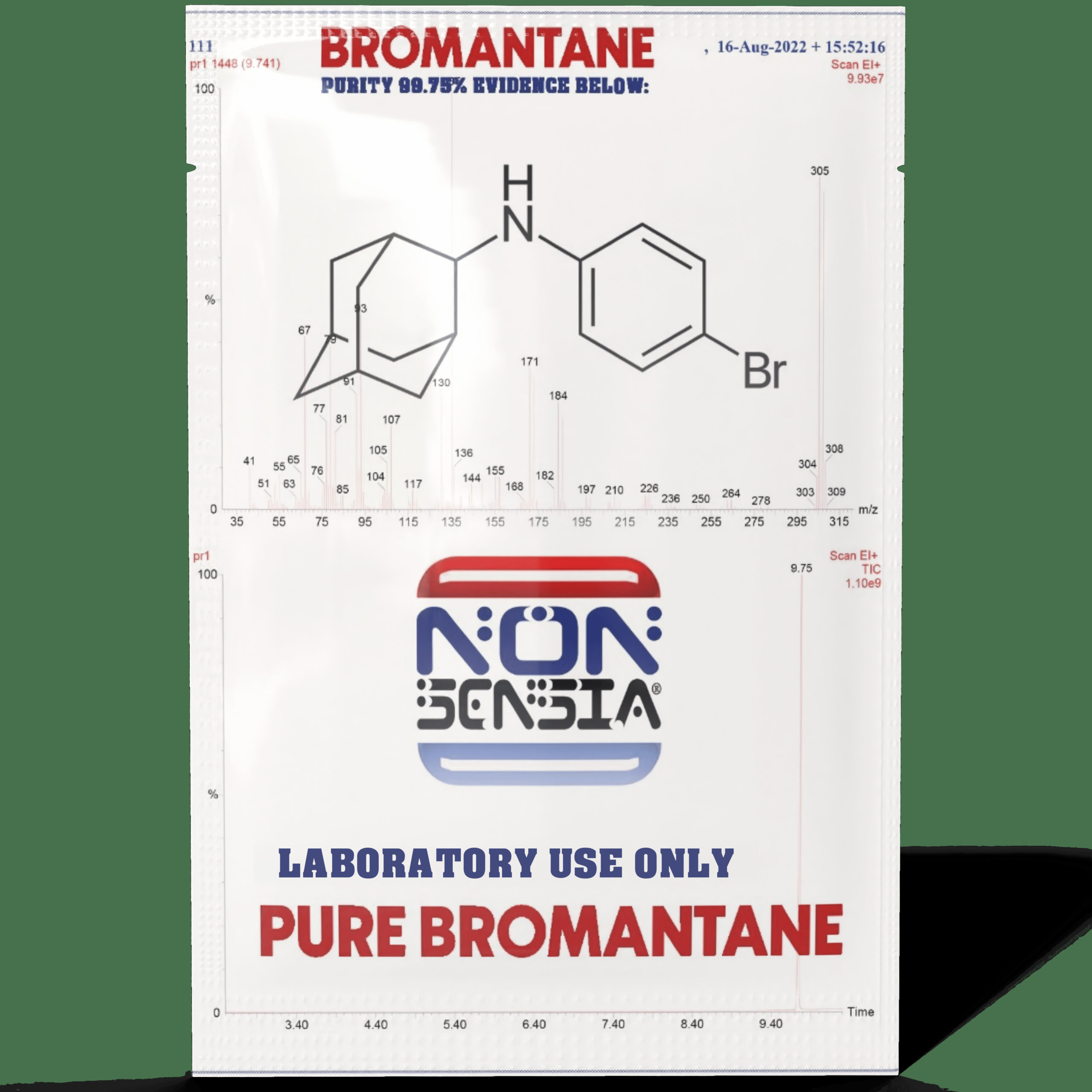
- One bromine atom gives a near-1:1 M/M+2 isotope doublet at m/z 305/307, an unusually cheap confirmation of identity
- Hazards
- GHS Warning: H315 (skin irritation), H319 (serious eye irritation), H335 (may cause respiratory irritation)
- Regulatory flag
- WADA 2026 Prohibited List, class S6.A non-Specified Stimulants, prohibited in-competition
- Intended use
- In-vitro analytical chemistry, HPLC and GC-MS identity and purity work, doping-control reference material, marker for related adamantan-2-amines
- Excluded use
- Any human or animal administration; any consumable, medicinal or cosmetic product; any use in sport
- Substance identity and registry data
- Molecular structure
- Computed descriptors and what they predict
- Stereochemistry: why this material has no enantiomers
- Solid-state behaviour and solution preparation
- Use as an analytical reference standard
- Reference spectral data
- Batch specification and Certificate of Analysis
- Handling, storage and stability
- Hazard classification
- Discovery and development history
- Receptor-level and preclinical pharmacology
- Clinical research literature
- Regulatory status
- Permitted use and terms of supply
- Frequently asked questions
- How this page is sourced and verified
- References
1. Substance identity and registry data
Bromantane is the WHO Drug Dictionary name for N-(4-bromophenyl)adamantan-2-amine, a secondary aromatic amine in which a diamondoid adamantane cage is bonded through nitrogen to a para-brominated benzene ring [1]. It belongs to the adamantane pharmacophore family that also contains amantadine, rimantadine and memantine, but it differs from all three in a way that matters analytically: the nitrogen is attached at the cage bridging carbon C-2 rather than at a bridgehead, and it is an arylamine rather than an alkylamine. Those two features set its polarity, its basicity and its chromatographic behaviour apart from the rest of the family.
Bromantane, bromantan or Ladasten — what is the difference?
There is none at the level of the substance: all three name the same molecule, CAS 87913-26-6. Bromantane is the WHO Drug Dictionary form and the one used throughout this page. Bromantan (and the older transliteration bromontan) is how the compound appears in the Russian-language literature and, notably, in the WADA Prohibited List, which spells the entry "Bromantan" [2]. Ladasten is a trade name: the medicinal product authorised and marketed in the Russian Federation. A search on any of the three should reach this record; a laboratory inventory should carry the CAS number rather than any of the names.
Every identifier below comes from a public authoritative registry [1][4], so a receiving laboratory can reconcile the material against its own inventory system without ambiguity.
| WHO Drug Dictionary name | bromantane |
|---|---|
| IUPAC name | N-(4-bromophenyl)adamantan-2-amine |
| CAS index name | Tricyclo[3.3.1.13,7]decan-2-amine, N-(4-bromophenyl)- |
| Common synonyms | bromantan; bromontan; Ladasten; N-(2-adamantyl)-N-(4-bromophenyl)amine; 2-bromophenyl-1-amino adamantane |
| CAS Registry Number | 87913-26-6 |
| Superseded CAS Number | 138308-72-2 — deprecated; do not use on new records |
| EC Number | 687-739-8 |
| UNII (FDA GSRS) | N1ILS53XWK |
| PubChem CID | 4660557 |
| ChEMBL ID | CHEMBL4303520 |
| DSSTox Substance ID | DTXSID40405333 |
| NCI Thesaurus code | C221880 |
| Nikkaji Number | J1.013.532J |
| MDL Number | MFCD02101627 |
| Molecular formula | C16H20BrN |
| Average molecular mass | 306.24 g·mol−1 |
| Monoisotopic mass | 305.07791 Da (79Br isotopologue) |
| InChIKey | LWJALJDRFBXHKX-UHFFFAOYSA-N |
| InChI | InChI=1S/C16H20BrN/c17-14-1-3-15(4-2-14)18-16-12-6-10-5-11(8-12)9-13(16)7-10/h1-4,10-13,16,18H,5-9H2 |
| SMILES | C1C2CC3CC1CC(C2)C3NC4=CC=C(C=C4)Br |
Two entries in that table regularly cause reconciliation failures. The superseded CAS number 138308-72-2 still circulates in older catalogues and secondary databases; it refers to this same substance but is no longer current, and a record built on it will not match a modern registry lookup. And the InChIKey LWJALJDRFBXHKX-UHFFFAOYSA-N ends in UHFFFAOYSA, the standard marker for a structure carrying no stereochemical layer at all — not an omission in the record but a positive statement that there is nothing to specify. Section 4 explains why, and why it simplifies the analytical work considerably.
2. Molecular structure
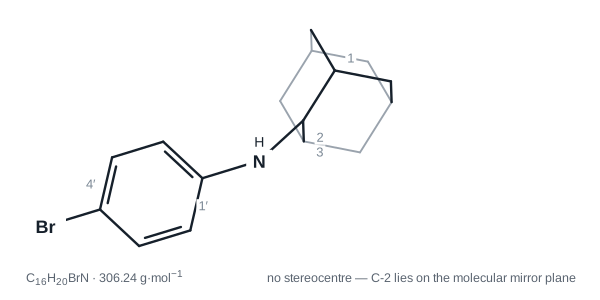
Three structural regions each govern a different part of its laboratory behaviour. The adamantane cage is a rigid, saturated, almost spherical C10 hydrocarbon with no conformational freedom: it contributes bulk and lipophilicity and nothing else — no hydrogen bonding, no ionisable group, no rotatable bond — which is why the whole molecule has only two rotatable bonds despite eighteen heavy atoms. The secondary arylamine bridge, C-2–NH–C-1′, is the only polar functionality and the only hydrogen-bond donor; because the nitrogen lone pair is conjugated into the ring and the para bromine withdraws further electron density, this nitrogen is aniline-like rather than alkylamine-like, making bromantane a far weaker base than the alkylamine adamantanes it is often shelved beside. The 4-bromophenyl ring supplies both the ultraviolet chromophore that makes HPLC-UV detection straightforward and the bromine atom whose isotope signature makes mass-spectrometric confirmation unusually easy.
Structural neighbours in this catalogue
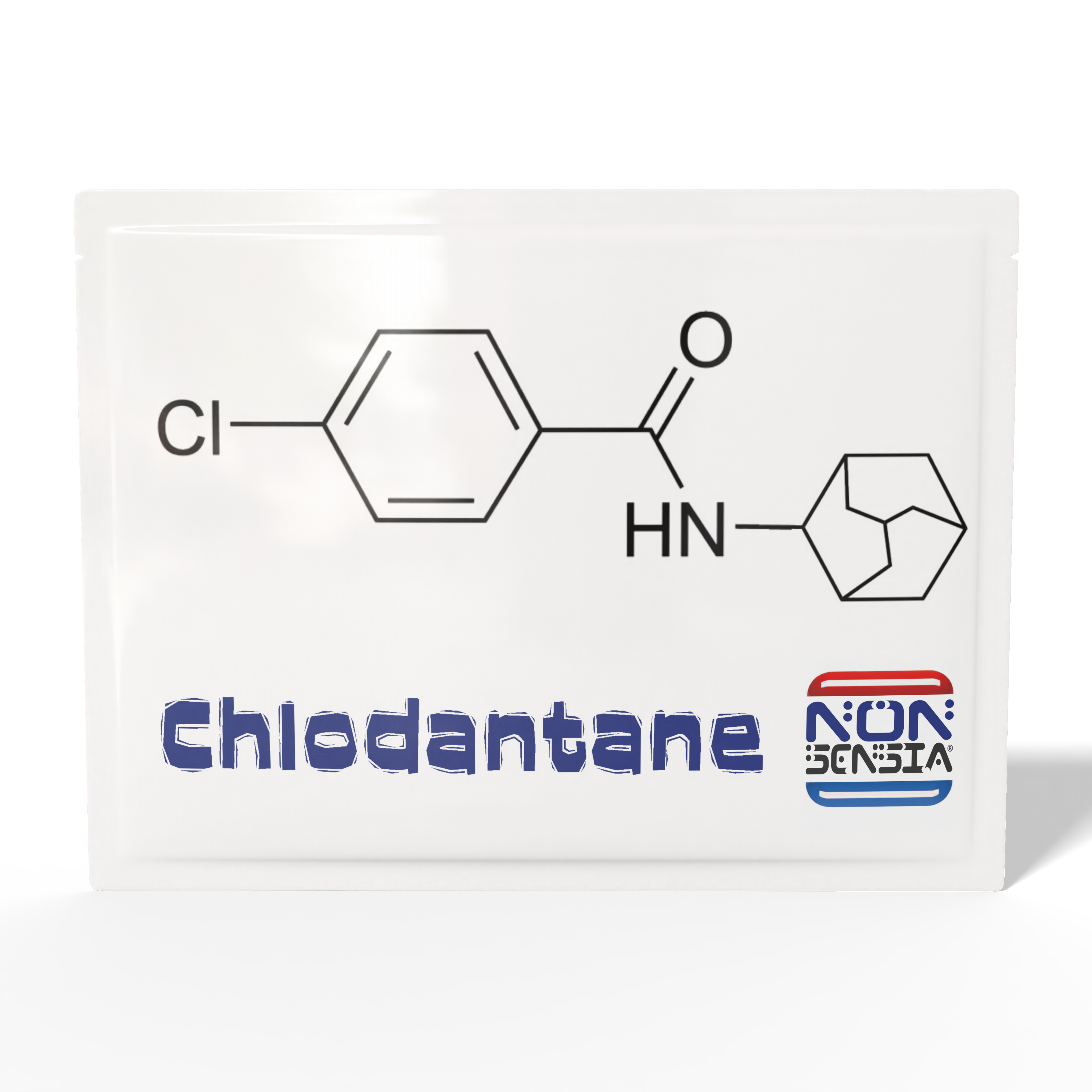
The single most informative comparison is with the corresponding chlorine analogue, offered here as chlodantane. The relationship is not a halogen swap,. Chlodantane is N-(2-adamantyl)-4-chlorobenzamide: a carbonyl sits between the nitrogen and the ring, so its bridge is an amide rather than the aryl amine found here, and the molecule carries an extra carbon and an extra oxygen. Its mass is nonetheless lower — 289.80 against 306.24 — because chlorine is some 45 Da lighter than bromine. The adamantane cage and an aryl halide are genuinely shared; the bridge is not. That is precisely the situation in which a method has to be shown to separate two related species rather than merely detect one of them. The identifiers for that material are stated on its own product page.
Two further comparisons are useful for different reasons. Modafinil and flmodafinil share none of bromantane's chemistry — they are diphenylmethylsulfinyl acetamides — but they sit on the same S6.A list [2], so a laboratory building a stimulant screen frequently needs all three on the same shelf. Modafinil, unlike bromantane, is chiral at sulfur, which makes the pair a natural teaching contrast between a substance that needs a chiral method and one that cannot need one.
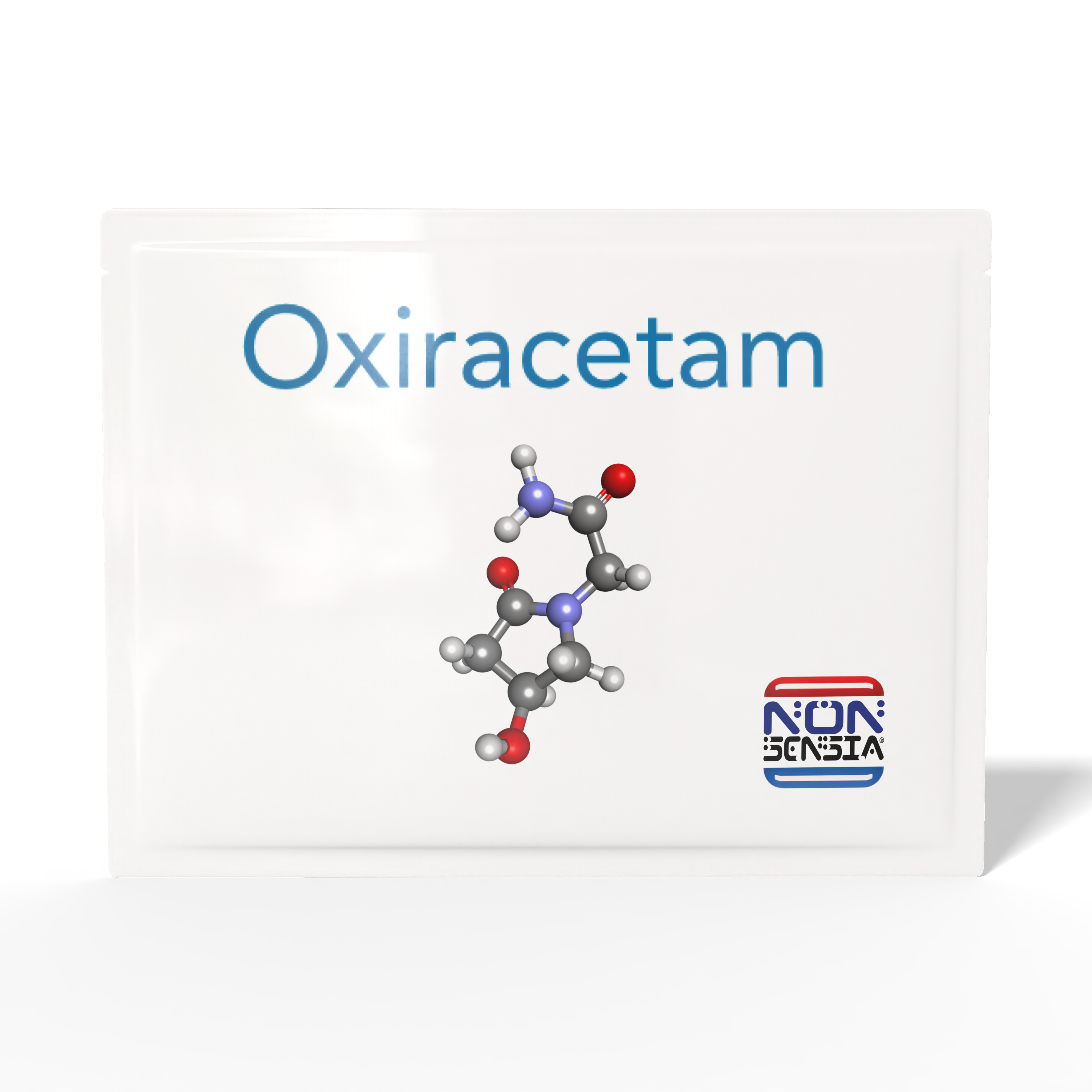
The oxiracetam reference standard sits at the opposite pole of the polarity range in this catalogue: computed logP around −2.2 against bromantane's +5. A pair of standards that far apart is a convenient way to bracket the working range of a gradient method during system-suitability development.
3. Computed descriptors and what they predict
The values in Table 2 are computed from the structure by the algorithms used in the PubChem pipeline [1]. They are predictions, not measurements, and they are labelled as such throughout this page. Their value is that they are reproducible, they are derived from a structure that is itself unambiguous, and they predict laboratory behaviour well enough to design a first experiment.
| XLogP3-AA | 5.0 |
|---|---|
| Topological polar surface area | 12 Å2 |
| Hydrogen-bond donors | 1 |
| Hydrogen-bond acceptors | 1 |
| Rotatable bonds | 2 |
| Heavy atoms | 18 |
| Formal charge | 0 |
| Complexity (Cactvs) | 280 |
| Defined / undefined atom stereocentres | 0 / 0 |
| Defined / undefined bond stereocentres | 0 / 0 |
| Covalently bonded units | 1 |
| Isotope atom count | 0 |
What is the molecular weight of bromantane, and what do the descriptors predict?
The molecular weight is 306.24 g·mol−1 for the formula C16H20BrN, with a monoisotopic mass of 305.07791 Da for the 79Br isotopologue [1]. The remaining descriptors matter less as numbers than as predictions:
A computed logP of 5.0 with a polar surface area of 12 Å2 describes a strongly lipophilic, essentially non-polar solid. On a conventional C18 column this predicts heavy retention: a mobile phase in the region of seventy per cent or more organic modifier is a rational starting point, and an isocratic method built for polar analytes will simply not elute this compound in a usable time. It also predicts that the material will be practically insoluble in water and freely soluble in methanol, acetonitrile, acetone and chlorinated solvents — which is how stock solutions should be prepared.
Two rotatable bonds is a remarkably low count for a molecule of eighteen heavy atoms. The cage contributes none, and the only freedom is rotation about the two bonds either side of nitrogen. Conformationally rigid analytes give narrow, symmetrical peaks and reproducible retention, and they are less prone to the temperature-dependent peak distortion that flexible molecules can show.
One donor and one acceptor, both belonging to the same nitrogen, means silanol interaction is the main peak-shape risk rather than ionic retention. An end-capped, high-purity-silica stationary phase is the sensible default, and tailing that persists on such a phase points to the column rather than to the sample.
The absence of any formal charge and of any strongly basic centre is the descriptor with the largest practical consequence, and it is easy to overlook. Conjugation of the nitrogen lone pair into the ring, reinforced by the para bromine, makes this an aniline-type nitrogen rather than an alkylamine one. Chemists who approach bromantane expecting the behaviour of amantadine or memantine — readily protonated aliphatic amines that ionise cleanly in positive electrospray — will find it does not follow. Where electrospray response proves weak, atmospheric-pressure chemical ionisation is the conventional alternative for neutral lipophilic analytes of this class. This is an inference from structure rather than a measured result, and it is offered as a starting hypothesis for method development, not as a specification.
Complexity 280 with zero stereocentres is the signature of a molecule that is topologically intricate but stereochemically trivial. That combination is unusual and it is worth stating plainly, because it means the entire apparatus of chiral method development — enantiomeric purity specification, chiral column screening, enantiomeric impurity limits — is simply not applicable here. Section 4 sets out why.
4. Stereochemistry: is bromantane chiral?
Bromantane has no stereocentre. The PubChem record reports zero defined and zero undefined atom stereocentres and zero defined and zero undefined bond stereocentres [1], and the standard InChIKey carries no stereochemical layer.
This deserves a section of its own because the structure looks, at a glance, as though it ought to be chiral: carbon C-2 carries a hydrogen, the arylamino nitrogen and two ring bonds heading off into the cage. The reason it is nonetheless achiral is a symmetry argument rather than a counting one. The two ring paths leading away from any C-2-type carbon of adamantane are related by a mirror plane of the cage — walking round the cage in either direction traverses paths that are constitutionally and spatially identical. Two of the four substituents at that carbon are therefore the same, so it is not a stereogenic centre, and the molecule retains that mirror plane and is superimposable on its mirror image. Figure 1 marks the flanking bridgehead carbons 1 and 3 precisely because they are the pair the mirror plane exchanges.
What this means for the analyst. There is no enantiomeric impurity to specify, no chiral method to validate, and no enantiomeric ratio to report on the Certificate of Analysis. A single achiral HPLC or GC method characterises this material completely. Conversely, this article cannot be used to qualify a chiral separation — it has no enantiomers to resolve, and it will give a single peak on any chiral column. For that purpose a racemate with a genuine stereocentre is required, such as the racemic oxiracetam standard.
The point is not academic. Reviews of stereoisomer handling in sports drug testing note that a large fraction of doping-relevant analytes are chiral and require enantioselective treatment [14]. Bromantane is one of the ones that does not, and knowing which side of that line a substance falls on before method development starts saves a column screen that could never have produced a result.
5. Solid-state behaviour and solution preparation
A gap in the public record, stated rather than filled. The authoritative public registries do not currently publish a validated experimental melting point, boiling point, density, refractive index, vapour pressure or aqueous solubility for bromantane [1]. The PubChem record for this compound contains computed properties and no experimental properties section. This page therefore prints no such value. Figures for these constants do circulate in commercial listings; they are not traceable to a named measurement and are not reproduced here. Where a procedure requires a physical constant, use the value measured for the delivered batch and stated on its Certificate of Analysis.
What can be said about the solid state follows from structure and from the behaviour of the adamantane class generally, and is set out here as reasoning rather than measurement. Adamantane derivatives are known for high sublimation enthalpies and unusually ordered molecular crystals; a systematic thermodynamic study of adamantane and memantine derivatives found that crystal packing dominates the sublimation characteristics of this family [11]. The near-spherical cage packs efficiently and rotational disorder in the solid is common. Operationally, adamantane-containing solids can show measurable sublimation on prolonged open storage or under vacuum, and an open, warm vial is a slow route to gravimetric error.
Unlike the polar racetams, bromantane presents no hygroscopicity risk of any consequence. With a single NH donor, a polar surface area of 12 Å2 and a hydrocarbon cage occupying most of the molecular surface, there is nothing for atmospheric water to bind to. Caking in a bromantane sample is not moisture uptake and should be investigated as something else.
What is the melting point and water solubility of bromantane?
Neither is published in a validated form, and this page prints no value for either — see the note above. The same applies to boiling point, density and refractive index. If a procedure needs a physical constant, take it from the batch Certificate of Analysis rather than from a catalogue listing.
Preparing stock solutions
The computed lipophilicity dictates the approach. Methanol and acetonitrile are the appropriate primary solvents for chromatographic stock solutions; acetone, dichloromethane and dimethyl sulfoxide dissolve the compound readily where a different medium is needed. Water is not usable at any practically relevant concentration, and aqueous dilution of a concentrated organic stock is the classic way to precipitate a lipophilic analyte in the autosampler vial: keep the organic fraction of any working dilution high enough that the analyte stays in solution. Since no certified solubility figure exists, determine the working concentration for the specific batch rather than inheriting one — weigh, dissolve, verify against a UV response and record the result.
6. Use as an analytical reference standard
A reference standard earns its place on a shelf by answering a question that cannot be answered without it. Bromantane answers four, and the second and third are the ones that make this particular substance worth stocking rather than merely worth listing.
6.1 Identity and purity confirmation by HPLC-UV
The 4-bromophenyl ring is a competent ultraviolet chromophore, which makes conventional reversed-phase HPLC with diode-array detection the natural first method for this compound. The role of the standard here is the ordinary one: establish the retention time under the laboratory's own conditions, capture the spectrum for library matching, and provide the peak against which sample purity is normalised.
The computed logP of 5.0 sets the practical envelope: a high-organic mobile phase, long retention on any method designed for polar analytes, and gradient elution usually more convenient than isocratic. Because there is no ionisable centre of consequence, mobile-phase pH is a weak lever on retention — useful, since it removes one common source of inter-laboratory drift.
6.2 The bromine isotope signature, and why it is worth the shelf space
This is the strongest single technical argument for keeping a characterised bromantane standard.
Bromine occurs naturally as two stable isotopes in almost equal proportion: 79Br at 50.69% and 81Br at 49.31% [7]. A molecule containing exactly one bromine atom therefore produces a molecular-ion cluster with two peaks of nearly equal height, separated by two mass units. For bromantane the monoisotopic mass is 305.07791 Da for the 79Br isotopologue [1]; the 81Br isotopologue lies 1.99795 Da higher, at approximately 307.076 Da, giving an M/M+2 doublet at nominal m/z 305 and 307 in a ratio close to 1:0.97.
That pattern is close to unmistakable. Most organic molecules in a chromatographic background produce a molecular ion with a small M+1 shoulder from carbon-13 and nothing at M+2. A pair of near-equal peaks two units apart is the classic monobromine fingerprint, and it survives in electron-ionisation GC-MS, in soft-ionisation LC-MS, and in fragment ions that retain the bromine atom.
Why this matters operationally. Isotope-pattern confirmation is one of the very few identity checks that costs nothing extra: it comes free with any full-scan acquisition, it requires no additional injection, no second column and no derivatisation, and it is largely independent of matrix. What a reference standard adds is the calibration of that expectation — the measured ratio and its tolerance on the laboratory's own instrument, in its own matrix, at its own resolution. Once that is recorded, an M/M+2 ratio outside tolerance becomes evidence of a co-eluting interference rather than a curiosity.
6.3 Reference material for doping control
Bromantan appears by name in section S6.A of the WADA 2026 Prohibited List, among the non-Specified Stimulants, and is prohibited in-competition [2]. The substance has a documented history in this specific context: its first appearance in international doping control was reported in The Lancet in 1997 by Burnat and colleagues at the French armed-forces analytical laboratory, under the transliteration bromontan, as a then-unfamiliar agent encountered in athlete samples [12].
That history is why a characterised standard is needed rather than optional. Laboratories operating under ISO/IEC 17025 and the WADA International Standard for Laboratories must show that their initial testing procedure detects each listed substance at the required sensitivity and that their confirmation procedure identifies it unambiguously — neither claim can be made against a substance the laboratory has never had in pure form. A reference standard supports:
- retention-time and relative-retention establishment in the laboratory's own stimulant screen;
- acquisition of a reference mass spectrum and selection of diagnostic product ions;
- calibration of the M/M+2 isotope-ratio acceptance window described above;
- spiking of blank matrix to determine the limit of detection actually achieved, as opposed to the limit assumed;
- preparation of quality-control samples for routine batch acceptance;
- demonstration of selectivity against structurally related compounds.
A dedicated liquid chromatography–tandem mass spectrometry assay for bromantane in human plasma has been published [13], and reviews of multi-target stimulant screening describe the framework into which such an analyte is fitted [14]. How quickly that framework has to absorb new entries is visible in neighbouring analogues: flmodafinil and fladrafinil also appear in S6.A of the 2026 list [2], and their metabolism and elimination were characterised for sports-testing purposes in the same period [15]. The methodological literature specific to bromantane is nonetheless thin, which is stated here rather than glossed over; section 17 returns to the point.
6.4 Bromantane compared with its nearest analogues
| Property | Bromantane | Chlodantane | Modafinil | Amantadine |
|---|---|---|---|---|
| Core | adamantan-2-yl | adamantan-2-yl | diphenylmethyl sulfinyl | adamantan-1-yl |
| Formula and mass | C16H20BrN, 306.24 | C17H20ClNO, 289.80 | C15H15NO2S, 273.35 | C10H17N, 151.25 |
| Nitrogen type | aryl amine (aniline-like) | amide (benzamide) | amide | alkyl amine (basic) |
| Halogen isotope pattern | Br: ~1:1 M/M+2 | Cl: ~3:1 M/M+2 | none | none |
| Stereocentre | none — achiral | none | one, at sulfur | none |
| Chiral method needed | no | no | yes | no |
| WADA 2026 status | S6.A, in-competition [2] | not listed by name | S6.A, in-competition [2] | not listed |
| In this catalogue | this page | chlodantane | modafinil | — |
Amantadine is included as a reference point only; it is not offered here. The row that matters operationally is the isotope pattern, because it is the one property that separates these materials without any chromatography at all.
Selectivity claims are only meaningful against a named alternative. The nearest neighbour is the corresponding chloro compound, chlodantane, which shares the adamantane cage and the aryl halide but not the bridge: chlodantane is an amide, NH–C(=O)–Ar, where bromantane is an aryl amine. The difference is analytically legible in three independent ways: the molecular mass falls to 289.80, an amide carbonyl appears near 1630–1650 cm−1 in the infrared and near 166–167 ppm in 13C, and the halogen isotope pattern changes character entirely — chlorine's 35Cl and 37Cl occur in roughly a 3:1 ratio rather than bromine's near-1:1 [7]. A method that resolves and correctly assigns the two is a method that has been shown to do something, and demonstrating that requires both materials in authenticated form.
The broader family matters too. Adamantane derivatives recur across pharmacology — amantadine, rimantadine and memantine are the familiar ones — and synthetic routes to 2-substituted adamantanamines are well established, including reductive amination chemistry developed with this scaffold in mind [8][9][10]. Where a laboratory screens for the class rather than one member of it, a characterised representative of the 2-aryl-substituted subgroup is the appropriate positive control.
6.5 A retention marker at the lipophilic end of the range
System-suitability work benefits from standards that bracket a method's working range rather than clustering in the middle of it. At a computed logP of 5.0 bromantane sits near the lipophilic extreme of this catalogue; the oxiracetam standard at roughly −2.2 sits near the polar extreme, with aniracetam and noopept between them. A gradient that retains and resolves the whole set has been shown to work across more than seven log units of partition coefficient — a far stronger statement about a method than any single-analyte result.
7. Reference spectral data
Third-party spectra deposited against this compound record are listed below with their attribution. They are the property of the depositors named and are cited so that a laboratory can locate a comparison spectrum from an independent source. They are not the spectra of the batch supplied; batch data are on the Certificate of Analysis.
| Technique | Depositor and attribution | Notes |
|---|---|---|
| ATR-IR (ATR-neat) | Forensic Spectral Research; sample supplied by Cayman Chemical Company, catalogue number 24688, lot 0531437-9. Copyright John Wiley & Sons, Inc. | Instrument recorded as Bio-Rad FTS. The only deposited spectrum with a stated sample provenance down to lot number |
| GC-MS | DigiLab GmbH; copyright DigiLab GmbH and Wiley-VCH GmbH | Electron-ionisation reference spectrum; the source in which the M/M+2 bromine doublet described in section 6.2 is directly visible |
| 13C NMR | Copyright John Wiley & Sons, Inc. | One-dimensional carbon spectrum |
Two absences are worth noting explicitly. There is no deposited 1H NMR spectrum and no deposited ultraviolet spectrum in this record [1]. A laboratory requiring either must acquire it, and the batch material is suitable for exactly that purpose. Stating the gap is more useful than implying a completeness the record does not have.
8. Batch specification and Certificate of Analysis
Each unit is supplied with a Certificate of Analysis for the specific batch. The certificate, not this page, is the controlling document for any numerical value used in a procedure.
| Parameter | Method | Specification |
|---|---|---|
| Identity — chromatographic | HPLC, retention against reference | Conforms |
| Identity — spectroscopic | IR and/or MS, comparison with reference spectrum | Conforms; M/M+2 doublet consistent with one bromine atom |
| Assay | HPLC, area normalisation | ≥99.75% |
| Related substances | HPLC, area normalisation | Batch value reported |
| Residual solvents | GC headspace | Batch value reported |
| Water content | Karl Fischer titration | Batch value reported |
| Appearance | Visual | Crystalline powder |
| Enantiomeric purity | — | Not applicable — the substance is achiral (section 4) |
The layout of the certificate, the parameters reported and the method stated against each one can be reviewed in advance on the specimen Certificate of Analysis. Laboratories with a document-control requirement generally want to see that format before ordering rather than after.
Scope of the specification, stated plainly. The material is supplied as an analytical reference standard with a batch Certificate of Analysis. It is not a certified reference material in the ISO 17034 sense: it is not accompanied by a metrologically traceable certified value with an assigned uncertainty budget, and it is not the product of an accredited reference-material producer. Where a method requires certified traceability — as some accreditation schemes do for confirmatory quantitation — that requirement is not met by this article and should be met by a certified material from an ISO 17034 producer. This page draws the distinction rather than leaving it to be discovered on audit.
9. Handling, storage and stability
The recommendations below follow from the physicochemical profile in sections 3 and 5 rather than from a generic template.
- Storage. Sealed, cool, dry, away from light. Aryl bromides are photochemically labile in principle, and an amber vial or a dark cupboard costs nothing.
- Container discipline. Keep containers closed except when weighing. Adamantane-family solids can sublime measurably on prolonged open storage or under vacuum [11], and a slowly lightening vial is a slowly accumulating gravimetric error.
- Condensation. Unlike hygroscopic polar standards, this material does not require an equilibration protocol against moisture uptake. Ordinary good practice — letting a cold container reach room temperature before opening — remains sensible, but the hygroscopicity risk that dominates handling of the racetams does not apply here.
- Solution stability. Prepare stock solutions in methanol or acetonitrile, store refrigerated and protected from light, and re-verify rather than assume stability across long intervals. No published stability study for bromantane solutions was located, and that absence is a reason for caution rather than confidence.
- Weighing. Static charge is a recurring nuisance with lipophilic crystalline solids of low density. An antistatic device or an ionising bar makes small-mass weighing considerably more reproducible.
- Personal protection. Gloves, eye protection and adequate ventilation, per section 10. Powder handling should take place in a fume hood or under local exhaust, because the classification includes respiratory-tract irritation.
10. Hazard classification
The classification below is the aggregated entry from the ECHA Classification and Labelling Inventory as surfaced in the PubChem record [1][3]. The Safety Data Sheet supplied with the batch is the controlling document; this section is orientation, not a substitute for it.
| Signal word | Warning |
|---|---|
| Hazard statements | H315 — Causes skin irritation H319 — Causes serious eye irritation H335 — May cause respiratory irritation |
| Hazard classes | Skin Irrit. 2; Eye Irrit. 2A; STOT SE 3 (respiratory tract irritation) |
| Precautionary statements | P261, P264, P264+P265, P271, P280, P302+P352, P304+P340, P305+P351+P338, P319, P321, P332+P317, P337+P317, P362+P364, P403+P233, P405, P501 |
| Basis of the aggregate | Two notifications from two companies — see the caveat below |
How much weight this classification carries. The aggregated entry rests on two notifications to the ECHA C&L Inventory [1][3]. That is a very small evidence base by the standards of the inventory, where widely traded substances commonly carry hundreds of notifications. A unanimous classification derived from two notifiers is unanimous in a trivial sense, and it should be read as the notifiers' self-classification rather than as a harmonised classification under Annex VI of the CLP Regulation, which bromantane does not have. The practical reading is: treat the H315/H319/H335 set as the working minimum for handling, and do not infer from the absence of other hazard statements that other hazards have been assessed and excluded. They have not been.
In operational terms the classification translates into gloves, eye protection and containment of dust — the H335 entry is the one most often underweighted, and it is the reason powder transfers belong under local exhaust rather than on an open bench.
Rodent toxicology for the substance exists in the Russian-language literature, including an acute toxicity study [32] and assessments of effects on neurological status after single administration [31] and on offspring maturation and reflex development [30]. Those are described in section 12 as bibliographic facts about published animal research. They are not a hazard classification, they are not derived from any harmonised assessment, and nothing in them changes the handling requirements set out above.
11. Discovery and development history
Bromantane came out of Soviet pharmacology, and the shape of its literature follows directly from that origin: a dense body of Russian-language work concentrated in a small number of institutes, very little of it replicated outside the former Soviet Union, and a sharp discontinuity in 1996 when the compound arrived in international awareness by an entirely unintended route.
Origins at the Zakusov Institute
The compound was developed and characterised principally at the Institute of Pharmacology of the Russian Academy of Medical Sciences in Moscow — later the V. V. Zakusov Institute of Pharmacology — with substantial parallel work at the Volgograd State Medical Academy and, later, at the Institute of Biochemistry and Genetics of the Ufa Research Centre. Those three affiliations account for the large majority of the primary literature, and they are stated in the affiliation fields of the cited records themselves.
The earliest indexed studies date from the first half of the 1990s: pharmaco-electroencephalographic analysis by Krapivin, Sergeeva and Morozov in 1993, then a 1998 comparison with adapromine and midantan, two other adamantane derivatives from the same programme. In 1995 three groups published within months of one another — Kudrin and colleagues on the dopaminergic and serotonergic systems of the rat brain [17], Grekhova and colleagues on dopamine release and metabolism in the dorsal striatum of freely moving rats by microdialysis [18], and Sergeeva and colleagues on the correlation between pharmacokinetics and the time course of effects [19].
The actoprotector category
Bromantane was developed within a pharmacological category that has no exact equivalent in Western classification: the actoprotector, a class defined by the goal of maintaining physical and mental working capacity under extreme conditions such as heat, hypoxia or prolonged exertion. Oliynyk and Oh reviewed the class and its history for an English-language readership in 2012 [33], and it is the frame in which almost all of the early Russian work on this compound was designed and interpreted.
The category matters for reading the literature: studies were built around endpoints such as physical work capacity, thermal protection and operant performance under load rather than around receptor occupancy. A modern reader looking for target-based pharmacology in the early papers will not find it, because that was not the question being asked.
1996: an unintended international debut
Bromantane entered international awareness through doping control rather than through pharmacology. The compound was encountered in athlete samples in the mid-1990s and reported in The Lancet in 1997 by Burnat and colleagues under the transliteration bromontan, described explicitly as a new doping agent [12]. It has been a named entry on the prohibited list ever since, and it appears in the current 2026 edition in class S6.A [2].
From a laboratory's point of view this is the single most consequential fact in the compound's history, and the reason a reference standard for it still has continuous demand three decades on.
Ladasten: registration as a medicinal product in Russia
In parallel, development continued toward a therapeutic indication. Under the trade name Ladasten the compound was investigated and subsequently registered in the Russian Federation for asthenic disorders. A pilot clinical trial was reported by Siuniakov and colleagues in 2006 [34], followed by a placebo-controlled comparative study in neurasthenia by Neznamov and colleagues in 2009 [35] and a multicentre study in asthenic disorders associated with psychoautonomic syndrome in 2010 [36]. Section 13 summarises that literature.
Alongside the clinical programme, the mechanistic work moved to the Ufa institute, where a series of studies from the mid-2000s onward examined the compound's effects on gene expression, on the tyrosine hydroxylase promoter and on chromatin-level regulation [23][24][25][26][27]. That work, summarised in section 12, is the most modern layer of the pharmacology and the layer with the clearest molecular hypotheses.
Synthetic chemistry, then and now
The compound continues to appear in the methodological chemistry literature as a synthetic target of convenience. Kolesnikov and colleagues used it to demonstrate a ruthenium-catalysed reductive amination that requires no external hydrogen source, using carbon monoxide as the reductant, and stated the application to ladasten explicitly [8]. The same scaffold reappears in more recent catalysis work on air- and moisture-stable ruthenium precatalysts [9], and the parent amine, adamantan-2-amine, features in ongoing Russian work on adamantane derivatisation [10].
The reason it recurs is instructive: condensing a hindered ketone (2-adamantanone) with a deactivated aromatic amine (4-bromoaniline) is a demanding reductive amination, so a catalyst that performs it well has demonstrated something worth reporting.
12. Receptor-level and preclinical pharmacology
How to read this section. What follows is a summary of published laboratory research on the substance bromantane, reported as bibliographic fact. Every finding is stated together with the experimental system that produced it — a named species, a named preparation, a named route. None of it describes, predicts or claims any effect of the reagent supplied on this page, which is not administered to anything. Nothing here is dosage guidance, a health claim, or a representation that the substance is safe or effective for any purpose in humans.
The preclinical literature divides into three layers produced by different groups, asking different questions and reaching different levels of mechanistic resolution. Read as one body of evidence they give a false sense of convergence; read as three layers they are more useful.
12.1 The neurochemical layer, 1993–1999
The earliest work characterised the compound electrophysiologically and neurochemically in rodents: a quantitative pharmaco-electroencephalographic analysis by Krapivin, Sergeeva and Morozov in 1993 [16], and a later comparison of bromantane with two other adamantane derivatives, adapromine and midantan, on the bioelectric activity of the rat brain [20].
The monoamine work followed. Kudrin and colleagues examined acute and chronic administration at 50 mg/kg orally in rats and reported changes in noradrenaline, dopamine and serotonin and their metabolites across brain regions, including an increase in serotonin and 5-hydroxyindoleacetic acid in the frontal cortex [17]. In the same year Grekhova, Gaĭnetdinov, Sotnikova and colleagues used microdialysis in freely moving rats to follow dopamine release and metabolism in the dorsal striatum [18] — the most direct measurement in the early set, and the one least dependent on inference from tissue homogenates. Morozov and colleagues summarised the mechanism as then understood in 1999, describing the principal component as dopamine-positive activity: antagonism of neuroleptic effects in rats at 5 mg/kg, blockade of dopamine synaptosomal uptake at 50 µM, and inhibition of neuronal serotonin uptake at 50 µM [21]. Pharmacokinetic characterisation was published in parallel, correlating plasma concentrations with the development of effects [19]; a later study examined the compound's effect on the pharmacokinetics of the co-administered stimulant sydnocarb [39].
A caveat on the concentrations. The in-vitro uptake effects cited above were observed at 50 µM, which is high by the standards of modern target pharmacology and well above what selective transporter ligands require. Effects at that concentration are not evidence of a high-affinity interaction, and the original reports do not present them as such. Any reading of this compound as a selective monoamine transporter inhibitor is not supported by the primary data.
12.2 The gene-expression layer, 2004–2012
The most mechanistically specific work came from the Institute of Biochemistry and Genetics of the Ufa Research Centre, and it took an unusual direction: rather than searching for a receptor, the group looked at transcriptional and epigenetic regulation. Vakhitova and colleagues reported that a single administration increased tyrosine hydroxylase messenger RNA in the rat hypothalamus more than twofold, then used bisulfite sequencing to examine methylation of CpG sites in the tyrosine hydroxylase promoter, reporting cytosine demethylation in hypothalamic cells [23]. Tyrosine hydroxylase is the rate-limiting enzyme of catecholamine biosynthesis, so a durable change in its transcription is a plausible route to the dopaminergic effects described in the earlier layer — a mechanism operating on synthesis rather than on transport or receptor binding. The group extended the approach to proteomic identification of candidate target proteins in rat brain [24], CREB (Ser133) content and transcription-factor DNA-binding activity [25], the time course of histone deacetylase 1 and acetylated histones H3 and H4 [26], and neurotrophin and mitogen-activated kinase gene expression [27].
The most rigorous study in the whole body of work was published outside Russia. Mikhaylova and colleagues, at the Leibniz Institute for Neurobiology in Magdeburg with the Zakusov and Ufa groups, reported in Neuropharmacology that a single oral 50 mg/kg administration differentially regulated tyrosine hydroxylase messenger RNA and protein and dopamine and L-DOPA content across the ventral tegmental area, nucleus accumbens, hypothalamus, striatum and hippocampus. In hippocampal slices, 10 µM transformed short-term potentiation of synaptic transmission into a long-lasting form; the reinforcement was blocked by the protein-synthesis inhibitor anisomycin and attenuated by the D1/D5 receptor antagonist SCH23390 [22].
That is the study to read first: it was conducted at an independent institution outside the originating programme, it used pharmacological controls that discriminate between candidate mechanisms rather than merely describing an effect, and it appeared in a peer-reviewed international journal.
12.3 The immunological layer and animal toxicology
A distinct strand examined effects on immune cells, which is why MeSH classifies the compound under Adjuvants, Immunologic as well as under Psychotropic Drugs [1]: Tallerova and colleagues reported effects on cytokine markers of inflammation and behaviour in a mouse model of depression-like syndrome [28] and on T-lymphocyte subpopulation composition in C57BL/6 mice [29]. This layer is the least developed and least replicated of the three, and is noted only because the registry classification exists and a reader meeting it deserves to know where it came from.
Rodent toxicology was studied mainly at the Volgograd group: an acute toxicity study [32], the toxic effect of a single treatment on neurological status [31], and, in Neurotoxicology and Teratology, effects on offspring maturation and reflex development after administration to rats [30]. These are animal studies of an administered substance and do not bear on the handling of a laboratory reagent, but a page that reports the pharmacology and silently drops the toxicology is presenting a selected literature rather than a literature.
12.4 What is and is not established
Stated plainly: no single molecular target for bromantane is established. There is no reported binding affinity at a defined receptor that accounts for the observed effects, no structure with a protein partner, and no independently replicated target-deconvolution study. The best-supported hypothesis is an indirect one — upregulation of catecholamine synthesis through effects on tyrosine hydroxylase transcription, with an epigenetic component — resting principally on work from two collaborating groups plus the independent Magdeburg study. That is a real hypothesis with real evidence behind it, and it is not the same thing as an established mechanism. A second limitation is linguistic: the large majority of the primary literature is in Russian, published in journals with limited international circulation, and much of it has never been replicated outside the originating institutions. That is a property of the evidence base rather than an editorial choice, and it is why this section ends in a hypothesis.
13. Clinical research literature
Medicinal product and laboratory reagent are different things. The studies below investigated Ladasten, a medicinal product that was authorised and marketed in the Russian Federation, administered to patients under medical supervision within approved clinical research. They are reported here as bibliographic facts about that literature. They describe neither the article supplied on this page nor any use of it. This reagent is not a medicinal product, has no marketing authorisation in any jurisdiction, has not been assessed by any medicines regulator for safety or efficacy, and must not be administered to any human or animal.
The clinical programme ran from the mid-2000s and concentrated on asthenic disorders — a diagnostic category with more currency in Russian psychiatry than in ICD-driven Western practice, which is itself relevant to interpreting the results.
Siuniakov, Grishin, Teleshova and colleagues reported a pilot clinical trial in 2006 [34]; Neznamov and colleagues followed in 2009 with a comparative study against placebo in neurasthenia, describing both psychostimulant and anxiolytic actions [35]; Voznesenskaia, Fokina and Iakhno reported a multicentre study of efficacy and safety in asthenic disorders with psychoautonomic syndrome in 2010 [36]; and Bogdan and colleagues examined psychophysiological parameters in healthy volunteers in 2009 [37]. Two smaller studies looked outside the primary indication — non-motor symptoms of Parkinson's disease [38], and pharmacological correction of adaptive reactions during short-term ascent from middle to high altitude [40] — and more recent Russian work has examined the compound combined with fabomotizole in a paraquat-induced model of parkinsonian syndrome [41].
How much weight this literature carries. Four limitations apply and none of them is a matter of interpretation. First, essentially all of the clinical work was conducted in a single country, largely by groups connected to the institute that developed the compound. Second, it is published in Russian-language journals with limited international indexing, and several of the reports are not accompanied by an English abstract. Third, the primary indication — asthenia and neurasthenia — is not a diagnostic category used uniformly across regulatory systems, which makes cross-jurisdictional comparison of the endpoints difficult. Fourth, no regulator outside the Russian Federation has evaluated the compound as a medicinal product. Taken together, this is a body of clinical literature that exists and can be cited, but it is not an evidence base that any medicines regulator in the European Union or the United States has accepted, and it should not be read as though it were.
14. Regulatory status
Regulatory status is jurisdiction-specific, it changes, and it is stated here strictly as fact against a named source with a date of check. Where no reliable source was found for a jurisdiction, this page says so rather than inferring.
Is bromantane banned in sport?
Yes. Bromantan is a named entry in class S6.A, Non-Specified Stimulants, of the WADA 2026 Prohibited List and is prohibited in-competition [2]. Because it sits in S6.A rather than S6.B, it is a non-Specified substance, which carries different consequences under the World Anti-Doping Code than a Specified one. This material is supplied so that laboratories can detect it; it must not be used by or supplied to athletes.
Is bromantane legal in Poland and the European Union?
It is not a controlled substance in Poland: bromantane, bromantan and the adamantanamine class do not appear in Annexes 1, 2 or 3 of the consolidated Polish list of psychotropic substances, narcotic drugs and new psychoactive substances, Dz.U. 2024 poz. 1139, checked 22 August 2026 [6]. It is also not an authorised medicinal product in Poland or in the European Union, and it holds no harmonised CLP classification [3]. None of that makes it a consumer product: it is supplied as a laboratory reagent under the terms in section 15, and purchasers outside Poland must verify the position under their own law.
| Instrument / jurisdiction | Status |
|---|---|
| WADA Prohibited List 2026 | Listed. Named entry "Bromantan" in class S6.A, Non-Specified Stimulants; prohibited in-competition. Verified against the text of the 2026 International Standard [2] |
| European Union — medicinal products | No marketing authorisation. The substance is not an authorised medicinal product in the European Union and has not been evaluated by the European Medicines Agency |
| Poland — narcotics, psychotropics and new psychoactive substances | Not listed. Bromantane, bromantan and the adamantanamine class do not appear in Annexes 1, 2 or 3 of the consolidated regulation on the list of psychotropic substances, narcotic drugs and new psychoactive substances, announced as Dz.U. 2024 poz. 1139 [6] |
| Poland — medicinal products | No marketing authorisation. The substance is not a registered medicinal product in Poland |
| United States — DEA | Recorded in the DEA National Forensic Laboratory Information System under drug category Stimulants, added December 2020 [5]. See the note below on what this does and does not mean |
| EU — CLP harmonised classification | No harmonised classification under Annex VI of the CLP Regulation. Two self-classification notifications exist in the ECHA C&L Inventory (section 10) [3] |
| Russian Federation | Was authorised and marketed as the medicinal product Ladasten. Current authorisation status was not verified from a primary Russian regulatory source for this revision and is therefore not asserted here |
| Other jurisdictions | Not assessed. Status must be verified locally before import, purchase or possession |
What the DEA NFLIS entry means, and what it does not. The National Forensic Laboratory Information System is a reporting programme that collects results from forensic laboratories analysing seized drug evidence. An NFLIS drug-category assignment records how such results are tabulated. It is not a scheduling action under the Controlled Substances Act, and it does not by itself make a substance controlled in the United States. The entry is reported here because it is a factual annotation in the registry record [1][5], and it is explained because it is routinely misread as a scheduling decision.
Limits of this section. The Polish entry is a verified negative: the consolidated list was retrieved and searched, and control terms known to be on that list were confirmed present in the same search before the absence of bromantane was recorded, so the search itself is known to have worked. That check is valid for the consolidated text cited and for the date stated; subsequent amendments are not covered. All other jurisdictions listed as "not assessed" are genuinely not assessed. The purchaser is responsible for confirming the position under the law applying to them.
15. Permitted use and terms of supply
Research use only. Not for human or animal consumption.
- Supplied solely for in-vitro laboratory research, analytical chemistry, chromatographic and mass-spectrometric method development, and reference-standard applications.
- Not a medicinal product, investigational medicinal product, dietary supplement, food, food ingredient, feed, novel food, cosmetic or biocide.
- Must not be ingested, inhaled, injected, applied to the body, or administered to any human or animal, under any circumstances and irrespective of quantity.
- Must not be used in the manufacture, compounding or formulation of any product intended for human or animal consumption or application.
- Must not be resold, repackaged or represented as a supplement, medicine or consumable product.
- Must not be used by, supplied to, or administered to any athlete, or used in any manner connected with sporting competition. The substance is prohibited in-competition under the WADA Prohibited List [2]; supply for that purpose is expressly excluded from these terms.
- Intended for purchase and use exclusively by, or under the direct supervision of, persons professionally qualified to handle laboratory chemicals, at premises suitable for chemical storage.
- No information on this page constitutes medical advice, dosage guidance, a health claim, or a representation that the substance is safe or effective for any purpose in humans.
- The purchaser is responsible for verifying the legal status of the substance in their own jurisdiction before ordering, and for compliance with all applicable import, possession and record-keeping requirements.
By placing an order the purchaser confirms acceptance of these conditions and confirms the material will be used exclusively as described above.
16. Frequently asked questions
- What is bromantane used for in a laboratory?
- It is used as an analytical reference standard: to establish retention time and a reference mass spectrum in a laboratory's own method, to calibrate the bromine isotope-ratio acceptance window, to spike blank matrix so that a real limit of detection can be measured rather than assumed, to prepare quality-control samples, and to demonstrate selectivity against structurally related compounds. The largest single group of users is anti-doping laboratories, because the substance is a named entry on the WADA Prohibited List and a laboratory cannot claim to detect a substance it has never had in pure form.
- Is this product intended for human consumption?
- No. It is a chemical reagent and analytical reference material supplied for in-vitro laboratory use only. It is not a medicinal product, supplement or food, and must not be ingested or administered to any human or animal.
- Is bromantane on the WADA Prohibited List?
- Yes. Bromantan is a named entry in class S6.A, Non-Specified Stimulants, of the World Anti-Doping Agency 2026 Prohibited List, and is prohibited in-competition. This reference material is supplied for anti-doping laboratories and other analytical laboratories that need an authenticated standard in order to detect and confirm the substance. It must not be used by or supplied to athletes, or used in any way connected with sporting competition.
- Is the material chiral, and does it need a chiral method?
- No, and no. Bromantane has zero stereocentres: the substituted carbon is adamantane C-2, which lies on the molecular mirror plane, so the two ring paths leading away from it are equivalent. The registry record confirms zero defined and zero undefined stereocentres, and the standard InChIKey carries no stereochemical layer. A single achiral HPLC or GC method characterises the material completely, and no enantiomeric purity figure appears on the Certificate of Analysis because there is none to report.
- What purity is guaranteed, and is this a certified reference material?
- Not less than 99.75% by HPLC using area normalisation. The value measured for the specific batch supplied is stated on its Certificate of Analysis, together with water content, related substances and residual solvents; the specimen certificate shows every parameter reported and the method behind each one. It is an analytical reference standard, not a certified reference material: it carries no metrologically traceable certified value with an assigned uncertainty budget and is not produced under ISO 17034. Where an accreditation scheme requires a certified reference material for confirmatory quantitation, that requirement is not met by this article and should be met by a certified material from an accredited producer.
- Why is no melting point, density or water solubility given?
- Because no validated experimental value for any of them is published in the authoritative public registries for this substance, and printing an unsourced figure would defeat the purpose of a reference standard. Values for these constants do circulate in commercial listings, but they are not traceable to a named measurement. Use the batch values on the Certificate of Analysis for any procedure requiring a physical constant.
- What chromatographic conditions suit this compound?
- Its computed logP of 5.0 and polar surface area of 12 square angstroms describe a strongly lipophilic, essentially non-polar solid. Expect heavy retention on C18 with a high-organic mobile phase, typically seventy per cent organic or more, and prefer gradient elution. There is no ionisable centre of consequence, so mobile-phase pH is a weak lever on retention. Prepare stock solutions in methanol or acetonitrile; the compound is not usefully soluble in water.
- How is bromantane confirmed by mass spectrometry, and how does it differ from chlodantane?
- The single bromine atom is the key. Bromine occurs as two stable isotopes in almost equal abundance, 79 at about 50.7 per cent and 81 at about 49.3 per cent, so the molecular ion appears as a doublet at nominal mass-to-charge 305 and 307 in a ratio close to one to one. That pattern is highly diagnostic, because most organic molecules show nothing at M plus 2, and the role of a reference standard is to calibrate the expected ratio and its tolerance on the laboratory's own instrument and matrix. Chlodantane shares the adamantane cage and carries an aryl halide, but it is not the same scaffold with a different halogen: its bridge is an amide, NH–C(=O)–Ar, not an aryl amine, so it carries an extra carbon and an extra oxygen and its mass is 289.80 rather than 306.24. Two independent things separate the materials in a mass spectrum: the accurate mass, and the isotope pattern, since chlorine gives roughly a three-to-one ratio rather than bromine's near one-to-one. Having both materials in authenticated form is what allows a method to demonstrate that it separates and correctly assigns them.
- How should the material be stored?
- Sealed, cool, dry and protected from light, since aryl bromides are photochemically labile in principle. Keep containers closed except when weighing, because adamantane-family solids can sublime measurably on prolonged open storage or under vacuum. Unlike the polar racetam standards, this material is not appreciably hygroscopic, so no moisture-equilibration protocol is required before opening.
- What are the hazards?
- The aggregated ECHA Classification and Labelling entry is GHS Warning with H315 causes skin irritation, H319 causes serious eye irritation, and H335 may cause respiratory irritation, corresponding to classes Skin Irrit. 2, Eye Irrit. 2A and STOT SE 3. Gloves, eye protection and containment of dust are required. That aggregate rests on only two notifications, so it should be read as the notifiers' self-classification and not as evidence that other hazards have been assessed and excluded. The Safety Data Sheet shipped with the batch is the controlling document.
- What is the CAS number of bromantane, and why do two different numbers circulate?
- The current CAS Registry Number is 87913-26-6. An older number, 138308-72-2, still appears in legacy catalogues, internal spreadsheets and secondary databases; it refers to the same substance but has been superseded and will not match a modern registry lookup. Purchase orders and sample-tracking records should carry 87913-26-6. The corresponding EC number is 687-739-8 and the FDA UNII is N1ILS53XWK.
- Is bromantane the same substance as Ladasten?
- Yes. Ladasten is a trade name for a medicinal product that was authorised and marketed in the Russian Federation, and its active substance is bromantane, CAS 87913-26-6. Bromantan and bromontan are transliterations of the same name used in the Russian-language literature and, in the case of bromantan, in the WADA Prohibited List. The material supplied here is a laboratory reagent, not that medicinal product, and holds no marketing authorisation in any jurisdiction.
- How is bromantane made?
- By reductive amination: the hindered ketone 2-adamantanone is condensed with the deactivated aromatic amine 4-bromoaniline and the resulting imine is reduced. The combination is demanding enough that it recurs in the catalysis literature as a benchmark transformation. Kolesnikov and colleagues used it to demonstrate a ruthenium-catalysed reductive amination requiring no external hydrogen source, with carbon monoxide as the reductant, and stated the application to ladasten explicitly.
- What does the published research say about how bromantane acts?
- No single molecular target is established. The best-supported hypothesis in the published literature is indirect: upregulation of catecholamine synthesis through effects on tyrosine hydroxylase transcription, with an epigenetic component, reported by groups at the Zakusov Institute and the Ufa Research Centre and supported by an independent study from the Leibniz Institute for Neurobiology in Magdeburg. Those are findings about the substance in rodent and in-vitro systems, reported here as bibliographic facts. They are not claims about this reagent, which is not administered to anything.
- Is bromantane a controlled substance in the United States?
- It is recorded in the DEA National Forensic Laboratory Information System under the drug category Stimulants, added in December 2020. That is a reporting category used to tabulate results from forensic laboratories analysing seized evidence; it is not a scheduling action under the Controlled Substances Act and does not by itself make the substance controlled. The entry is routinely misread as a scheduling decision. Legal status must be verified against the law applying to the purchaser.
- What pack sizes are available?
- Eight: 1 g, 5 g, 10 g, 20 g, 50 g, 100 g, 200 g and 500 g, each supplied as crystalline powder with a batch Certificate of Analysis. Catalogue numbers follow the CAS-based scheme NSA-87913-26-6 with the pack size appended, for example NSA-87913-26-6-10G.
- Is bromantane a controlled substance in Poland?
- It does not appear in the consolidated Polish list of psychotropic substances, narcotic drugs and new psychoactive substances announced as Dz.U. 2024 poz. 1139, checked on 22 August 2026. It is also not an authorised medicinal product in Poland or in the European Union. Legal status differs between jurisdictions and changes over time, so purchasers outside Poland must verify the position under the law applying to them before ordering.
17. How this page is sourced and verified
A technical page is only useful if the reader can tell where each statement came from. The rules below govern this document, and they are stated so that any claim on it can be checked or challenged.
| Document scope | Technical and regulatory description of bromantane supplied as an analytical reference material |
|---|---|
| Last reviewed | 22 August 2026 |
| Primary data sources | PubChem (NCBI) compound record CID 4660557; ECHA Classification and Labelling Inventory; FDA GSRS (UNII); WADA International Standard — Prohibited List 2026; Polish Ministry of Health consolidated regulation Dz.U. 2024 poz. 1139; IUPAC/CIAAW isotopic abundances |
| Bibliographic verification | Every cited work was checked against PubMed and Crossref metadata. Each DOI was resolved and its registered title, journal, volume, issue and pagination confirmed against the citation printed here. Where a publisher landing page returned an access refusal to an automated request, the DOI was confirmed as registered in Crossref and retained; where a work has no DOI, a PubMed identifier and link are given instead |
| Regulatory verification | The WADA entry was confirmed by retrieving the text of the 2026 Prohibited List and reading the S6.A section directly, not from a secondary summary. The Polish entry was confirmed by retrieving the consolidated regulation and searching it; substances known to be listed were confirmed present in the same search before the absence of bromantane was recorded, so that a failed search could not be mistaken for a negative result |
| Rule on numerical values | No physical constant is printed unless it appears in a named authoritative registry or is measured for the delivered batch. Where no validated public value exists — melting point, boiling point, density and aqueous solubility, in this case — the absence is stated explicitly rather than filled from a secondary commercial listing |
| Rule on biological claims | Findings from the pharmacological literature are attributed to the experimental system in which they were obtained (isolated tissue, cell preparation, named animal model, or supervised clinical study of a medicinal product). No finding is transferred to this reagent article, and no effect in humans is claimed for it |
| Corrections | Documented errors are corrected and the review date updated. Reports of factual error, including disputed citations, are welcome and acted on |
Limitations named directly
Five limitations are worth naming rather than leaving for the reader to discover.
- The computed descriptors are predictions. XLogP3, topological polar surface area and complexity are algorithmic estimates from the structure, not laboratory measurements, and are labelled as computed wherever they appear. Statements in section 6 about expected chromatographic and ionisation behaviour follow from those predictions and from general chemical reasoning; they are starting hypotheses for method development, not specifications, and are marked as such in the text.
- The experimental physicochemical record for this substance is essentially empty. There is no validated public melting point, boiling point, density or solubility — unusual for a compound with a thirty-year literature, and a real limit on what any supplier can honestly state.
- The hazard classification rests on two ECHA notifications. Section 10 explains what that does and does not support. It is a much weaker basis than a GHS table normally implies.
- One cited work is not indexed in PubMed. The liquid chromatography–tandem mass spectrometry plasma assay [13] appears in a title from a publisher whose editorial standards have been questioned in the scholarly-publishing literature. It is cited because its DOI is registered and verifiable and because it is the only dedicated bromantane bioanalytical method located during this review; readers should weigh it accordingly, and it is flagged here rather than quietly mixed in with the peer-reviewed sources.
- The pharmacological and clinical literature is overwhelmingly Russian-language, geographically concentrated and largely unreplicated outside the originating institutions. Sections 12 and 13 say so in place, and it is why both end in a qualified statement rather than a conclusion.
Not yet on this page
This page does not yet carry a named author with stated professional qualifications, a named technical reviewer, or laboratory data generated in-house for a specific batch — no chromatogram, no spectrum, no measured retention data of our own. Those are real gaps in the evidence a reader might reasonably want, named here because a page that sets out verification rules should apply them to itself first.
18. References
Citations follow the Chicago author–date convention. All external links carry rel="nofollow". Access to full texts is governed by the policies of the respective publishers.
Registry, regulatory and reference-data sources
- National Center for Biotechnology Information. 2026. "PubChem Compound Summary for CID 4660557, Bromantane." PubChem. Accessed August 22, 2026. https://pubchem.ncbi.nlm.nih.gov/compound/4660557.
- World Anti-Doping Agency. 2025. World Anti-Doping Code International Standard: Prohibited List 2026. Effective 1 January 2026. Bromantan listed in class S6.A, Non-Specified Stimulants, page 15. https://www.wada-ama.org/en/prohibited-list.
- European Chemicals Agency. 2026. "Classification and Labelling Inventory: Aggregated Notifications for Bromantane, EC 687-739-8." Accessed August 22, 2026. https://echa.europa.eu/information-on-chemicals/cl-inventory-database.
- U.S. Food and Drug Administration. 2026. "Global Substance Registration System: UNII N1ILS53XWK, Bromantane." Accessed August 22, 2026. https://gsrs.ncats.nih.gov/ginas/app/beta/substances/N1ILS53XWK.
- U.S. Drug Enforcement Administration. 2020. "National Forensic Laboratory Information System: Drug Category — Stimulants; Bromantane, added December 2020." Annotation reproduced in the PubChem record for CID 4660557.
- Minister Zdrowia. 2024. Obwieszczenie Ministra Zdrowia z dnia 17 czerwca 2024 r. w sprawie ogłoszenia jednolitego tekstu rozporządzenia Ministra Zdrowia w sprawie wykazu substancji psychotropowych, środków odurzających oraz nowych substancji psychoaktywnych. Dziennik Ustaw 2024, poz. 1139. https://eli.gov.pl/eli/DU/2024/1139.
- Commission on Isotopic Abundances and Atomic Weights (IUPAC). "Isotopic Compositions of the Elements: Bromine." Accessed August 22, 2026. https://www.ciaaw.org/bromine.htm.
Synthesis, physicochemistry and analytical methodology
- Kolesnikov, P. N., N. Z. Yagafarov, D. L. Usanov, V. I. Maleev, and D. Chusov. 2015. "Ruthenium-Catalyzed Reductive Amination without an External Hydrogen Source." Organic Letters 17 (2): 173–175. https://doi.org/10.1021/ol503595m.
- McArthur, G., J. H. Docherty, M. Hareram, M. Simonetti, I. J. Vitorica-Yrezabal, J. J. Douglas, and I. Larrosa. 2024. "An Air- and Moisture-Stable Ruthenium Precatalyst for Diverse Reactivity." Nature Chemistry 16 (7): 1141–1150. https://doi.org/10.1038/s41557-024-01481-5.
- Novakov, I. A., A. S. Yablokov, A. N. Vernigora, B. S. Orlinson, M. B. Navrotskii, and S. V. Voloboev. 2017. "Reaction of Adamantan-2-amine and (Adamantan-1-yl)methylamine with Methyl 2-(4-allyl-2-methoxyphenoxy)acetate." Russian Chemical Bulletin 66 (9): 1597–1600. https://doi.org/10.1007/s11172-017-1929-y.
- Perlovich, G. L., and T. V. Volkova. 2020. "Interrelation of Thermodynamic Sublimation Characteristics with Crystal Structure: Adamantane and Memantine Derivatives of Sulfonamide Molecular Crystals." CrystEngComm 22 (15): 2573–2584. https://doi.org/10.1039/d0ce00108b.
- Burnat, P., A. Payen, C. Le Brumant-Payen, M. Hugon, and F. Ceppa. 1997. "Bromontan, a New Doping Agent." The Lancet 350 (9082): 963–964. https://doi.org/10.1016/s0140-6736(05)63310-7.
- Miroshnichenko, I. I. 2013. "A Rapid and Sensitive LC–MS/MS Assay for the Quantitation of Bromantane in Human Plasma." Journal of Sports Medicine & Doping Studies 3: 120. https://doi.org/10.4172/2161-0673.1000120. (Not indexed in PubMed; see section 17.)
- Thomas, A., and M. Thevis. 2022. "Stereoisomers in Sports Drug Testing: Analytical Strategies and Applications." Journal of Chromatography A 1674: 463154. https://doi.org/10.1016/j.chroma.2022.463154.
- Krug, O., S. Guddat, C. Görgens, K. Walpurgis, F. Toma, A. Thomas, and M. Thevis. 2026. "Investigations into the Metabolism and Elimination of Flmodafinil and Fladrafinil for Sports Drug Testing Purposes." Drug Testing and Analysis 18 (8): 1076–1087. https://doi.org/10.1002/dta.70100.
Preclinical pharmacology and toxicology
- Krapivin, S. V., S. A. Sergeeva, and I. S. Morozov. 1993. "[A Quantitative Pharmaco-electroencephalographic Analysis of the Action of Bromantane]." Biulleten' Eksperimental'noi Biologii i Meditsiny 116 (11): 515–518. https://pubmed.ncbi.nlm.nih.gov/8312546/.
- Kudrin, V. S., S. A. Sergeeva, L. M. Krasnykh, I. I. Miroshnichenko, K. S. Raevskii, and I. S. Morozov. 1995. "[The Effect of Bromantane on the Dopamin- and Serotoninergic Systems of the Rat Brain]." Eksperimental'naia i Klinicheskaia Farmakologiia 58 (4): 8–11. https://pubmed.ncbi.nlm.nih.gov/7580761/.
- Grekhova, T. V., R. R. Gaĭnetdinov, T. D. Sotnikova, V. S. Kudrin, I. S. Morozov, and K. S. Raevskii. 1995. "[The Effect of Bromantane, a New Immunostimulant with Psychostimulating Action, on Release and Metabolism of Dopamine in the Dorsal Striatum of Freely Moving Rats: A Microdialysis Study]." Biulleten' Eksperimental'noi Biologii i Meditsiny 119 (3): 302–304. https://pubmed.ncbi.nlm.nih.gov/7795203/.
- Sergeeva, S. A., S. V. Krapivin, A. S. Losev, and I. S. Morozov. 1995. "Correlations between the Pharmacokinetics and Dynamics of Pharmacological Effects of Bromantane." Bulletin of Experimental Biology and Medicine 119 (3): 297–300. https://doi.org/10.1007/bf02445841.
- Krapivin, S. V., S. A. Sergeeva, and I. S. Morozov. 1998. "[Comparative Analysis of Effects of Adapromine, Midantan, and Bromantane on the Bioelectric Activity of the Rat Brain]." Biulleten' Eksperimental'noi Biologii i Meditsiny 125 (2): 175–179. https://pubmed.ncbi.nlm.nih.gov/9559131/.
- Morozov, I. S., G. S. Pukhova, N. A. Avdulov, S. A. Sergeeva, I. A. Spasov, and V. V. Iznak. 1999. "[The Mechanisms of the Neurotropic Action of Bromantan]." Eksperimental'naia i Klinicheskaia Farmakologiia 62 (1): 11–14. https://pubmed.ncbi.nlm.nih.gov/10198757/.
- Mikhaylova, M., J. V. Vakhitova, R. S. Yamidanov, M. Kh. Salimgareeva, S. B. Seredenin, and T. Behnisch. 2007. "The Effects of Ladasten on Dopaminergic Neurotransmission and Hippocampal Synaptic Plasticity in Rats." Neuropharmacology 53 (5): 601–608. https://doi.org/10.1016/j.neuropharm.2007.07.001.
- Vakhitova, Iu. V., S. V. Sadovnikov, R. S. Iamidanov, and S. B. Seredenin. 2006. "[Cytosine Demethylation in the Tyrosine Hydroxylase Gene Promoter in the Hypothalamus Cells of the Rat Brain under the Action of an Aminoadamantane Derivative Ladasten]." Genetika 42 (7): 968–975. https://pubmed.ncbi.nlm.nih.gov/16915929/.
- Yamidanov, R. S., M. Kh. Salimgareeva, S. V. Sadovnikov, Yu. V. Vakhitova, V. M. Govorun, and S. B. Seredenin. 2010. "Proteomic Analysis and Identification of Ladasten Target Proteins in Rat Brain." Bulletin of Experimental Biology and Medicine 149 (6): 775–778. https://doi.org/10.1007/s10517-010-1050-9.
- Salimgareeva, M. Kh., Yu. V. Vakhitova, R. S. Yamidanov, S. V. Sadovnikov, and S. B. Seredenin. 2009. "Changes in CREB (Ser133) Content and DNA-Binding Activity of Transcriptional Factors in Rat Brain Cells against the Background of Ladasten Exposure." Bulletin of Experimental Biology and Medicine 147 (5): 599–602. https://doi.org/10.1007/s10517-009-0573-4.
- Salimgareeva, M. Kh., S. V. Sadovnikov, R. S. Yamidanov, Yu. V. Vakhitova, and S. B. Seredenin. 2011. "Time Course of Histone Deacetylase 1 and Acetylated H3 and H4 Histones in the Brain of Rats Treated with Ladasten." Bulletin of Experimental Biology and Medicine 150 (5): 603–606. https://doi.org/10.1007/s10517-011-1201-7.
- Salimgareeva, M. Kh., R. S. Yamidanov, Yu. V. Vakhitova, and S. B. Seredenin. 2012. "Mechanisms of Action of Ladasten: Activation of Gene Expression for Neurotrophins and Mitogen-Activated Kinases." Bulletin of Experimental Biology and Medicine 152 (3): 313–317. https://doi.org/10.1007/s10517-012-1516-z.
- Tallerova, A. V., L. P. Kovalenko, A. D. Durnev, and S. B. Seredenin. 2011. "Effect of Ladasten on the Content of Cytokine Markers of Inflammation and Behavior of Mice with Experimental Depression-Like Syndrome." Bulletin of Experimental Biology and Medicine 152 (1): 58–60. https://doi.org/10.1007/s10517-011-1453-2.
- Tallerova, A. V., L. P. Kovalenko, O. S. Kuznetsova, A. D. Durnev, and S. B. Seredenin. 2014. "Correcting Effect of Ladasten on Variations in the Subpopulation Composition of T Lymphocytes in C57Bl/6 Mice on the Experimental Model of an Anxious-Depressive State." Bulletin of Experimental Biology and Medicine 156 (3): 335–337. https://doi.org/10.1007/s10517-014-2343-1.
- Iezhitsa, I. N., A. A. Spasov, and L. I. Bugaeva. 2001. "Effects of Bromantan on Offspring Maturation and Development of Reflexes." Neurotoxicology and Teratology 23 (2): 213–222. https://doi.org/10.1016/s0892-0362(01)00119-2.
- Iezhitsa, I. N., A. A. Spasov, L. I. Bugaeva, and I. S. Morozov. 2002. "Toxic Effect of Single Treatment with Bromantane on Neurological Status of Experimental Animals." Bulletin of Experimental Biology and Medicine 133 (4): 380–383. https://doi.org/10.1023/a:1016206306875.
- Bugaeva, L. I., V. E. Verovskiĭ, and I. N. Iezhitsa. 2000. "[An Acute Toxicity Study of Bromantane]." Eksperimental'naia i Klinicheskaia Farmakologiia 63 (1): 57–61. https://pubmed.ncbi.nlm.nih.gov/10763112/.
- Oliynyk, S., and S. Oh. 2012. "The Pharmacology of Actoprotectors: Practical Application for Improvement of Mental and Physical Performance." Biomolecules & Therapeutics 20 (5): 446–456. https://doi.org/10.4062/biomolther.2012.20.5.446.
Clinical research literature
- Siuniakov, S. A., S. A. Grishin, E. S. Teleshova, T. S. Siuniakov, and G. G. Neznamov. 2006. "[Pilot Clinical Trial of Ladasten]." Eksperimental'naia i Klinicheskaia Farmakologiia 69 (4): 10–15. https://pubmed.ncbi.nlm.nih.gov/16995430/.
- Neznamov, G. G., S. A. Siuniakov, S. E. Teleshova, T. S. Siuniakov, and S. B. Seredenin. 2009. "[Ladasten, the New Drug with Psychostimulant and Anxiolytic Actions in Treatment of Neurasthenia (Results of the Comparative Clinical Study with Placebo)]." Zhurnal Nevrologii i Psikhiatrii imeni S. S. Korsakova 109 (5): 20–26. https://pubmed.ncbi.nlm.nih.gov/19491814/.
- Voznesenskaia, T. G., N. M. Fokina, and N. N. Iakhno. 2010. "[Treatment of Asthenic Disorders in Patients with Psychoautonomic Syndrome: Results of a Multicenter Study on Efficacy and Safety of Ladasten]." Zhurnal Nevrologii i Psikhiatrii imeni S. S. Korsakova 110 (5 Pt 1): 17–26. https://pubmed.ncbi.nlm.nih.gov/21322821/.
- Bogdan, N. G., N. V. Kolotilinskaia, M. A. Iarkova, B. A. Badyshtov, and S. B. Seredenin. 2009. "[Effect of Ladasten on the Psychophysiological Parameters of Healthy Volunteers]." Eksperimental'naia i Klinicheskaia Farmakologiia 72 (3): 3–9. https://pubmed.ncbi.nlm.nih.gov/19642584/.
- Sarycheva, T. N., V. A. Rybak, and O. V. Kurushina. 2011. "[Ladasten in the Management of Non-motor Symptoms of Parkinson's Disease]." Zhurnal Nevrologii i Psikhiatrii imeni S. S. Korsakova 111 (1): 85–87. https://pubmed.ncbi.nlm.nih.gov/21434470/.
- Zherdev, V. P., G. B. Kolyvanov, O. G. Kravtsova, M. N. Levina, A. A. Litvin, and A. K. Sariev. 2006. "Effect of Ladasten on the Pharmacokinetics of Sydnocarb." Pharmaceutical Chemistry Journal 40 (11): 588–590. https://doi.org/10.1007/s11094-006-0199-z.
- Kundashev, U. K., A. Z. Zurdinov, and V. G. Barchukov. 2014. "[Possibilities of the Pharmacological Correction of Adaptive Reactions of Human Organism in Short-Term Moving from Middle to High Altitude]." Eksperimental'naia i Klinicheskaia Farmakologiia 77 (9): 32–37. https://pubmed.ncbi.nlm.nih.gov/25365868/.
- Marievskii, V. N., I. Yu. Lyubanskii, S. V. Shangin, L. F. Zainullina, and V. V. Dorofeev. 2025. "The Study of Antiparkinsonian Activity of the Combination of Ladasten with Fabomotizole in Paraquat-Induced Model of Parkinsonian Syndrome." Pharmacokinetics and Pharmacodynamics, no. 1: 43–52. https://doi.org/10.37489/2587-7836-2025-1-43-52.